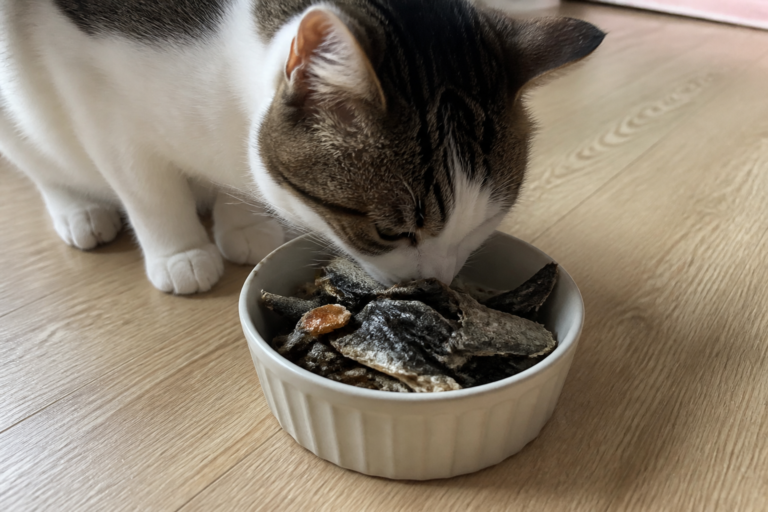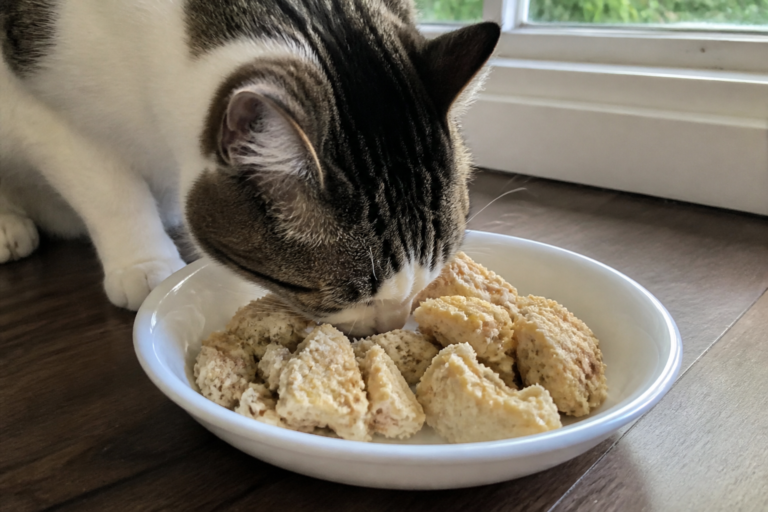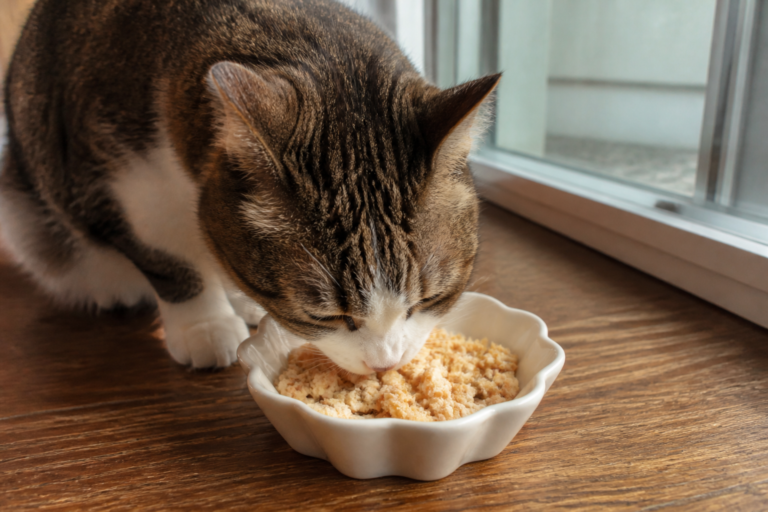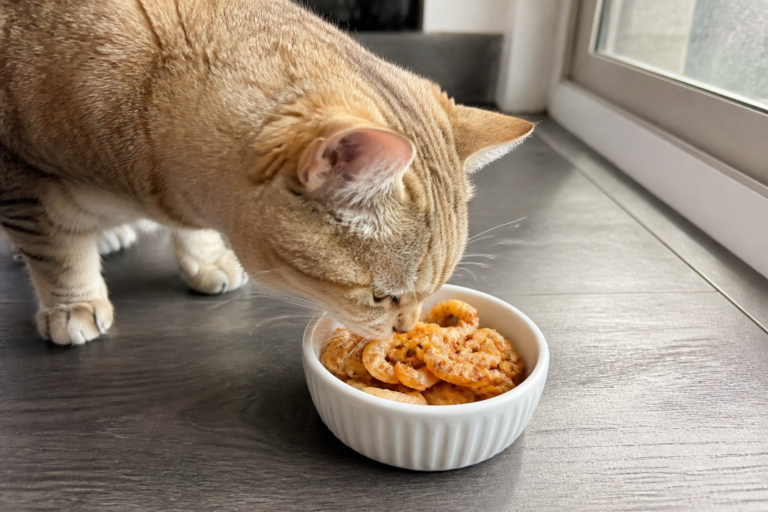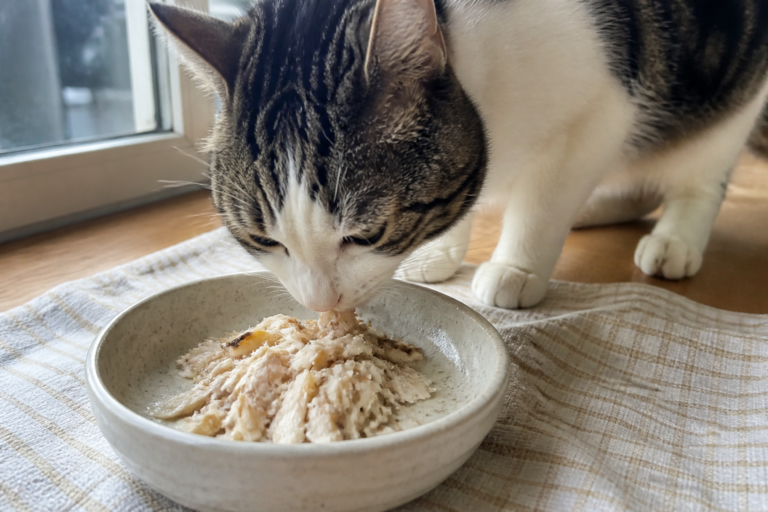
If your cat loves fish, these little frozen bites can be a fun homemade treat to keep in the freezer. They use simple cat-friendly ingredients and make a cool, easy-to-serve snack for warm days or for adding a little variety to your cat’s routine. This recipe is made for cats, not people, so it keeps the flavor simple and the ingredients cat-safe.
Just remember that treats should stay a small part of your cat’s overall diet.
Shopping List
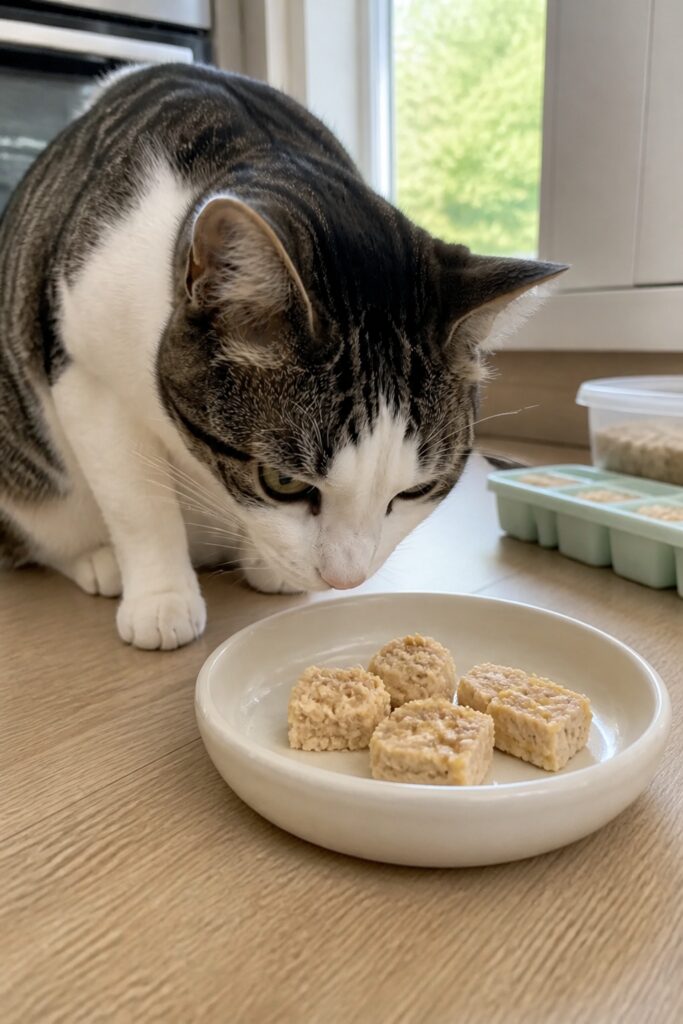
- 1 can tuna in water, 5 ounces, drained well and packed with no salt added if possible
- 1 large egg, cooked and cooled
- 2 tablespoons plain pumpkin puree, unsweetened
- 2 to 4 tablespoons water, as needed for texture
- 1 tablespoon plain cat-safe yogurt, optional, only if your cat tolerates dairy well
You only need a few simple ingredients, and that is part of the appeal. Keep everything plain and unseasoned so the bites stay cat-friendly.
Instructions
- Drain the tuna very well. Put the tuna in a bowl and press out as much liquid as you can. This helps the bites freeze into a better texture.
- Cook the egg. Scramble or hard-boil the egg without butter, oil, salt, or seasoning.
Let it cool completely before using it.
- Combine the ingredients. Add the tuna, cooked egg, pumpkin puree, and optional yogurt to a bowl. Mash everything together with a fork until it starts to look like a rough paste.
- Adjust the texture. Add 1 tablespoon of water at a time until the mixture is scoopable but still thick. You want it firm enough to hold shape in a mold or tray.
- Shape the bites. Spoon the mixture into silicone molds, an ice cube tray, or a lined mini muffin tin.
Keep the portions small, about 1 teaspoon to 1 tablespoon each depending on your cat’s size.
- Freeze until solid. Place the tray in the freezer for at least 3 to 4 hours, or overnight for the best results.
- Serve one bite at a time. Pop out a single bite and let it soften for a minute or two before offering it to your cat. That makes it easier to eat and gentler on teeth.
If your cat is new to frozen treats, start with a tiny piece. Some cats love the texture right away, while others prefer a bite that has softened a little.
Storage Instructions
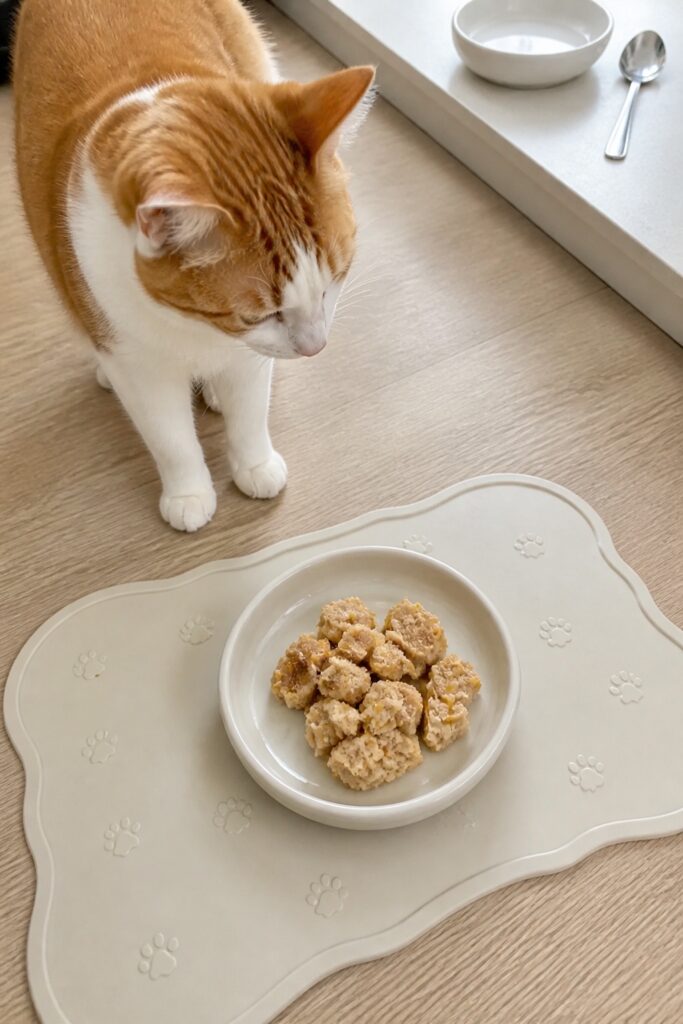
Store the frozen bites in an airtight container or freezer bag.
If you layer them, place a small piece of parchment between layers so they do not stick together.
Freezer storage: These bites keep well for up to 2 months in the freezer. For best flavor and texture, use them within 3 to 4 weeks.
Fridge storage: Once thawed, keep leftovers in the refrigerator and use them within 2 days. Do not leave them sitting out for long periods, especially in warm weather.
Portioning: Treat size should stay small.
For most cats, 1 to 2 bites a day is plenty, depending on their size, diet, and activity level. These should be a snack, not a meal replacement.
Why This is Good for You
This recipe gives your cat a simple mix of protein-rich ingredients in a form that feels like a treat. Tuna and egg both bring animal protein, which fits well into a cat-focused snack.
The texture also works well for many cats because it is soft, cold, and easy to lick or nibble.
That can make it more appealing than dry treats, especially for cats who enjoy fish flavors.
Pumpkin adds a little body and helps the mixture freeze into bites without heavy fillers. It keeps the recipe simple and makes it easier to portion into small, manageable servings.
This kind of homemade treat can also help you control what goes into your cat’s food. You choose the ingredients, skip the extra salt and seasoning, and keep the recipe focused on cat-safe basics.
Common Mistakes to Avoid
- Using seasoned tuna. Avoid tuna packed with spicy flavoring, onion, garlic, or extra salt.
Plain tuna in water works best.
- Adding unsafe ingredients. Never mix in onion, garlic, chives, leeks, chocolate, grapes, raisins, alcohol, caffeine, or xylitol.
- Using too much dairy. Some cats do not digest dairy well, so keep yogurt optional and use only a tiny amount if you choose to include it.
- Making the bites too large. Big chunks can be hard for small cats to handle. Keep the portions bite-sized and easy to eat.
- Serving them frozen solid. Very hard bites can be too cold for some cats. Let them soften slightly before serving.
- Relying on treats too often. Even cat-friendly snacks should not crowd out your cat’s regular balanced meals.
It also helps to remember that cats can be picky.
If the texture does not work for your cat, you can still use the same ingredients and simply adjust the shape or softness.
Alternatives
If your cat does not care for tuna, you can swap in other cat-safe proteins. Plain cooked chicken, turkey, or salmon can work well as long as you keep them unseasoned and boneless.
- Chicken version: Replace the tuna with finely shredded cooked chicken breast.
- Turkey version: Use plain cooked ground turkey that has been drained well.
- Salmon version: Use cooked or canned salmon in water with no salt added.
- Texture change: Blend the mixture smoother if your cat likes a softer lickable treat.
- Firmer bite: Add a little more pumpkin if you want a thicker, more scoopable frozen treat.
You can also make the recipe into tiny frozen drops instead of larger bites. That works well for cats who only want a small taste at a time.
If your cat prefers room-temperature snacks, you can chill the mixture in the fridge instead of freezing it.
It will still stay simple and cat-friendly, just with a softer texture.
FAQ
How much should I serve my cat?
Start small, especially if this is a new treat. For most cats, 1 small bite is enough the first time, and 1 to 2 bites a day is usually plenty as an occasional snack.
Can I make these ahead of time?
Yes, these are great for batch prep. Make a tray, freeze the bites, and pull out only what you need for the day so the rest stay fresh.
Can I use tuna in oil instead of tuna in water?
It is better to use tuna in water.
Tuna in oil can be heavier and may not be the best choice for a cat treat, especially if it contains extra seasoning or salt.
Is the egg safe for cats?
Yes, plain cooked egg is a common cat-safe ingredient. Make sure it is fully cooked and never seasoned with salt, pepper, butter, onion, or garlic.
Do I have to use yogurt?
No, yogurt is optional. If your cat is sensitive to dairy, skip it and keep the recipe simple with tuna, egg, pumpkin, and water.
How long do the frozen bites last?
They keep well in the freezer for up to 2 months, though they taste and look best if you use them within a few weeks.
Once thawed, use leftovers within 2 days and keep them refrigerated.
Can kittens eat these bites?
Only offer them in tiny amounts and only if your kitten already eats a complete kitten diet. Keep portions very small and check that the texture is soft enough for easy eating.
Frozen Tuna and Egg Cat Bites are a simple way to give your cat a cool, homemade treat without a lot of fuss. Keep the portions small, the ingredients plain, and the prep easy, and you will have a freezer-friendly snack your cat can enjoy now and then.