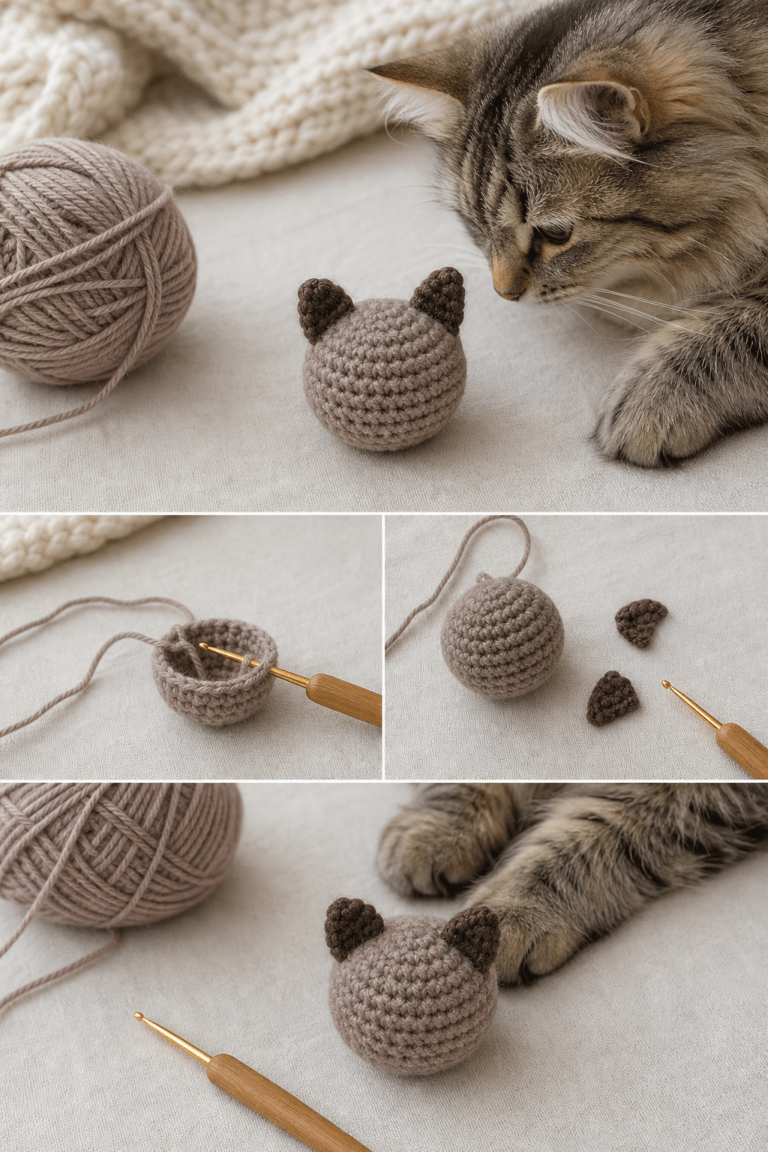
If you’ve got a feline friend who gets chilly or just looks adorable in tiny clothes, a crochet cat sweater pattern is the perfect project to tackle.
This cozy sweater fits most adult cats and works up quickly in worsted weight yarn.
Whether you’re a beginner looking for your first wearable project or someone who wants to gift handmade comfort to a beloved pet, this crochet cat sweater pattern delivers results without complicated shaping or tricky techniques.
Pattern Overview
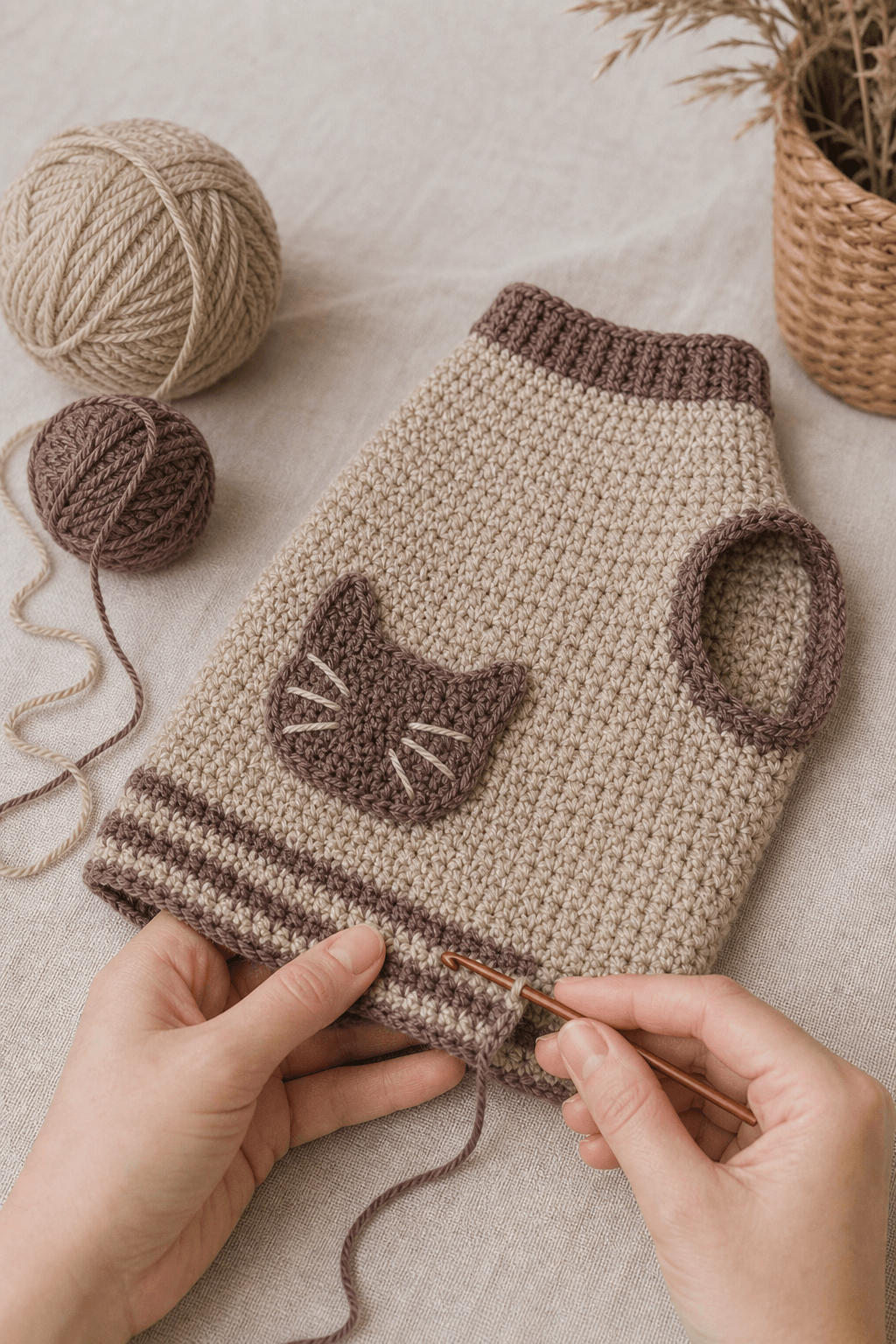
This crochet cat sweater pattern creates a simple, slip-on design that fits snugly around your cat’s chest and belly.
The sweater features a rectangular body worked in single crochet for a stretchy, comfortable fit, with openings for the front legs and neck.
You’ll add a ribbed edging around the armholes and neckline to prevent rolling, then weave in your ends and you’re done.
Skill Level
Beginner to Easy.
This pattern uses only single crochet and basic finishing techniques. No increases, decreases, or color changes required. If you can crochet in rows and weave in ends, you can make this sweater.
Finished Size
The finished sweater measures approximately 7 inches long (from neck to tail opening) and 6 inches wide around the chest, with 1-inch leg holes.
This size fits most adult cats weighing 8 to 14 pounds.
If your cat is smaller or larger, adjust the width by casting on fewer or more chains, or use a lighter or heavier yarn weight.
Materials
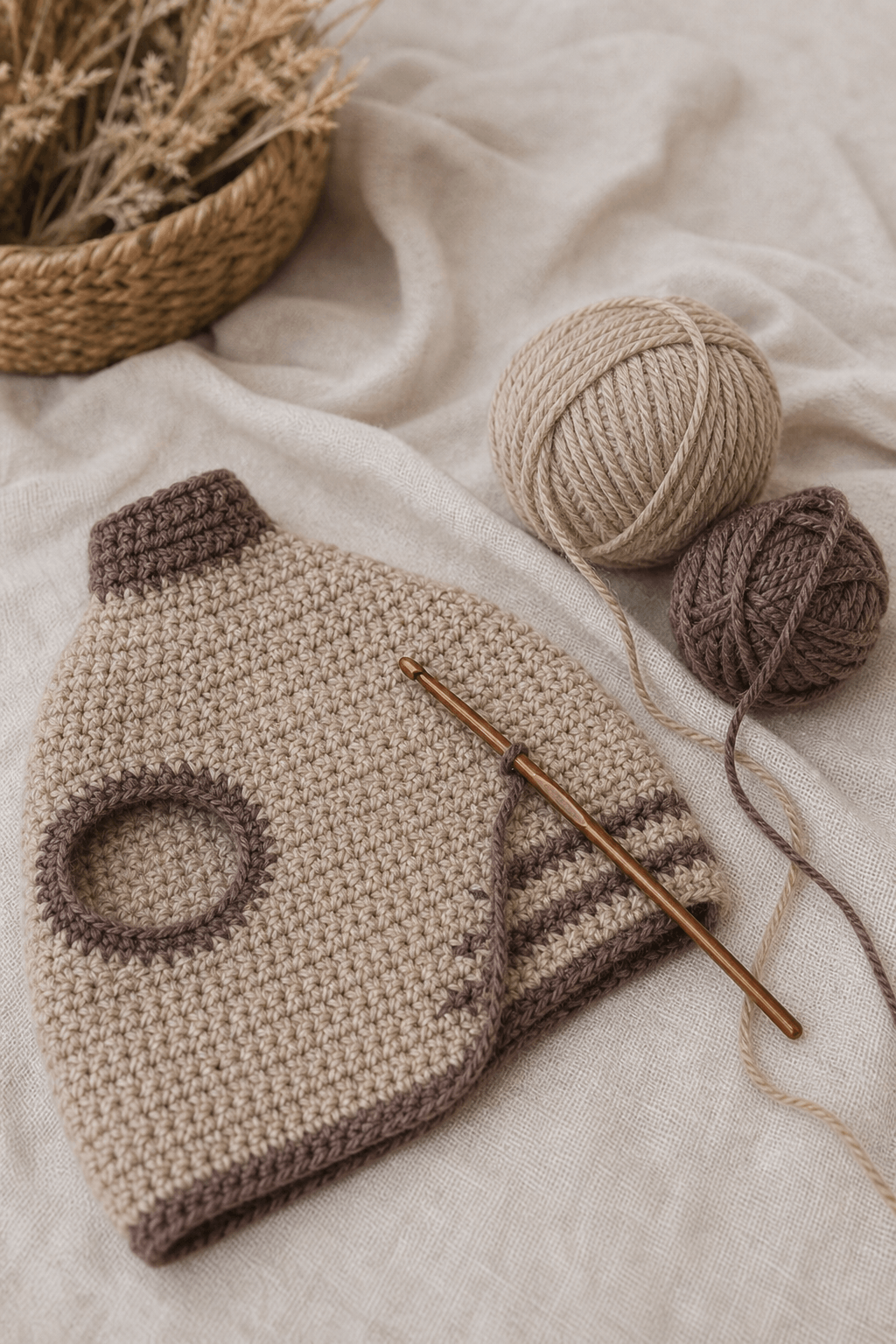
- Yarn: 150 to 200 yards of worsted weight yarn in your chosen color (one skein of most worsted weight brands covers this project)
- Crochet Hook: US Size H/8 (5 mm) hook, or the size needed to achieve gauge
- Notions: Yarn needle for weaving in ends, stitch marker (optional but helpful)
- Optional Supplies: Scissors, scrap yarn to mark leg holes during construction
Abbreviations
| Abbreviation | Full Term |
|---|---|
| ch | chain |
| sc | single crochet |
| sl st | slip stitch |
| st(s) | stitch(es) |
| rnd(s) | round(s) |
| row(s) | row(s) |
| inc | increase |
| dec | decrease |
Gauge
16 stitches and 16 rows = 4 inches in single crochet with US H/8 hook and worsted weight yarn.
Gauge matters for this pattern because it determines the finished width and stretch of your sweater.
A tighter gauge (more stitches per inch) creates a smaller, less stretchy garment.
A looser gauge creates a larger, more forgiving fit.
Crochet a 4-inch by 4-inch swatch in single crochet, block it gently, and measure to check your gauge before you begin.
Pattern Notes
- Work the body flat in rows from front to back.
- Mark your leg hole openings with stitch markers or scrap yarn to keep track of placement.
- Single crochet creates a dense, warm fabric. If your yarn is thin or your cat runs hot, switch to half double crochet and adjust your starting chain count.
- Try the sweater on your cat before you weave in all ends. If adjustments are needed, you’ll find it easier to rip back a few rows.
- The sweater should fit snugly but not tight. Your cat should be able to move and breathe comfortably.
Crochet Pattern Instructions
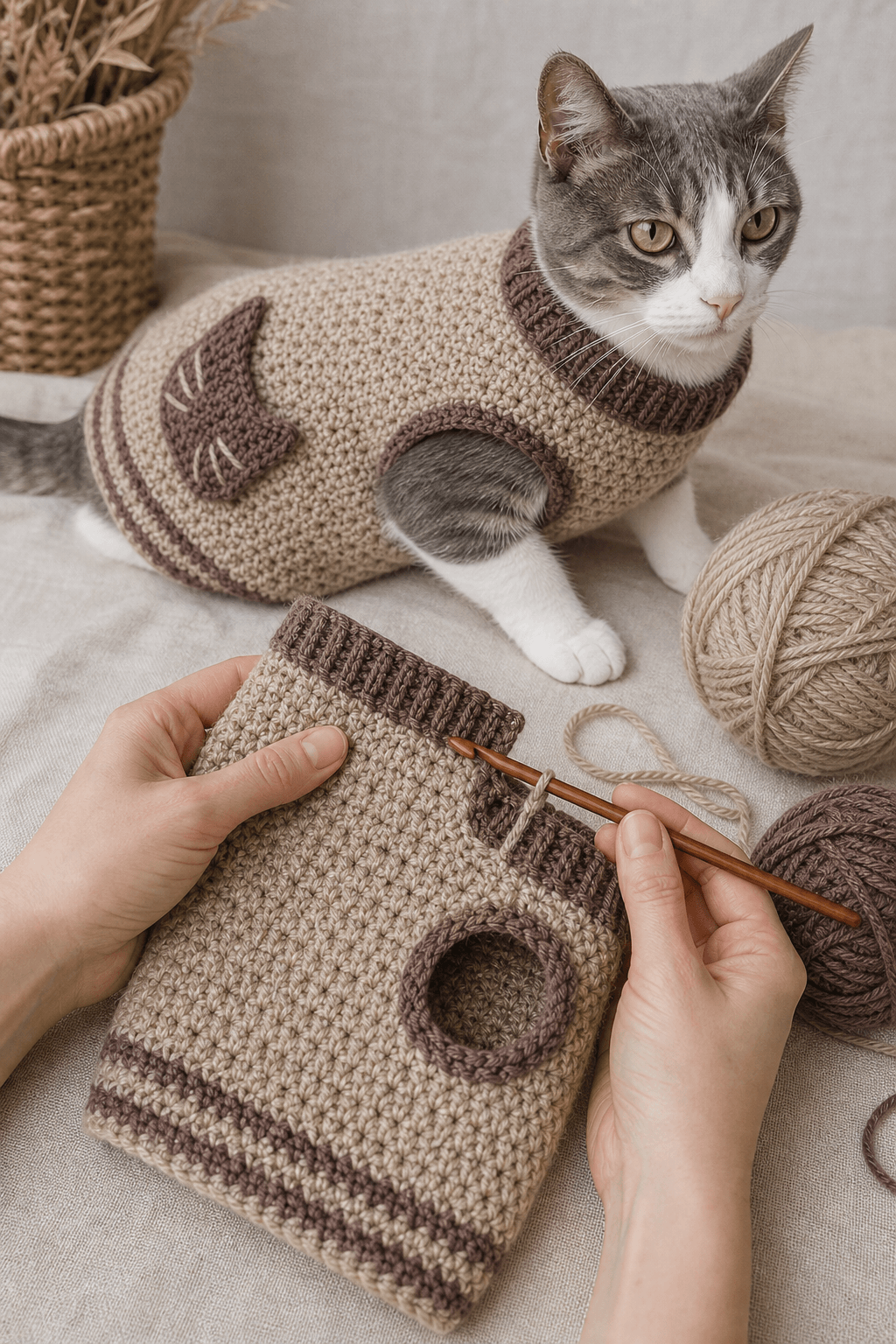
Body
- Ch 25 loosely with your chosen yarn.
- Row 1: Sc in second ch from hook and in each ch across. (24 sc)
- Row 2: Ch 1, turn, sc in each st across. (24 sc)
- Rows 3-24: Repeat Row 2. Work until your piece measures about 7 inches from the starting chain.
- Fasten off and weave in the short tail from your starting chain.
You now have a rectangular piece that will wrap around your cat’s torso.
Leg Holes
With your sweater body laid flat in front of you, use a stitch marker or scrap yarn to mark where the front legs will go.
The openings should be roughly 1 inch apart and positioned about 2 inches from each short end. You’ll cut out these openings after the body is complete.
- Lay your completed body piece flat.
- Locate the front leg opening positions (approximately 1 inch wide, centered between 2 and 3 inches from the neck edge on each side).
- With yarn needle and scissors, carefully cut a 1-inch horizontal slit at each marked position. Cut straight through one layer of fabric only.
- Gently pull the cut edges to prevent unraveling. Single crochet stitches hold their shape well and won’t fray like woven fabric.
Edging
- Attach yarn at the neck edge with a slip stitch.
- Row 1: Ch 1, sc in each st around the neck opening to return to the starting point. (24 sc around the neck)
- Row 2: Ch 1, turn, sc in the back loop only of each st around. This creates a ribbed texture that prevents rolling.
- Fasten off and weave in the end.
- Repeat Steps 1-4 around each leg hole opening, working approximately 6 to 8 single crochets around each small opening.
Assembly and Finishing
- Weave in any remaining yarn ends using your yarn needle. Push the tails to the inside of the sweater so they don’t irritate your cat’s skin.
- Gently stretch the sweater lengthwise and lay it flat on a towel to block. Blocking relaxes the yarn fibers and helps the sweater hold its shape.
- Let the sweater dry completely before trying it on your cat, usually 2 to 4 hours.
- Try the sweater on your cat to check fit. The neck opening should slide over the head easily, and the leg holes should align with the front legs without pinching.
- If the fit is off, you can hand-sew the neckline slightly smaller or larger using a simple ladder stitch with matching yarn.
Customization Ideas
- Color: Make a solid color sweater or work stripes by changing yarn color every few rows. Variegated yarn also adds visual interest without extra effort.
- Size: For a smaller cat (under 8 pounds), chain 20 instead of 25 and work 15 to 18 rows instead of 24. For a larger cat (over 14 pounds), chain 28 and work 26 to 28 rows.
- Yarn Weight: Use bulky yarn for a thicker, warmer sweater and expect to use fewer yards. Use DK weight for a thinner, cooler-weather option. Adjust your hook size to match yarn recommendations on the label.
- Edging: Skip the ribbed edging and use a contrasting yarn color for a decorative border. Single crochet in the back loop only around all openings, then add a second round in your contrast color using slip stitches.
- Embellishments: Embroider a small face or paw print on the back of the sweater using embroidery thread after your crochet work is complete. Add a small bell on the chest by sewing it securely through the stitches.
Care Instructions
Hand wash your crochet cat sweater in cool water with mild detergent. Rinse gently until the water runs clear, then squeeze out excess water without wringing.
Lay flat on a clean towel to dry away from direct sunlight or heat. Do not machine wash or dry, as agitation can felt the yarn.
Before washing, remove any bells or embellishments that might not survive the process.
Troubleshooting
My sweater is too loose around the chest.
Reblock the sweater with slight tension pulling the width inward. If blocking doesn’t help, unravel the last few rows and switch to a smaller hook size, then rejoin yarn and repeat those rows.
The leg holes are tearing or the edges feel scratchy.
Add an extra round of single crochet around each hole and reinforce the edges with a second pass of slip stitches. This stabilizes the cut edges and creates a smoother finish.
My cat won’t keep the sweater on.
Ensure the neckline is not too loose. Hand-stitch the opening slightly smaller using a ladder stitch. Some cats prefer a snug, secure fit. If your cat continues to dislike the sweater, try a slightly smaller size or softer yarn.
The finished sweater is longer or shorter than expected.
This usually means your gauge is off. Check your tension and hook size, and swatch again. In future projects, adjust the number of rows to match your desired finished length based on your actual gauge.
Single crochet feels too stiff for my cat’s skin.
Switch to half double crochet for a softer, more flexible fabric. Recalculate your starting chain count based on your new gauge, and expect the finished sweater to be slightly larger.