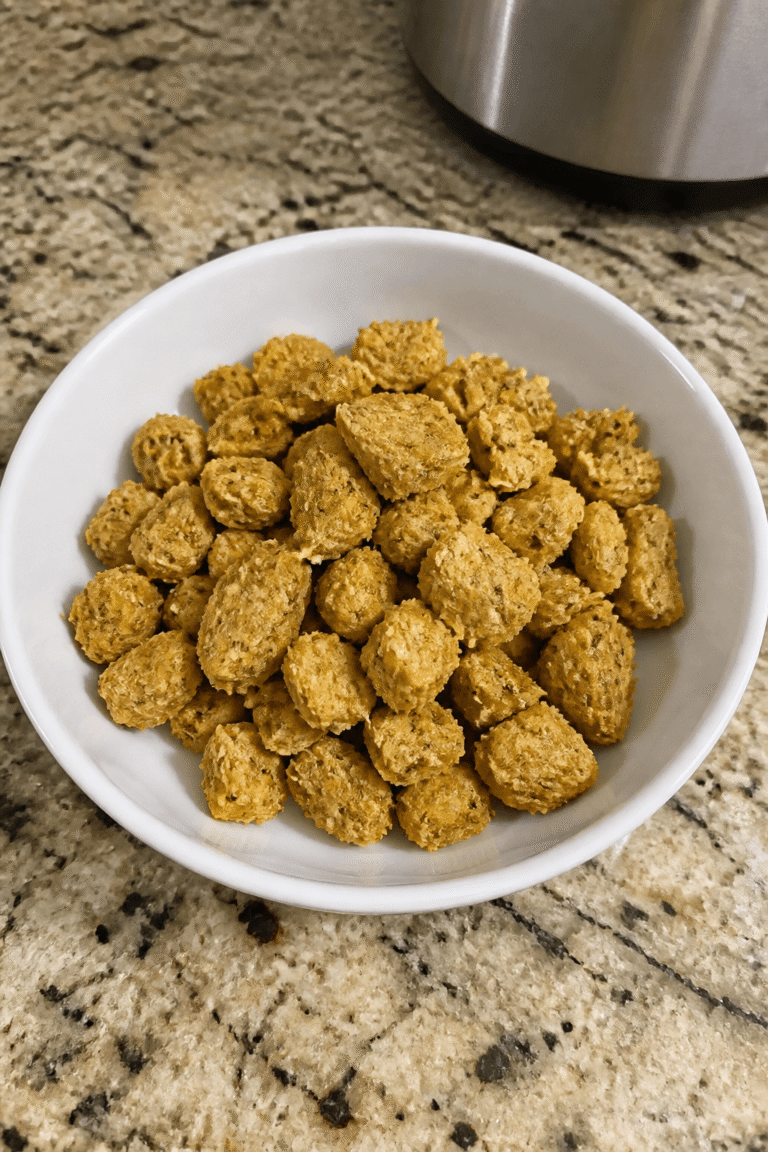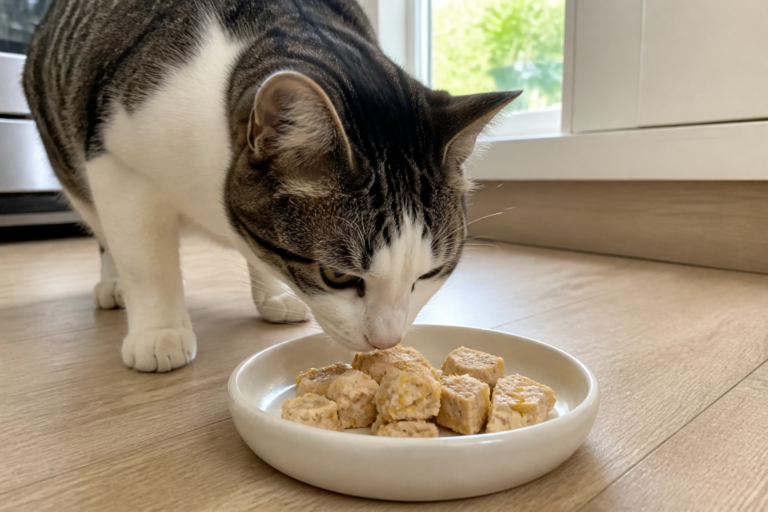
If you want a homemade treat that feels a little special for your cat, these Tuna and Egg Cat Cookies are a fun place to start. They are simple to mix, easy to shape, and made with cat-friendly ingredients you can feel good about using. This recipe is meant for cats, so it keeps the flavors appealing without adding anything unnecessary.
It works well as an occasional treat or a small snack alongside your cat’s regular meals.
The texture is soft-crisp, which makes the cookies easy to break into smaller pieces for serving. You can also bake them a bit longer if your cat prefers a firmer bite. Just remember that treats should stay a small part of your cat’s overall diet.
Ingredients
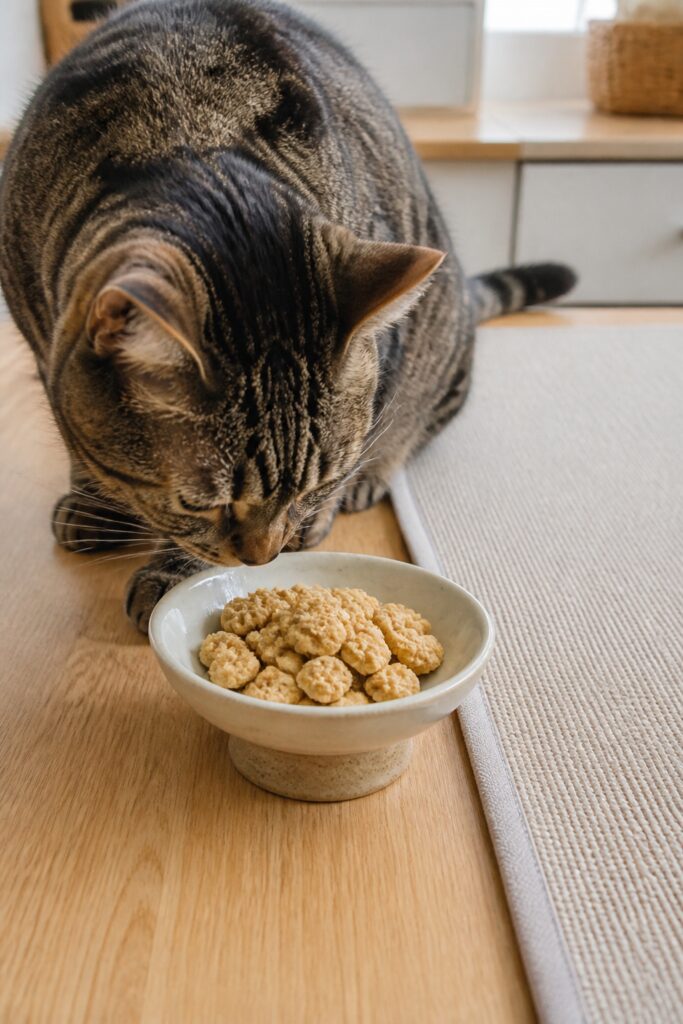
- 1 can tuna in water, about 5 ounces, drained well
- 1 large egg
- 1 cup oat flour
- 1 to 2 tablespoons water, if needed for texture
- 1 tablespoon plain canned pumpkin, unsweetened
Use tuna packed in water, not oil, and choose plain pumpkin with no added sugar or spices.
Oat flour gives the cookies structure while keeping the ingredient list simple. If you do not have oat flour, you can blend plain rolled oats into a fine powder.
How to Make It
- Preheat your oven to 325°F and line a baking sheet with parchment paper.
- Drain the tuna well and place it in a bowl.
- Add the egg and pumpkin, then mash and mix until the mixture looks fairly smooth.
- Stir in the oat flour a little at a time. The dough should be thick enough to hold its shape.
- Add water if needed, 1 teaspoon at a time, if the dough feels too dry or crumbly.
- Scoop small portions onto the baking sheet.
Flatten them slightly with a spoon or fork.
- Bake for 12 to 15 minutes, then check the cookies. They should look set and lightly browned around the edges.
- Let them cool fully before serving. Cats should never get hot food straight from the oven.
If you want a crunchier cookie, bake them for 3 to 5 minutes longer and keep an eye on the edges.
For a softer treat, take them out earlier and let them cool all the way through. Either way, make sure the cookies are firm enough to handle before giving them to your cat.
How to Store
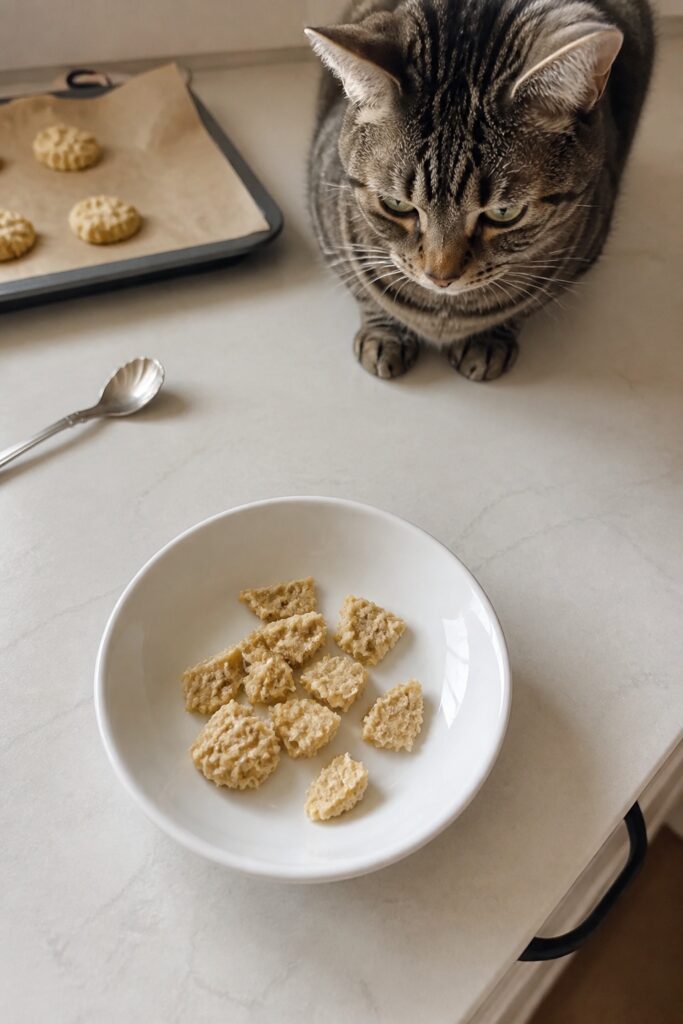
After the cookies cool completely, store them in an airtight container in the refrigerator. They usually keep well for 3 to 4 days.
Because this recipe uses egg and tuna, it is best not to leave the cookies sitting out for long.
For longer storage, freeze them in a single layer first, then move them to a freezer-safe bag or container. They can stay frozen for about 1 to 2 months. Thaw only the amount you plan to use, and serve in small portions.
Portioning matters with cat treats.
A good rule is to offer just a few tiny cookies, or even a broken piece, depending on your cat’s size and regular diet. If your cat is new to homemade treats, start with one small piece and watch how they handle it.
Why This is Good for You
This recipe gives your cat a simple homemade snack with ingredients that are easy to recognize. Tuna and egg both add animal protein, which many cats enjoy because it matches their natural taste preferences.
The recipe also avoids heavy fillers, strong spices, and extra salt.
The oat flour helps hold the cookie together without making the ingredient list too complicated. Pumpkin adds a little moisture and can improve the texture, which is helpful if your cat likes softer treats. Since the cookies are homemade, you also control the portion size and can keep them occasional and balanced.
That said, treats should not replace a complete cat food.
Think of these cookies as a small bonus, not a meal. A healthy routine still depends on your cat’s regular diet being nutritionally complete.
Pitfalls to Watch Out For
One of the biggest mistakes is using tuna that has added salt, seasoning, onions, or sauces. Cats do best with plain ingredients, so stick to tuna in water with no extras.
Avoid any mix-ins that sound harmless for people but are unsafe for cats.
Another issue is making the cookies too large. Big treats can be hard to chew and easy to overfeed. Keep them small, and if needed, break them into bite-size pieces before serving.
Watch the moisture level in the dough too.
If it is too wet, the cookies may spread and bake unevenly. If it is too dry, they can turn hard and crumbly, which may not be appealing to your cat.
Also avoid adding cheese, milk, garlic, onion powder, herbs, or flavored seasonings. Even small amounts of some ingredients can cause problems, and strong flavors can overwhelm the recipe.
Plain is best when you are cooking for cats.
Recipe Variations
If your cat enjoys different textures, you can change this recipe a little. For a softer treat, mash the mixture more finely and bake it for a shorter time. For a firmer cookie, add a little more oat flour and bake it longer.
You can also swap the tuna for another cat-safe protein, like cooked shredded chicken or plain cooked salmon.
Keep the protein plain and unseasoned. If you use cooked meat instead of tuna, you may need a little extra moisture to help the dough hold together.
For a different shape, press the dough into a thin layer and cut it into tiny squares after baking. That works well if you want quick, even portions.
You can also use a mini cookie cutter, as long as the treats stay small.
If your cat prefers a softer snack, mix in a little more pumpkin or add a teaspoon of water. If your cat likes a drier bite, bake the cookies a few minutes longer and let them cool completely. Small changes like these can help you match the texture to your cat’s preference.
FAQ
How much should I give my cat?
Start small.
For most cats, one to three tiny cookies or broken pieces is enough as an occasional treat, depending on their size and daily food intake. Treats should stay limited so they do not crowd out complete cat food.
Can I use fresh tuna instead of canned tuna?
Yes, you can use plain cooked tuna if it is unseasoned and fully cooled. Just make sure it is plain, with no oil, salt, or spices.
Drain it well so the dough does not become too wet.
How long do these cookies last in the fridge?
They usually keep for about 3 to 4 days in an airtight container. Since this recipe contains egg and fish, refrigeration is important. If you do not plan to use them quickly, freezing is the better choice.
Can I make these without egg?
You can try a little extra pumpkin or a spoonful of water to help the dough bind, but the texture may change.
Egg helps hold the cookies together and adds structure. If you need an egg-free version, test a small batch first.
Is pumpkin safe for cats?
Yes, plain canned pumpkin is generally a cat-safe ingredient in small amounts. Choose unsweetened pumpkin with no pie spice or added flavoring.
It should stay as a minor ingredient, not the main part of the recipe.
Can kittens eat Tuna and Egg Cat Cookies?
Kittens have different nutritional needs and tiny stomachs, so use extra caution. If you offer any at all, give only a very small piece and make sure the treat fits into their regular feeding plan. When in doubt, keep homemade treats for adult cats.
Do I need to remove all the tuna water before mixing?
Yes, drain the tuna well so the dough does not turn soggy.
A little moisture is fine, but too much liquid will make the cookies hard to shape. You want a thick dough that holds together easily.
Homemade cat treats can be a nice way to add variety to your cat’s routine, and Tuna and Egg Cat Cookies keep things simple. They are easy to make, easy to store, and easy to portion.
Best of all, they are made with cat-friendly ingredients that fit a thoughtful homemade approach.