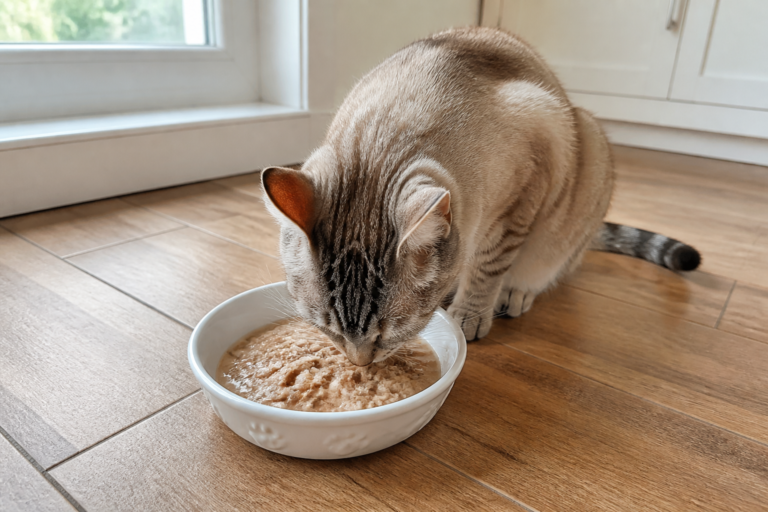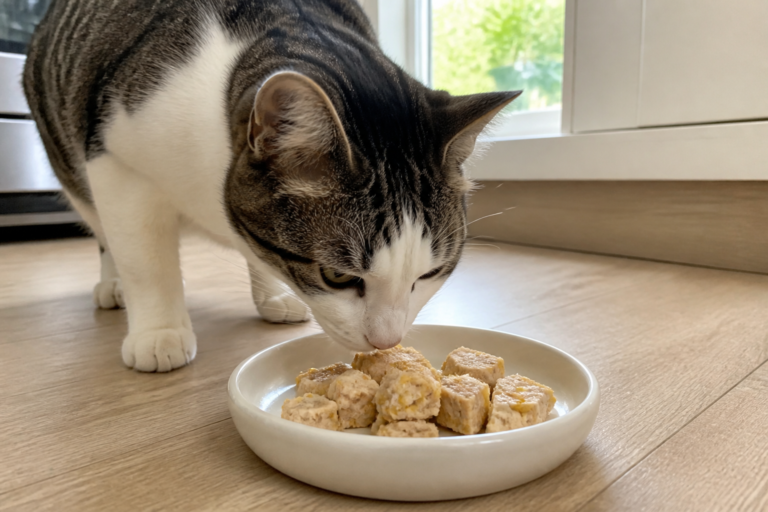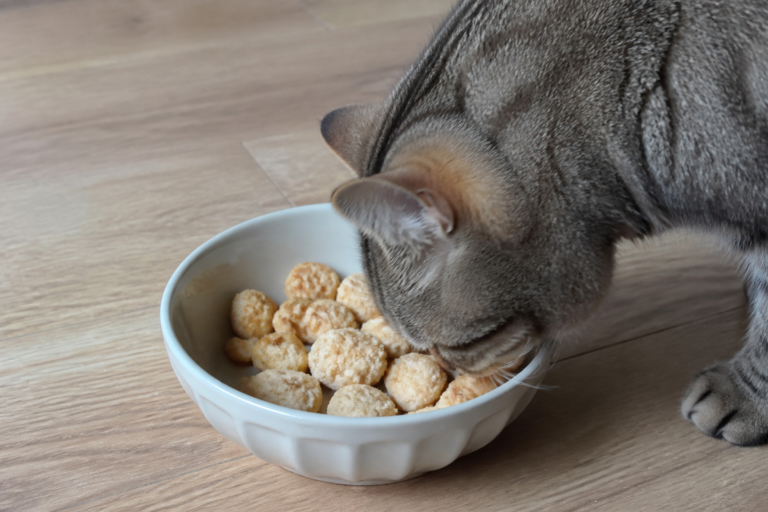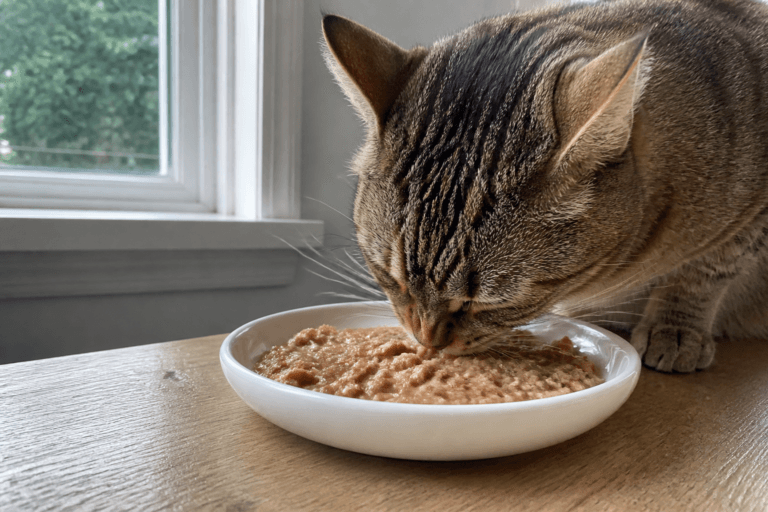
If your cat goes crazy for fish, these White Fish Cat Cookies are a simple homemade treat you can feel good about making. They are made for cats, not people, so the flavor and texture stay cat-friendly and easy to enjoy. This recipe uses plain white fish and a few gentle ingredients to create small, soft cookies that work well as an occasional treat.
They are easy to bake, easy to portion, and easy to store for later.
These cookies are not meant to replace a complete cat food, but they can be a nice homemade reward. Keep the portions small and serve them alongside your cat’s regular balanced meals. That way, you get the fun of a homemade recipe without throwing off the rest of your cat’s diet.
What You’ll Need
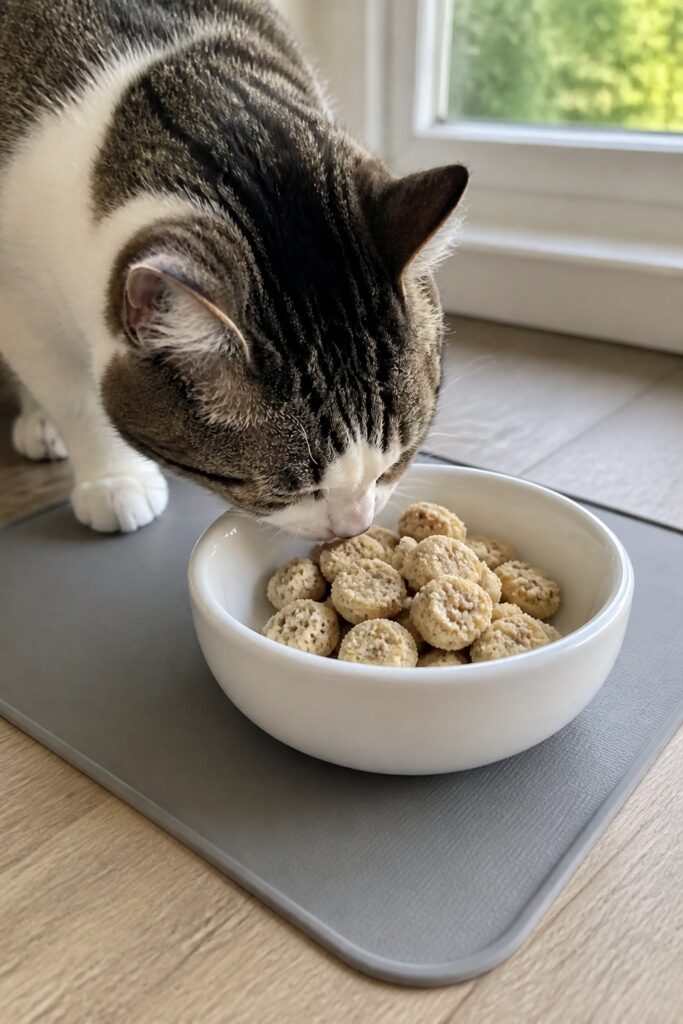
- 1 cup cooked white fish such as cod, haddock, or pollock, flaked and boneless
- 1 large egg
- 1/2 cup oat flour
- 2 tablespoons plain pumpkin puree with no added sugar or spices
- 1 tablespoon water, plus a little more if needed
- 1 teaspoon salmon oil or another cat-safe fish oil, optional
Use plain, fully cooked fish with no skin, bones, salt, butter, or seasoning.
If you do not have oat flour, you can make your own by blending plain rolled oats until fine.
Step-by-Step Instructions
- Preheat the oven. Set it to 350°F and line a baking sheet with parchment paper.
- Prepare the fish. Make sure the white fish is fully cooked, cooled, and carefully checked for tiny bones. Flake it into small pieces with a fork.
- Mix the wet ingredients. In a medium bowl, stir together the egg, pumpkin puree, water, and salmon oil if you are using it.
- Add the fish. Fold the flaked white fish into the wet mixture until it looks evenly combined.
- Stir in the flour. Add the oat flour a little at a time. Mix until you get a soft dough that holds together without being sticky.
- Adjust the texture. If the dough feels too wet, add a small spoonful more oat flour.
If it feels too dry, add a few drops of water.
- Shape the cookies. Roll the dough into small balls or flatten it into tiny cookie rounds. Keep them bite-size for cats.
- Bake. Place the cookies on the prepared baking sheet and bake for 12 to 15 minutes, or until they feel set and lightly firm.
- Cool completely. Let the cookies cool all the way before serving. This helps the texture set and keeps your cat safe from hot food.
For a softer cookie, take them out closer to 12 minutes.
For a firmer treat, let them bake a few minutes longer. Every oven runs a little differently, so watch the first batch closely.
Keeping It Fresh
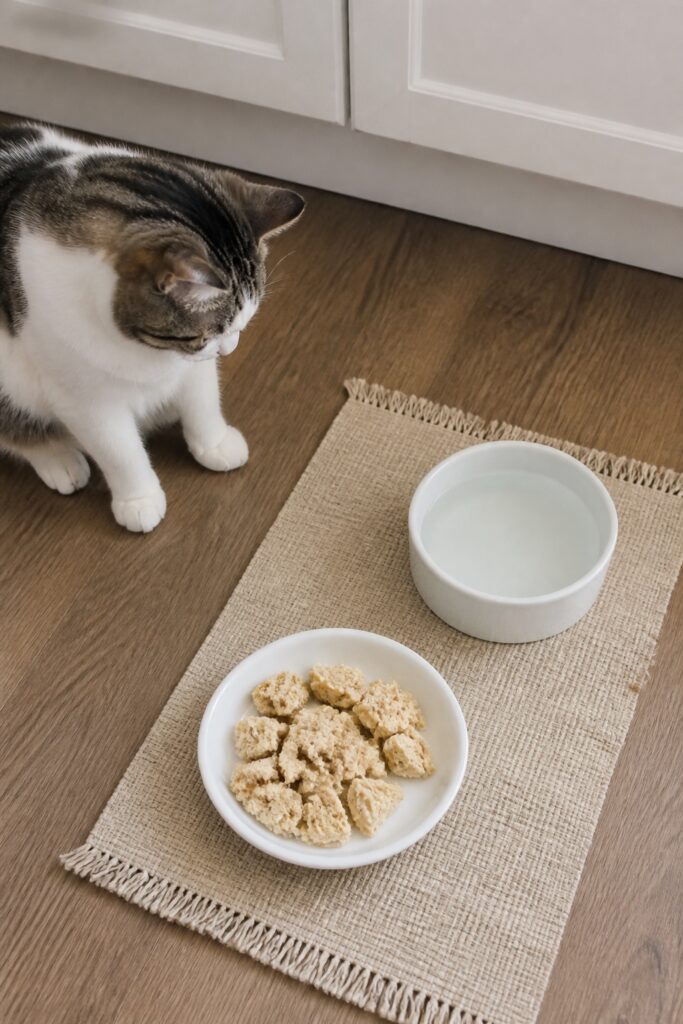
Store the cookies in an airtight container in the fridge for up to 3 days. Because these treats use real fish and egg, cold storage matters more than with dry store-bought snacks.
If you want to make a bigger batch, freeze the extra cookies for up to 2 months.
Freeze them in a single layer first, then move them to a sealed bag or container so they do not stick together.
Portion them into small servings before storing if that helps you stay consistent. For most cats, 1 to 2 small cookies at a time is plenty as a treat, depending on size and daily food intake.
Health Benefits
White fish gives these cookies a strong, cat-friendly protein base. Cats are carnivores, so protein matters more than sweeteners or filler ingredients, and fish can make a homemade treat feel especially rewarding.
Egg adds extra structure and a little more protein, while pumpkin helps the texture and can make the cookie easier to shape.
Oat flour keeps the recipe simple and digestible, and it works well in small amounts without making the cookies too heavy.
These cookies can fit into a balanced feeding plan when you use them as a treat, not as a full meal. That balance matters most for cats, since treats should stay only a small part of daily intake.
What Not to Do
- Do not use raw fish. Always cook the fish fully before making the recipe.
- Do not add onion, garlic, chives, or leeks. These ingredients are unsafe for cats.
- Do not use salt, seasoning blends, or flavored fish. Keep the recipe plain and gentle.
- Do not add dairy in large amounts. Many cats do not handle milk, cream, or cheese well.
- Do not make the cookies too large. Big pieces can be hard for cats to chew and may encourage overfeeding.
- Do not serve them as a full meal. These are treats, not complete cat food.
- Do not leave them out too long. Fish and egg can spoil quickly at room temperature.
It also helps to avoid changing too many things at once. If your cat has never had fish before, start with a tiny piece and see how they handle it as part of their regular routine.
Variations You Can Try
If your cat likes a softer texture, mash the dough a little more and make thinner cookies.
A softer batch can be easier for older cats or cats who prefer tender treats.
You can also swap the white fish for cooked salmon in small amounts if your cat already tolerates it well. Just keep it plain and use the same method, with no added salt or seasoning.
For a different flavor, try replacing the pumpkin with plain mashed sweet potato in an equal amount. This can give the cookies a slightly different texture while still keeping the recipe cat-friendly.
If you want a simpler cookie, skip the salmon oil and keep only the fish, egg, and flour.
That version still gives you a straightforward homemade treat with a clean ingredient list.
FAQ
How many White Fish Cat Cookies can I give my cat?
Start with 1 small cookie and see how your cat responds. For most cats, 1 to 2 small cookies at a time is enough since treats should stay limited.
Can I use canned fish instead of fresh cooked fish?
Yes, but choose fish packed in water with no salt added if possible. Drain it well and check the label carefully before using it in the recipe.
How do I know if the cookies are cooked through?
The cookies should feel set and lightly firm on the outside.
Since the fish is already cooked before mixing, the baking step mainly firms the dough and helps the cookies hold their shape.
Can I freeze these cookies for later?
Yes. Freeze them in a sealed container or freezer bag for up to 2 months. Thaw only what you need so the rest stay fresh.
Are these safe for kittens?
Kittens can be more sensitive to new foods, so offer only a tiny amount if your kitten is already eating solid food and tolerating new ingredients.
Keep portions very small and stick to plain ingredients.
What if my cat does not like pumpkin?
You can leave it out and add a little more oat flour or a few drops of water to help the dough hold together. The fish flavor will still be the main focus.
Can I make these without eggs?
Yes, you can try using a little extra pumpkin or a small splash of water to bring the dough together. The texture may be a bit softer, so bake them until they feel set.
White Fish Cat Cookies are a nice way to make something special for your cat without overcomplicating things.
Keep the ingredients plain, the pieces small, and the servings modest, and you will have a homemade treat that fits nicely into your cat’s routine.