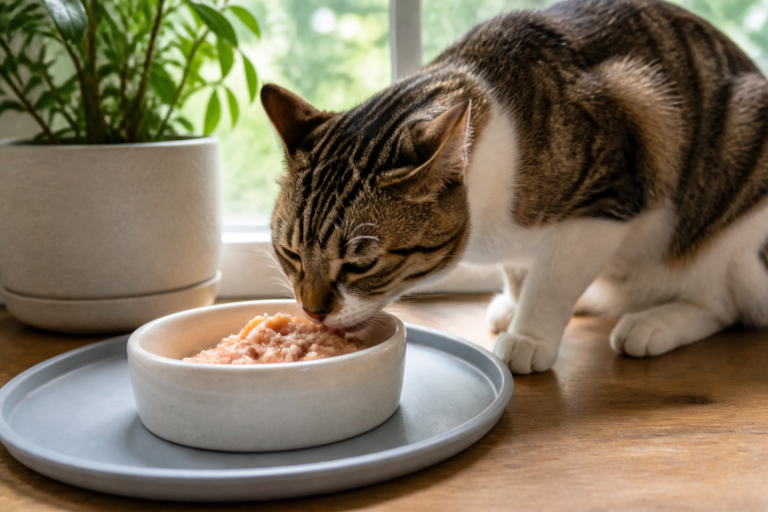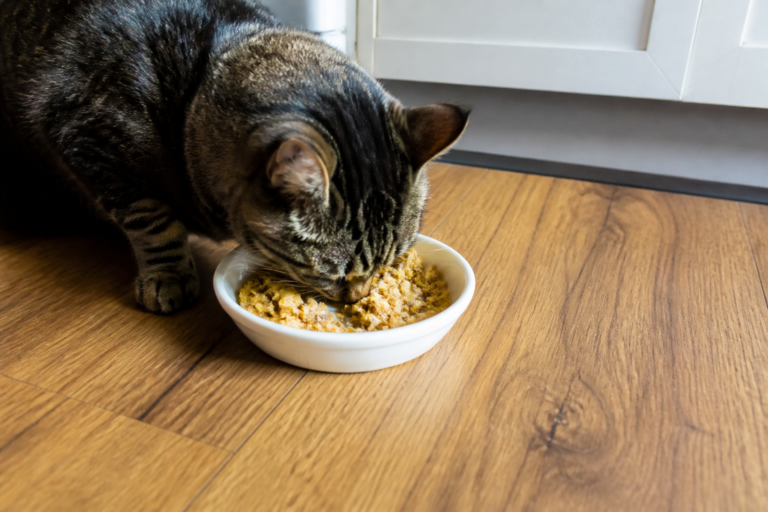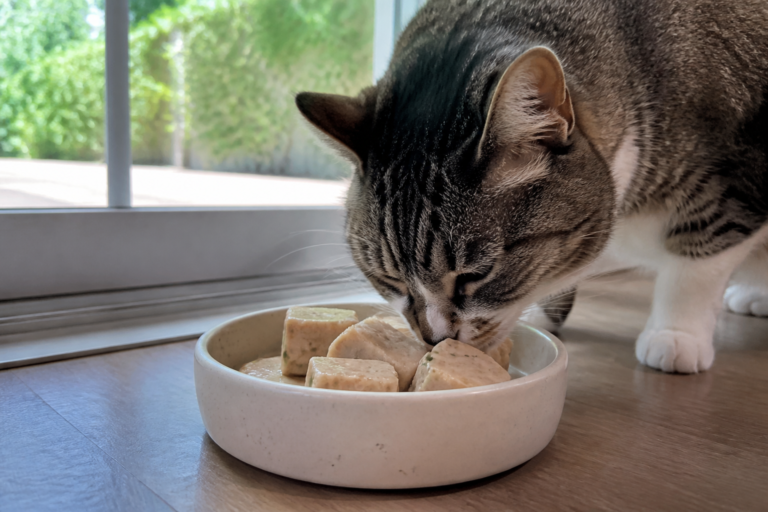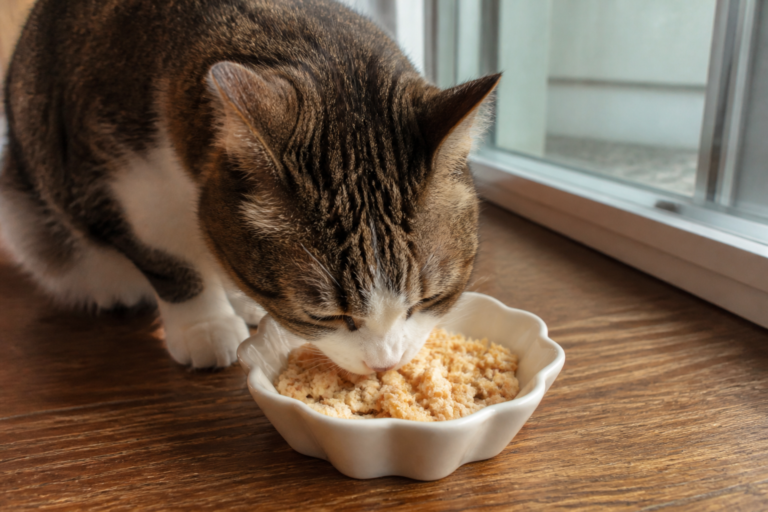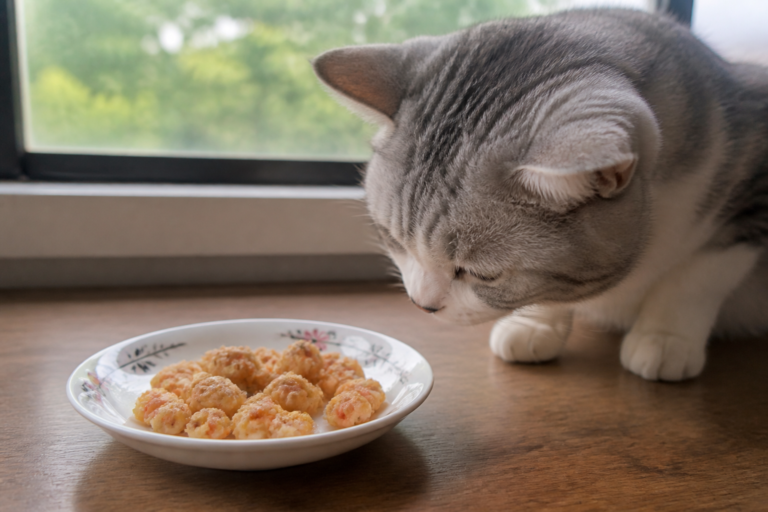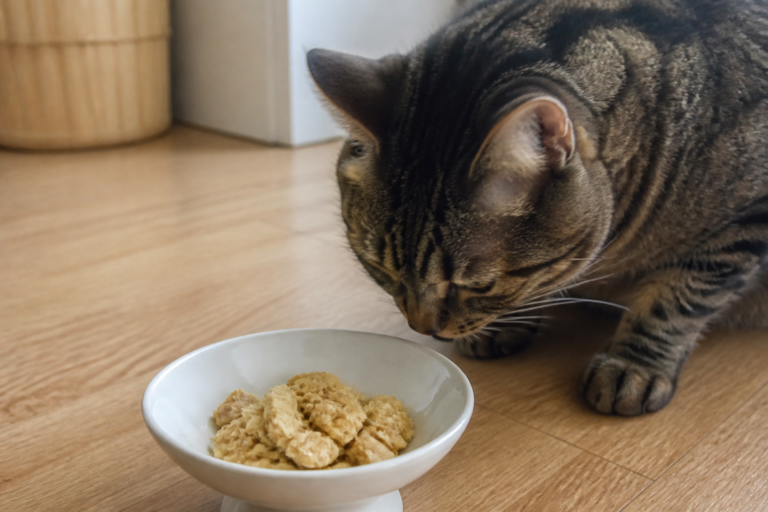
If you want a simple homemade treat for your cat, these air fryer chicken cat treats are a great place to start. They use a short ingredient list, cook fast, and keep the flavor focused on plain chicken, which is something many cats love. This is not a people snack with pet-safe adjustments.
It is a cat-friendly recipe made for feline taste and simple feeding at home.
These treats work well as a small reward, a topper, or a batch of tiny bites for training and bonding. They are easy to portion, easy to store, and easy to keep plain. That matters when you are making food for cats, because simple is usually best.
What You’ll Need
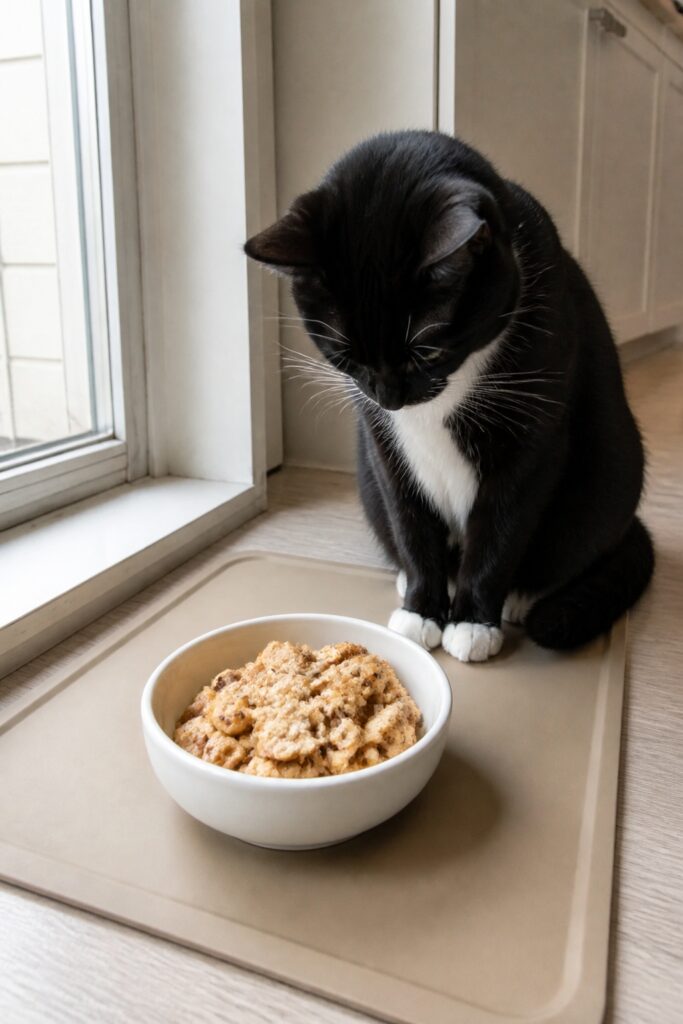
- 1 pound boneless, skinless chicken breast, cut into small pieces
- 1 egg
- 2 tablespoons oat flour
- 1 tablespoon plain pumpkin puree or unsweetened pumpkin puree
- 1 tablespoon water, if needed for mixing
These ingredients keep the recipe cat-safe and simple.
The chicken gives the main flavor, while the egg and oat flour help bind the mixture into small treat-sized bites. Pumpkin adds a little softness and can help with texture.
If your cat has a sensitive stomach, keep the recipe extra plain and skip any optional add-ins. Always check that your pumpkin puree is plain and does not contain spices, sugar, or seasoning.
Instructions
- Preheat the air fryer to 375°F.
- Prepare the chicken by cutting it into small chunks.
Smaller pieces cook more evenly and are easier to portion for cats.
- Mix the ingredients in a bowl. Combine the chicken, egg, oat flour, and pumpkin puree until the pieces are lightly coated. If the mixture looks too dry, add 1 tablespoon of water.
- Shape small bites with a spoon or your hands.
Keep them about the size of a pea or small marble for cat-friendly portions.
- Place the pieces in the air fryer basket in a single layer. Leave space between them so they cook evenly.
- Air fry for 8 to 10 minutes, then check the chicken for doneness. The pieces should be fully cooked and no longer pink inside.
- Cool completely before serving.
Hot food can burn your cat’s mouth, so let the treats rest for several minutes.
- Serve a small amount as a treat, not a full meal. Start with one or two tiny pieces if this is your cat’s first time trying the recipe.
If you want a softer texture, stop at the lower end of the cooking time. If you want a drier, firmer treat, cook a little longer and let the pieces cool fully.
Just keep an eye on them so they do not dry out too much.
How to Store
Store cooled treats in an airtight container in the refrigerator for up to 3 days. Because this recipe uses fresh chicken and egg, it is best to keep the storage time short.
For longer storage, freeze the treats in a single layer first, then transfer them to a freezer-safe bag or container. They can stay frozen for up to 2 months.
Label the container with the date so you can keep track easily.
Portion the treats before freezing if you plan to use them one at a time. That way, you can thaw only what you need and avoid waste. Thaw in the fridge, not on the counter, and discard any pieces that smell off or look dry and discolored.
Health Benefits
Chicken gives cats a strong source of animal protein, which fits their natural dietary needs.
Many cats also find plain chicken easier to enjoy than heavily mixed foods, especially when the recipe stays simple.
The small ingredient list can also support digestibility. When you keep the recipe free from seasoning, onion, garlic, and extra fat, you make it easier for your cat to enjoy as an occasional treat.
This recipe can also help with balanced meal planning because it is easy to portion. Treats should stay small and make up only a small part of your cat’s overall daily food.
If you use homemade treats often, think of them as a supplement to your cat’s regular complete and balanced diet.
That helps you keep treat time fun without replacing the nutrition your cat needs from main meals.
What Not to Do
- Do not add onion, garlic, chives, or leeks. These are unsafe for cats.
- Do not use salt, pepper, or seasoning blends. Cats do best with plain food.
- Do not add butter, oil, cheese, or creamy sauces. Heavy dairy and rich foods can upset digestion.
- Do not use raw chicken as a finished treat. Always cook it fully.
- Do not make the pieces too large. Small bites are safer and easier for cats to chew.
- Do not feed these as a full meal. They are treats, not a complete cat food.
- Do not leave treats out for hours. Fresh chicken needs proper refrigeration.
It is also easy to overdo portions when a cat loves the flavor. Even a good homemade treat should stay modest so it does not crowd out regular meals.
If your cat is very small or tends to gain weight easily, keep servings extra tiny.
Variations You Can Try
You can make a few cat-safe changes if your cat prefers a different texture or you want to use what you already have. The key is to keep the recipe plain and focused on simple ingredients.
- Turkey swap: Use finely chopped boneless turkey breast instead of chicken.
- Fish version: Replace chicken with cooked salmon or tuna in small amounts for a stronger scent and taste.
- Soft treat style: Add a little more pumpkin puree for a softer, mash-like bite.
- Crunchier texture: Air fry a minute or two longer for firmer pieces.
- Different binder: If needed, use a little plain cooked rice instead of oat flour for a softer mix.
When you try a new protein, introduce it slowly. Cats can be picky, and some cats do better with one new ingredient at a time.
That makes it easier to see what your cat likes and tolerates well.
FAQ
How many air fryer chicken cat treats can I give my cat?
Start with one or two small pieces and see how your cat handles them. For most cats, treats should stay to a small part of the day’s food, not a big snack session. If your cat already gets treats from other sources, keep the homemade portions even smaller.
Can I store these treats in the freezer?
Yes, freezing works well for this recipe.
Freeze them in a single layer first, then move them to a sealed container or bag. Thaw only the amount you plan to use soon, and keep the rest frozen until needed.
Are these safe for kittens?
They can be offered in very small amounts if the kitten already eats solid food and your vet has said treats are okay. Keep the pieces tiny and soft, and do not let treats replace a kitten’s regular complete food.
For very young kittens, stick with age-appropriate meals only.
Can I use canned chicken instead of fresh chicken breast?
You can, but only if it is plain and low in sodium with no seasoning. Rinse it if needed to remove extra salt, and check the label carefully for unsafe ingredients. Fresh chicken usually gives you more control over the final recipe.
What if my cat is a picky eater?
Try making the bites smaller or slightly softer.
You can also use a stronger-smelling protein like salmon or tuna in a small amount. Introduce any new recipe slowly and offer just a tiny taste at first.
How do I know if the treats are fully cooked?
The chicken should be opaque and no longer pink in the center. If you are unsure, break one piece open and check it before serving.
When in doubt, cook it a little longer, then cool it completely before giving it to your cat.