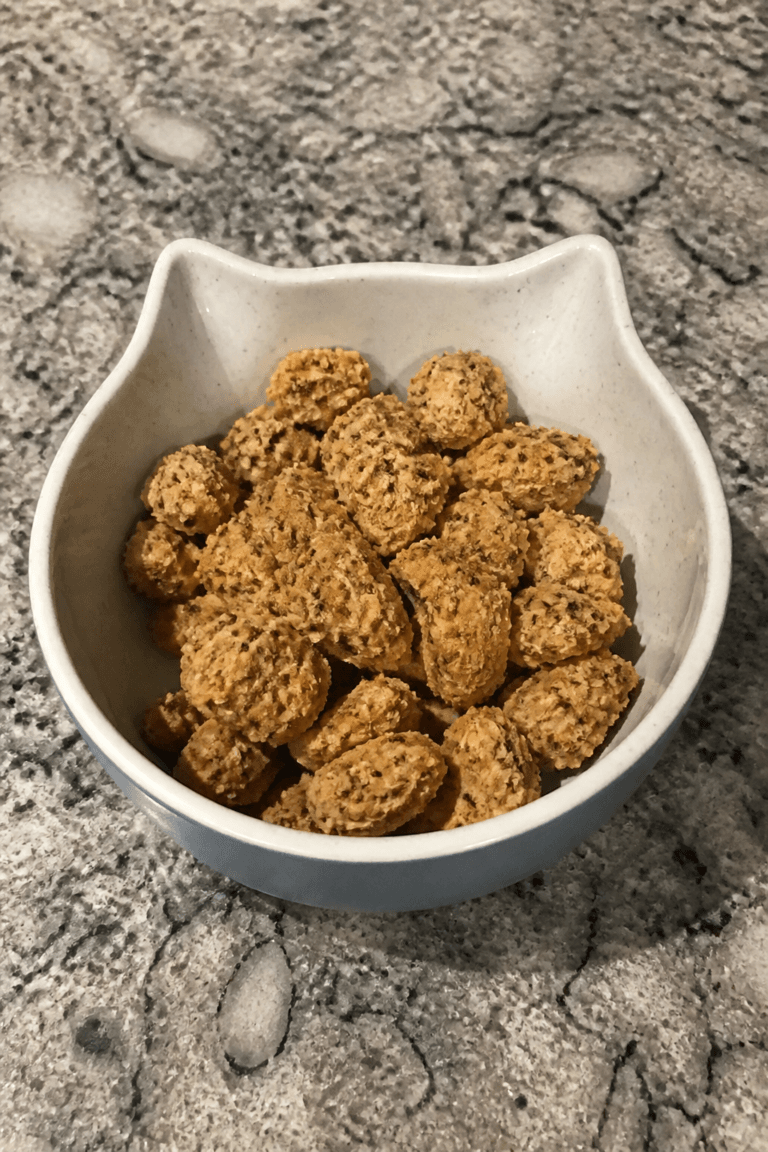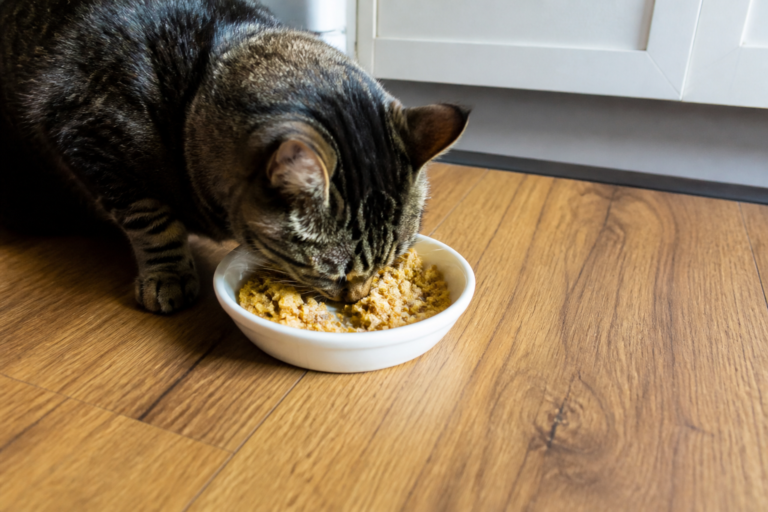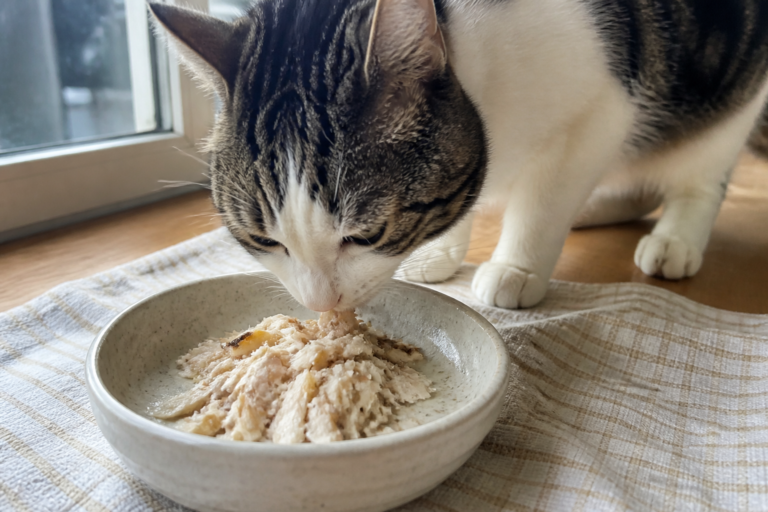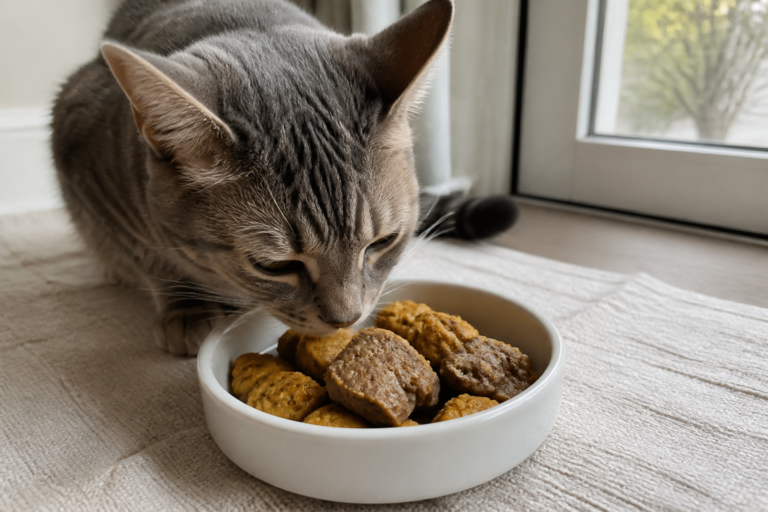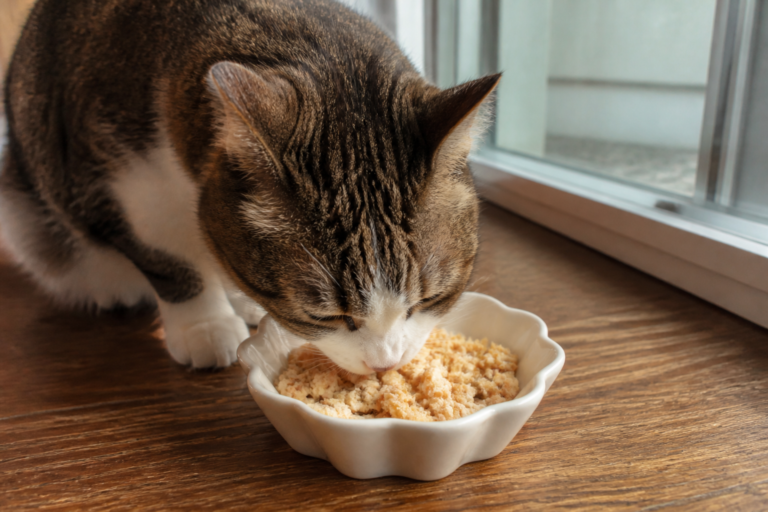
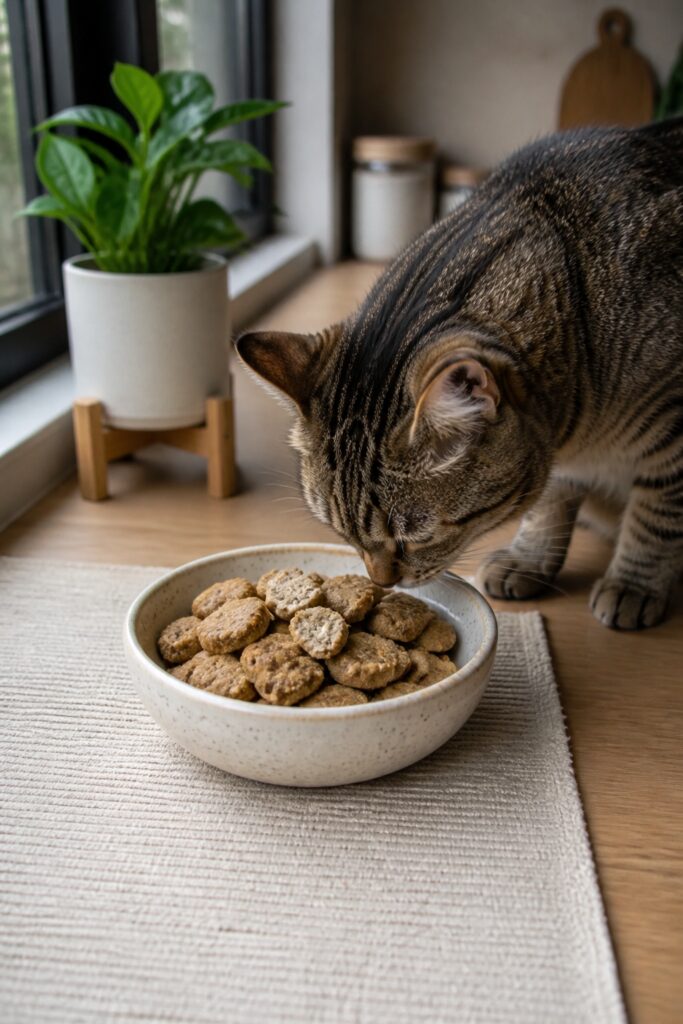
If you want to make a simple homemade treat for your cat, these sardine and oat cat cookies are a great place to start. They are made with cat-friendly ingredients and keep the flavor strong enough to catch a curious nose right away. The texture is soft-crisp, easy to handle, and sized for small feline bites.
Best of all, you can make them at home without any complicated steps.
These cookies are meant for cats, not people, so the recipe focuses on safe ingredients and simple preparation. Sardines bring a strong fish flavor that many cats love, while oats help bind the dough in a gentle, easy-to-digest way. You can use them as an occasional treat, a food topper, or a small reward during training.
Just keep portions modest and make sure they fit your cat’s regular diet.
What You’ll Need
- 1 small can sardines in water, about 3.75 oz, drained well and mashed
- 1/2 cup oat flour, or rolled oats blended into a fine flour
- 1/4 cup plain canned pumpkin, unsweetened
- 1 egg
- 1 to 2 tablespoons water, if needed for texture
Optional for shaping: a little extra oat flour for dusting the counter or your hands. Keep everything plain and simple. Do not add salt, seasoning, oil, butter, or flavorings.
How to Make It
- Preheat the oven to 325°F and line a baking sheet with parchment paper.
- Drain the sardines well and mash them in a mixing bowl until they break down into small pieces.
- Add the pumpkin and egg, then stir until the mixture looks evenly combined.
- Mix in the oat flour a little at a time.
The dough should feel soft but not sticky.
- Add water slowly if the dough seems too dry. If it feels too wet, add a little more oat flour.
- Shape small cookies using about 1 teaspoon of dough for each piece. Flatten them gently so they bake evenly.
- Place the cookies on the baking sheet with a little space between each one.
- Bake for 15 to 18 minutes, or until the cookies feel set and lightly firm at the edges.
- Cool completely before serving them to your cat.
If you want a crunchier cookie, leave them in the turned-off oven for a few extra minutes with the door cracked slightly.
For a softer bite, bake them just until set and let them cool fully on the tray.
Storage Instructions
Store the cookies in an airtight container in the fridge for up to 4 days. Because these treats contain fish and egg, refrigeration matters. Always let them cool fully before sealing them up so moisture does not build inside the container.
For longer storage, freeze the cookies for up to 2 months.
You can freeze them in a single layer first, then move them to a freezer bag or container. That makes it easy to grab only what you need.
Portion the cookies into small servings before storing if that helps with feeding. For most cats, one small cookie at a time is enough.
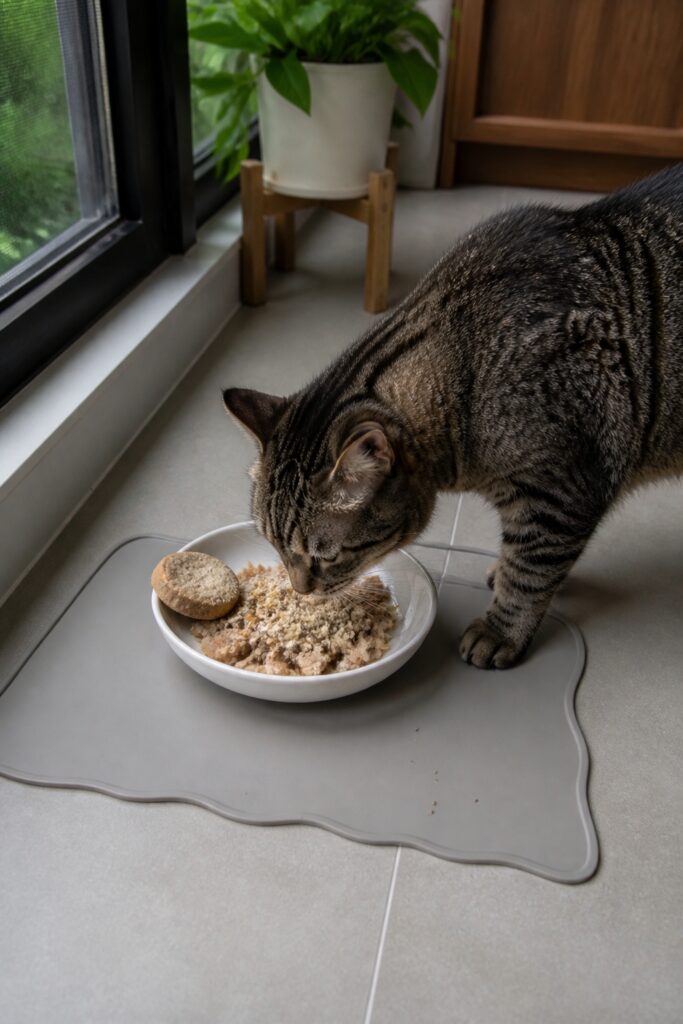
If you use them as a topper, crumble a cookie over a meal instead of giving several at once.
Benefits of This Recipe
This recipe gives your cat a strong fish flavor with simple ingredients. Sardines offer protein, which helps make the treat satisfying and tasty for many cats. Oats and pumpkin add structure without making the recipe heavy or complicated.
The texture is also easy to manage.
A small baked cookie is simple to break into pieces, which helps with portion control. That matters because cat treats should stay small and fit into your cat’s overall meal plan.
Using homemade treats can also help you keep a closer eye on ingredients. You know exactly what went into the batch, and that makes it easier to avoid unnecessary fillers, strong seasonings, or unsafe add-ins.
For many cat owners, that peace of mind is a big benefit on its own.
Pitfalls to Watch Out For
- Do not use sardines packed in oil or with added salt. Plain sardines in water work best for cats.
- Skip onions, garlic, chives, and leeks. These ingredients are not safe for cats.
- Avoid spices and seasoning blends. Cats do not need them, and some mixes include unsafe ingredients.
- Do not add cheese, milk, or heavy dairy. Many cats do not digest dairy well.
- Keep cookie sizes small. Large treats can lead to overeating, especially if your cat gets snacks often.
- Do not serve warm cookies straight from the oven. Let them cool completely first.
- Watch the moisture level. If the dough is too wet, the cookies may stay soft and fall apart. If it is too dry, they may crack and bake unevenly.
Another common mistake is treating homemade cookies like a full meal. These are treats or toppers, not a complete cat diet.
They work best when you keep servings small and balance them with your cat’s regular food.
Recipe Variations
You can make a few simple changes if your cat prefers a different texture or if you want to use what you have on hand. Keep all swaps cat-safe and plain.
- Use salmon instead of sardines if you want a similar fish flavor. Choose plain cooked salmon with no seasoning.
- Swap pumpkin for cooked mashed sweet potato in a small amount if your cat tolerates it well.
- Use whole oats blended into flour if you do not have oat flour already.
- Make mini bite-size dots instead of flat cookies if your cat likes softer, smaller treats.
- For a softer texture, bake for a shorter time and store the cookies in the fridge.
- For a firmer texture, bake a few minutes longer and let them dry in the cooling oven.
If your cat prefers stronger aroma, you can crush a tiny bit of the baked cookie over wet food.
That can make the same recipe feel new without changing the ingredients. Just keep the add-on small so the meal stays balanced.
FAQ
How many sardine and oat cat cookies can I give my cat?
For most cats, start with one small cookie and see how they respond. If your cat tolerates it well, you can offer a second piece later in the day, but keep treats limited and account for them in the rest of the diet.
Can I use canned sardines with bones?
Yes, plain canned sardines with soft edible bones are usually fine for this recipe, as long as they come with no added salt, seasoning, or oil.
Mash them well so the texture stays smooth and easy for your cat to eat.
How do I know if the cookies are safe for my cat?
Check that every ingredient is plain and cat-safe. That means no onion, garlic, chives, leeks, xylitol, chocolate, grapes, raisins, alcohol, caffeine, or heavy seasoning. When in doubt, keep the recipe simple.
Can I freeze these treats in advance?
Yes, freezing works very well for this recipe.
Freeze the cookies in small portions so you can thaw only what you need, and always let them thaw in the fridge rather than at room temperature for too long.
Are these cookies a full meal for cats?
No, these are best used as treats or meal toppers. They do not replace a complete and balanced cat food, so keep them as a small part of your cat’s overall feeding routine.
My cat is a picky eater. How can I make them more appealing?
Try making the cookies smaller and softer, since many cats prefer a delicate texture.
You can also crumble a tiny piece over your cat’s usual food to introduce the flavor without asking them to eat a full cookie right away.