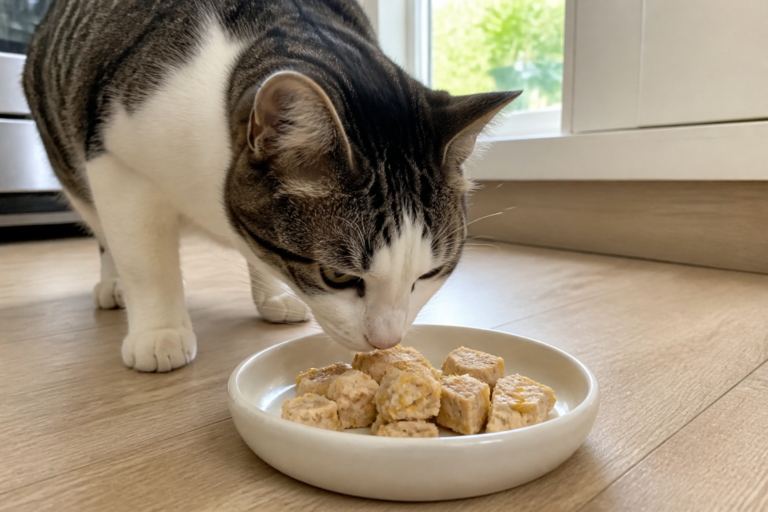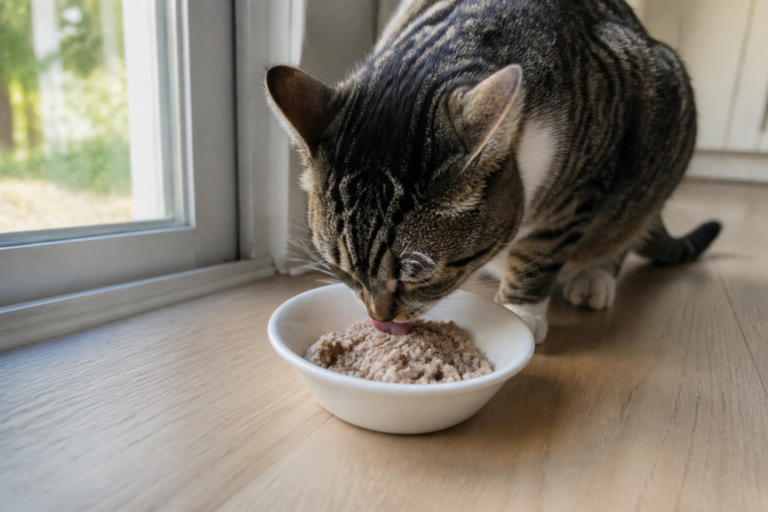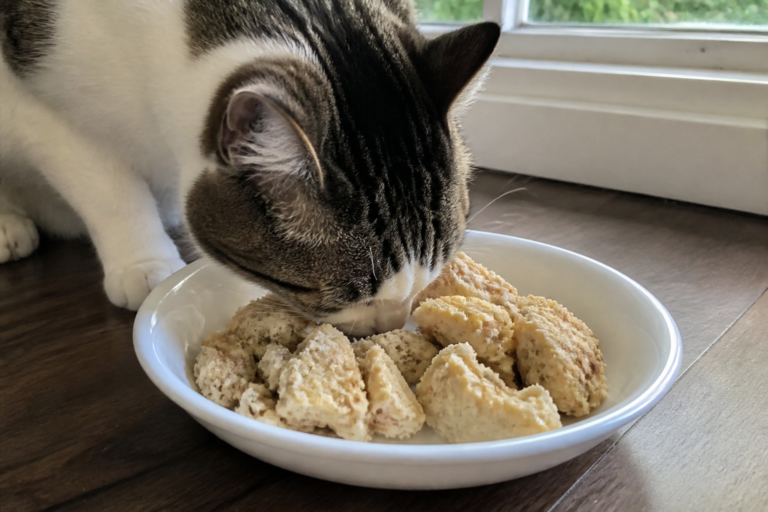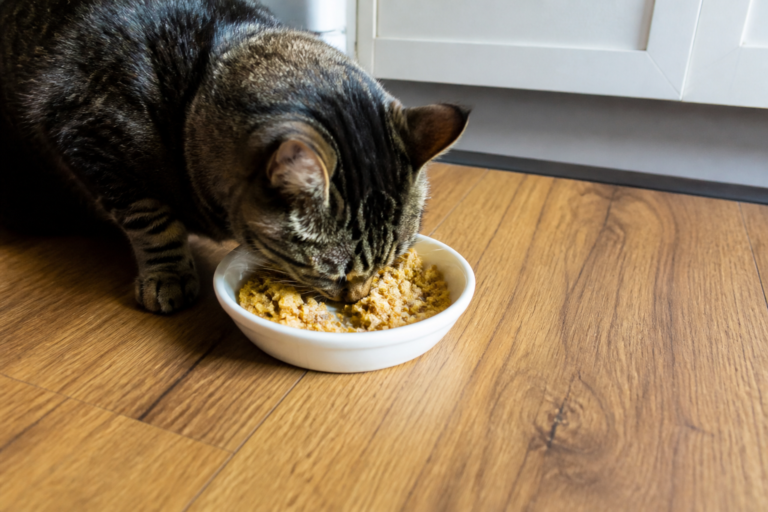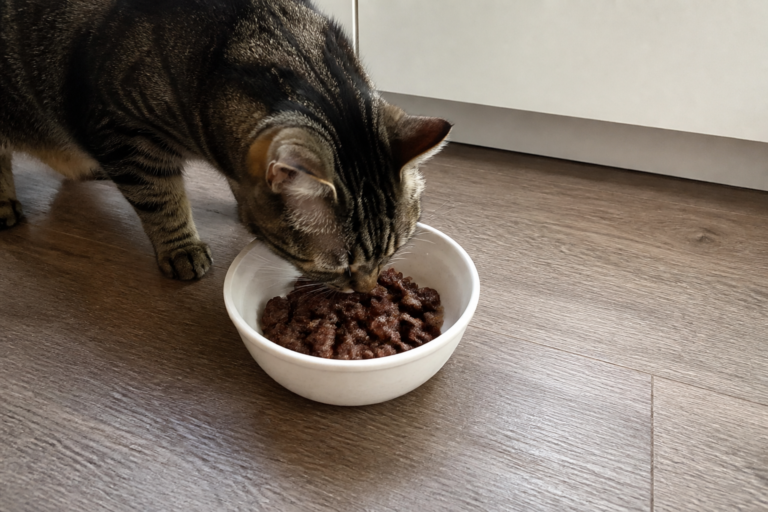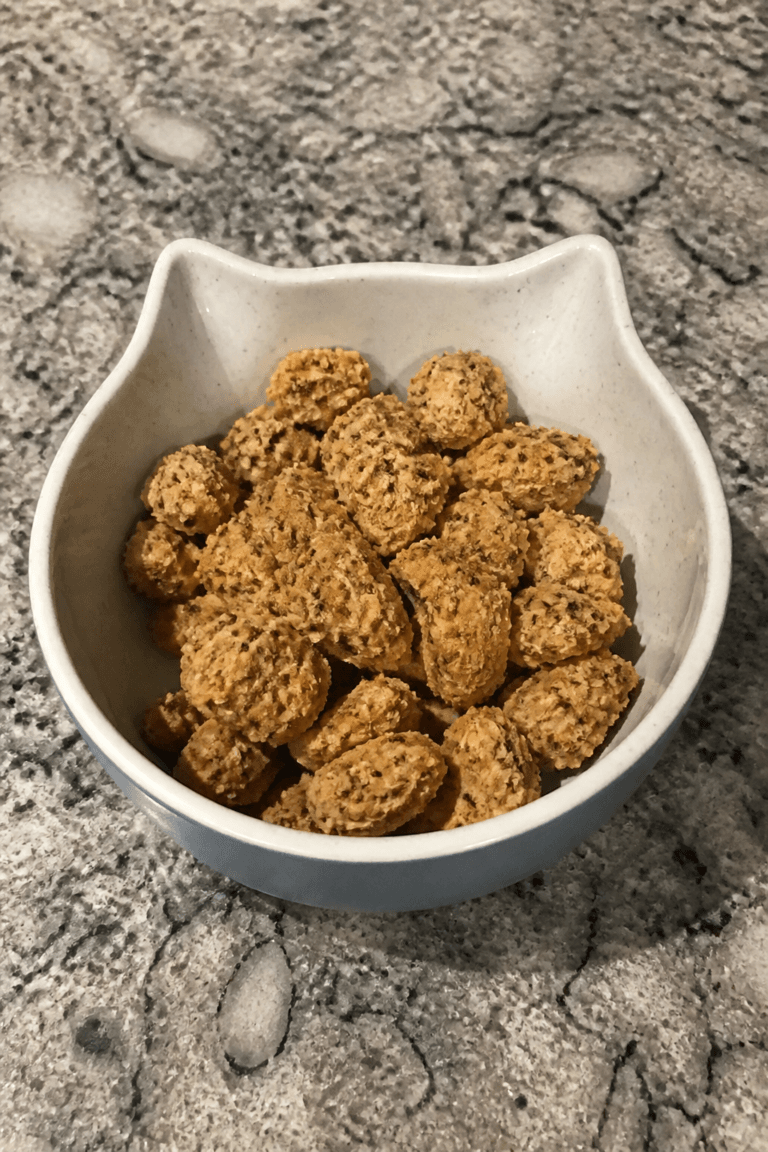
If you want a simple homemade treat for your cat, these Frozen Salmon Yogurt Cat Bites are a fun place to start.
They are cool, bite-sized, and made with ingredients that fit a cat-friendly kitchen. This recipe works best as an occasional treat, not a full meal.
It is also easy to portion, freeze, and serve when your cat deserves something special.
Ingredients
- 1/2 cup cooked salmon, plain and fully cooled, flaked into small pieces
- 1/4 cup plain unsweetened yogurt, preferably low-fat and without added sugar or flavors
- 1 tablespoon water, if needed to thin the mixture
- 1 teaspoon finely chopped catnip or a small pinch of cat-safe garnish, optional
Use only plain salmon with no salt, seasoning, oil, lemon, or butter. Choose yogurt with no added sweeteners or fruit, and keep the amount modest since many cats do better with only a little dairy.
How to Make It
- Prepare the salmon. Cook the salmon fully if it is raw, then let it cool. Remove all bones and skin before using it.
- Flake it finely. Break the salmon into tiny pieces with a fork so your cat can eat the bites easily.
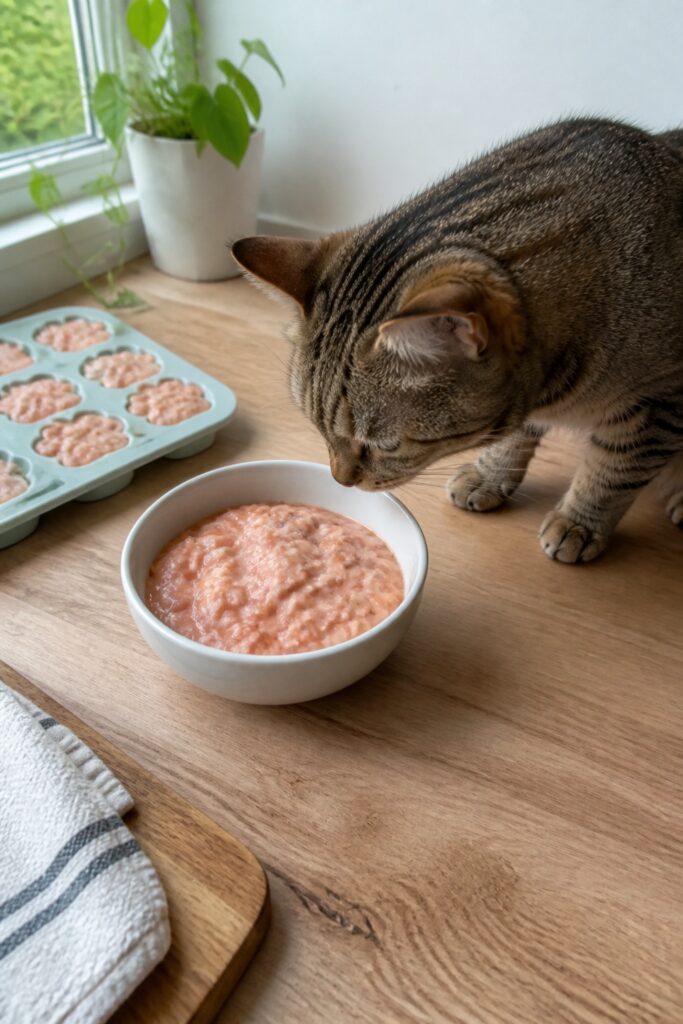
- Mix the base. Stir the salmon together with the plain yogurt in a small bowl.
Add a little water if the mixture feels too thick.
- Add optional catnip. If your cat enjoys catnip, mix in a tiny amount for extra interest. Skip it if your cat does not react well to it.
- Portion the bites. Spoon the mixture into silicone molds, an ice cube tray, or small freezer-safe treat cups. Keep each portion very small.
- Freeze until firm. Place the tray in the freezer for at least 2 to 3 hours, or until the bites are fully set.
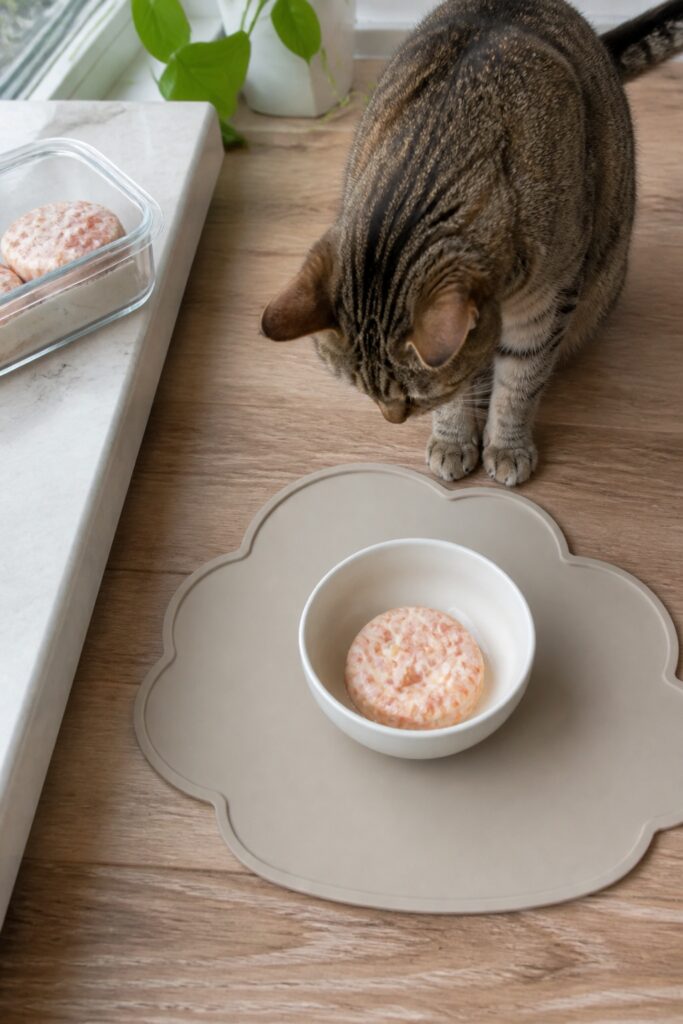
- Serve safely. Pop out one small bite and let it soften for a few minutes before offering it to your cat.
For most cats, one small bite is enough for a treat. You can also break a larger frozen piece into smaller bits if needed.
Storage Instructions
Keep the frozen bites in an airtight container or freezer bag after they set. They stay best in the freezer for about 2 to 3 weeks.
If you want to store them in the fridge, only keep one or two portions there at a time and use them within 24 hours. The yogurt can spoil faster once thawed, so do not leave the treats out at room temperature for long.
For easier serving, portion the mixture into very small molds from the start.
That way you can pull out just one treat instead of thawing more than your cat needs.
Benefits of This Recipe
This recipe gives your cat a simple mix of animal protein and a cool, soft texture.
Salmon brings a strong meaty flavor that many cats enjoy, which can help make homemade treats more appealing.
The recipe also works well as a small snack because the portions stay controlled. That makes it easier to fit treats into your cat’s daily eating plan without overdoing it.
Plain yogurt adds a creamy texture, but the amount stays low so the treat stays light.
That helps you keep the focus on the salmon while still creating a smooth frozen bite.
Because the ingredients are simple, this recipe is easy to recognize and adjust. If your cat prefers softer textures or tiny bites, you can shape the treats to match that preference.
What Not to Do
- Do not use raw salmon. Always cook it fully unless your vet has given you different guidance.
- Do not add seasoning. Skip salt, pepper, garlic, onion, herbs, sauces, and spice blends.
- Do not use sweetened yogurt. Avoid fruit yogurt, vanilla yogurt, and any product with added sugar or artificial sweeteners.
- Do not overdo the dairy. Keep yogurt as a small part of the recipe since many cats do not tolerate large amounts well.
- Do not include bones. Check the salmon carefully so no small bones remain.
- Do not make oversized portions. Large frozen chunks can be hard for cats to chew and can turn into too much food at once.
- Do not leave treats out too long. Once thawed, they should not sit around for hours.
It also helps to remember that treats should stay separate from a cat’s complete diet. These bites are a snack, not a replacement for balanced cat food.
Variations You Can Try
If your cat likes the idea but needs a different flavor, you can make a few cat-safe changes.
- Swap the salmon for cooked chicken. Use plain, shredded chicken for a milder flavor.
- Use tuna in water. Choose tuna with no salt added and drain it well.
Keep it occasional rather than daily.
- Try a smoother texture. Blend the salmon and yogurt for a softer, mousse-like bite.
- Make mini toppers. Freeze the mixture in very small dots to use as a topping over regular cat food.
- Skip the yogurt. If your cat does not do well with dairy, mix the salmon with a little water and freeze it alone.
You can also shape the recipe differently based on your cat’s preferences. Some cats like tiny cubes, while others do better with a crumbly frozen mix that breaks apart fast.
FAQs
How much of this treat can I give my cat?
For most cats, start with one small bite or even half a bite. Treats should stay small and occasional so they do not crowd out your cat’s regular food.
Can I use raw salmon instead of cooked salmon?
It is safer to use fully cooked salmon.
Cooking helps reduce food safety risks and makes it easier to check for bones and texture.
How long do Frozen Salmon Yogurt Cat Bites last in the freezer?
They usually stay good for about 2 to 3 weeks when stored in an airtight container. For the best texture, label the container with the date you made them.
Can I give these to kittens?
Only give them to kittens in very small amounts, and keep treats limited. Kittens need carefully planned nutrition, so their main food should stay a complete kitten diet.
What kind of yogurt is safest for cats?
Use plain, unsweetened yogurt with no fruit, flavoring, or added sweeteners.
Keep the amount small since some cats are sensitive to dairy.
Can I serve the bites straight from the freezer?
Yes, but it helps to let them soften for a few minutes first. That makes the texture easier for your cat to lick and chew.
Can I make these without catnip?
Absolutely. Catnip is optional and only adds extra interest for cats who enjoy it. The recipe works fine without it.