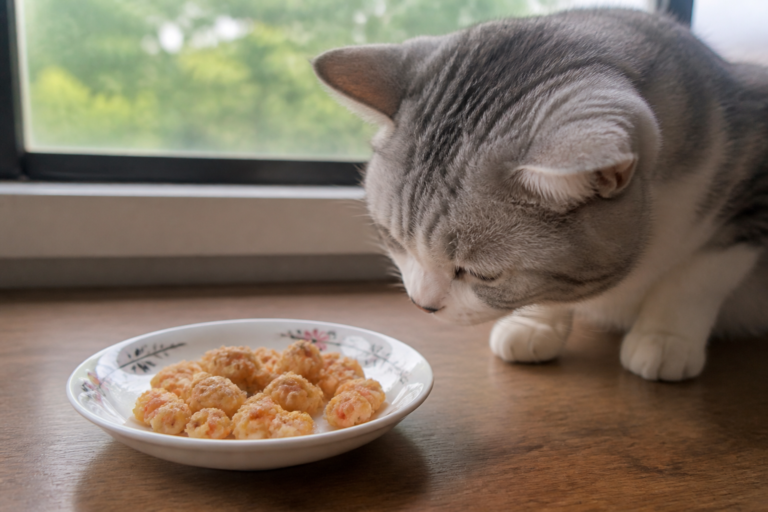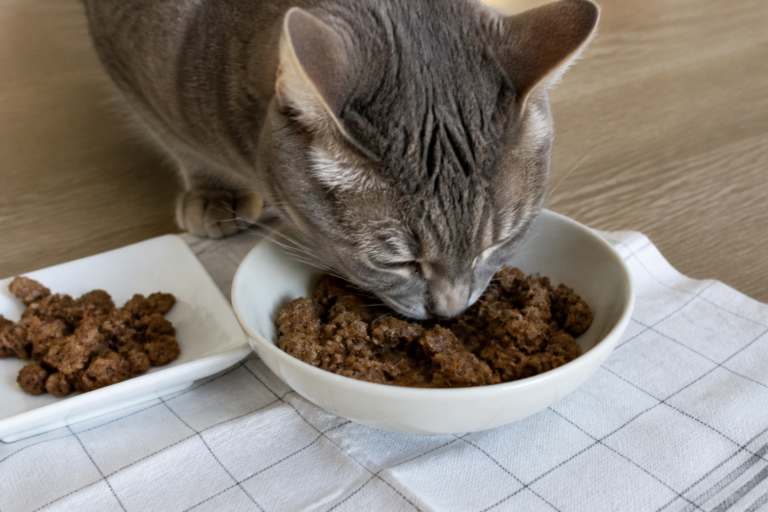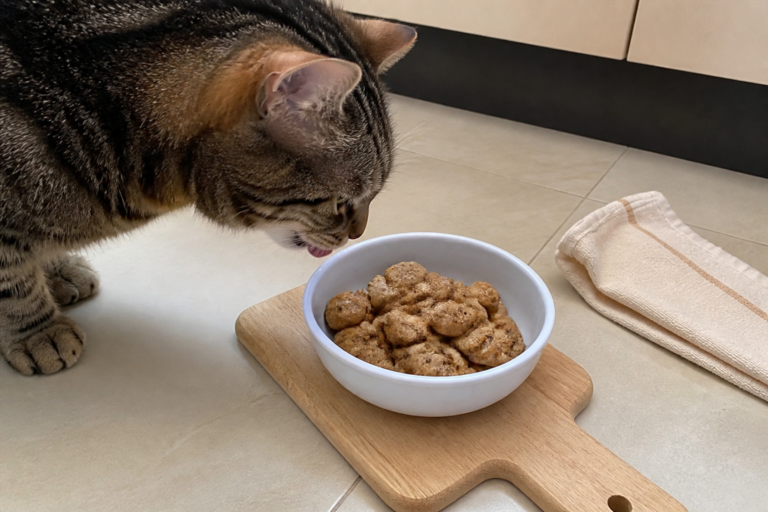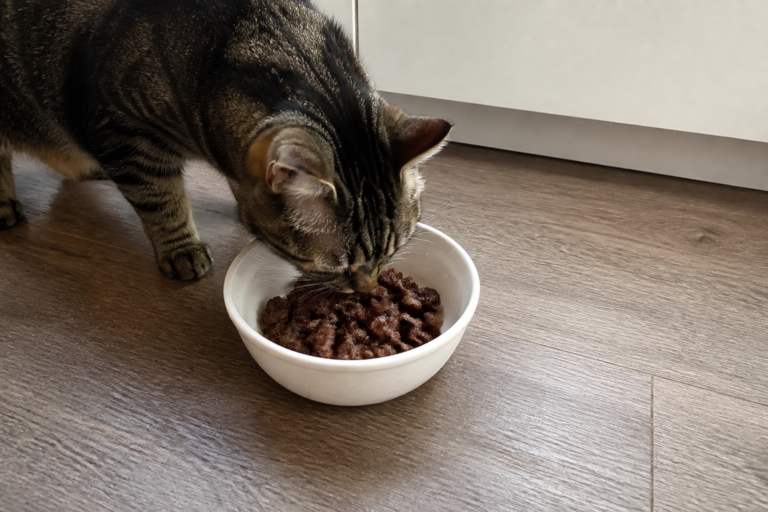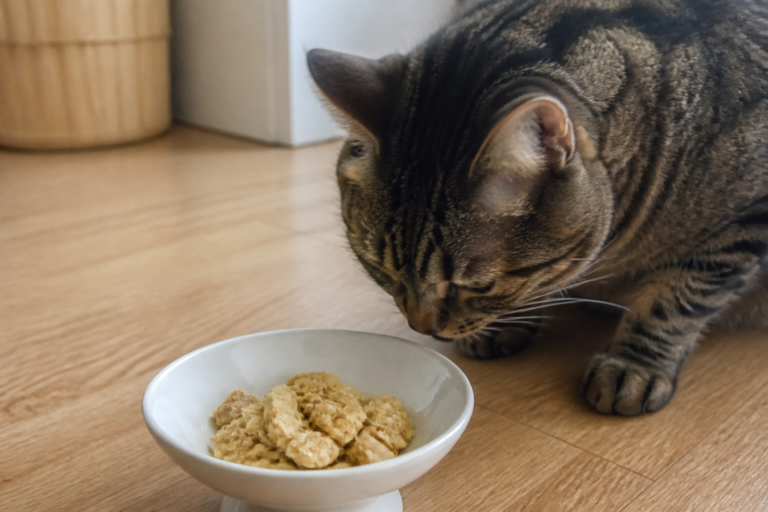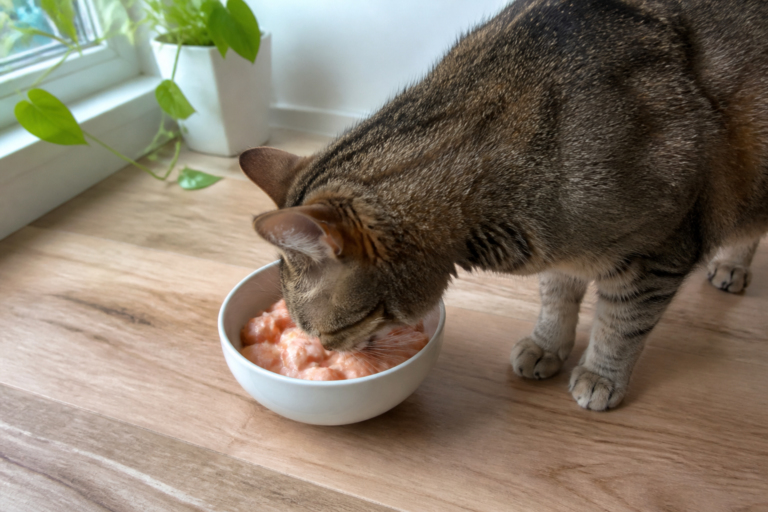
If you want a simple homemade treat for your cat, these Air Fryer Tuna Cat Bites are a great place to start. They are soft, tasty, and made with cat-friendly ingredients you can feel good about serving. This recipe keeps things plain and easy, which is usually best when you are making food for cats at home.
It is also a nice option for pet owners who want a quick batch of small bites for training, topping meals, or giving as an occasional treat.
The texture is light and tender, and the tuna flavor makes these bites especially appealing to many cats. You do not need many ingredients, and the air fryer helps cook them quickly without extra fuss. Just remember that these bites should be treated as a supplementary cat treat, not a full balanced diet.
Ingredients
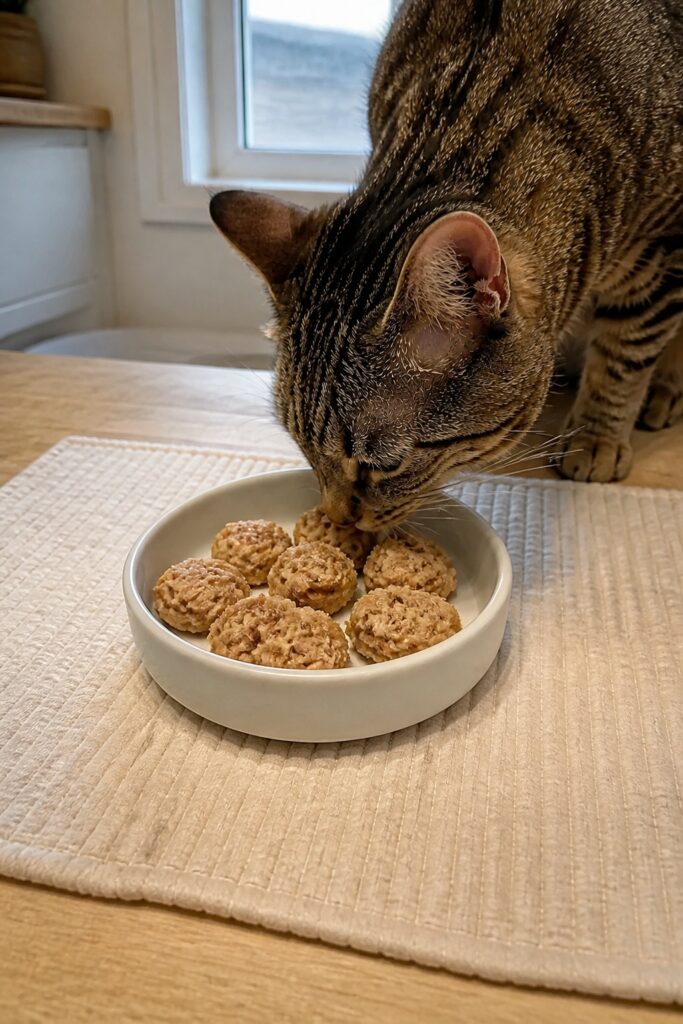
- 1 can tuna in water, 5 ounces, drained well
- 1 large egg
- 1/4 cup oat flour
- 2 tablespoons pumpkin puree, plain and unsweetened
- 1 tablespoon water, as needed for texture
- 1 teaspoon cat-safe dried parsley, optional
Choose tuna packed in water, not oil, and make sure it has no added salt, seasoning, or flavorings.
If your cat has never had pumpkin before, keep the amount small the first time.
Step-by-Step Instructions
- Prep the tuna. Drain the tuna very well and flake it into a mixing bowl with a fork.
- Add the wet ingredients. Crack in the egg and mix in the pumpkin puree until combined.
- Stir in the dry ingredients. Add the oat flour and parsley, if using. Mix until a soft dough forms.
- Adjust the texture. If the mixture feels too dry, add 1 tablespoon of water. It should hold together when pressed.
- Shape the bites. Roll into small balls or press into tiny patties, about the size of a pea or a dime.
Keep them small for cat-sized portions.
- Preheat the air fryer. Set it to 350°F and let it heat for a few minutes.
- Air fry. Place the bites in a single layer in the basket. Cook for 6 to 8 minutes, checking near the end. They should feel firm and lightly golden.
- Cool completely. Let the bites cool before serving.
Cats should never get hot food straight from the air fryer.
If your air fryer runs hot, start checking at 5 minutes. The goal is a cooked, tender bite, not a crunchy snack.
Keeping It Fresh
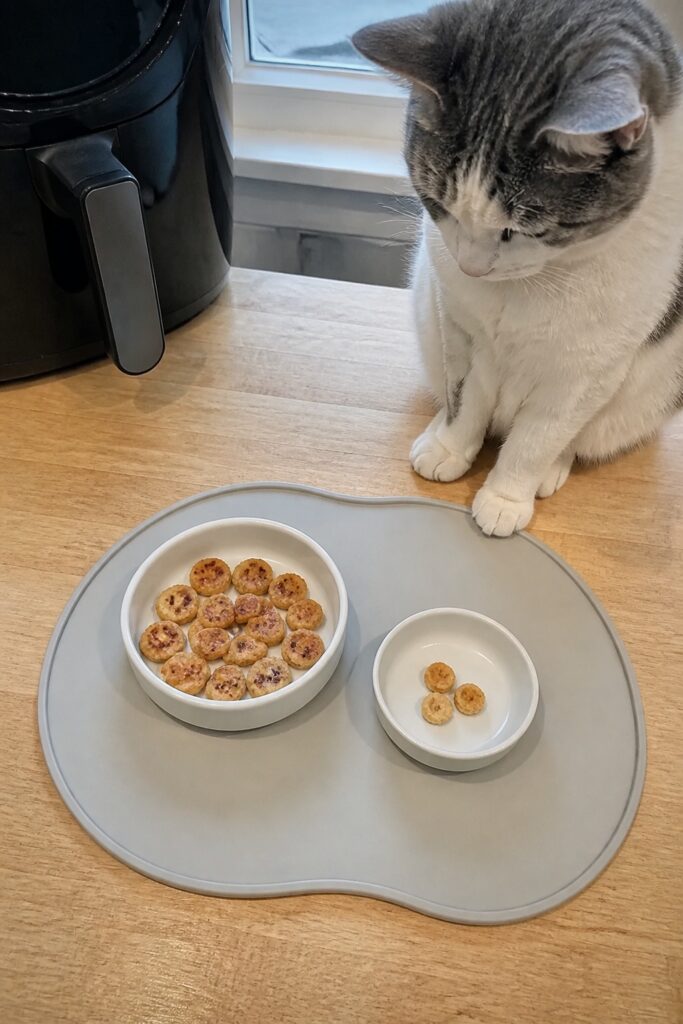
Store leftover tuna cat bites in an airtight container in the refrigerator for up to 3 days. Because this recipe uses egg and fish, it is best to keep the storage window short.
For longer storage, freeze the bites in a single layer first, then move them to a freezer-safe container or bag.
They can usually stay frozen for up to 2 months.
When serving from the freezer, thaw a few bites in the fridge overnight. You can also warm them slightly to room temperature, but always check that they are not hot before giving them to your cat.
Portion them into small servings so you only thaw what you need. That makes it easier to avoid waste and helps you keep your cat’s treat intake under control.
Health Benefits
Tuna offers animal protein, which many cats enjoy and digest well.
Protein supports everyday energy and helps make the treat feel satisfying without needing a long ingredient list.
The egg adds more protein and helps hold the bites together. Oat flour gives a simple binder that is usually easy to work with in small amounts.
Pumpkin can add a little moisture and fiber, which helps improve texture and can make the bites softer. The recipe stays simple, which is useful when you want a homemade snack that does not rely on heavy seasoning or processed fillers.
Even so, these bites should stay a small part of your cat’s diet.
Balanced cat nutrition still needs a complete and appropriate main food, so use this recipe as a treat, topper, or occasional snack.
Common Mistakes to Avoid
- Using tuna with added salt or seasoning. Plain tuna in water works best for cats.
- Adding onion or garlic. These ingredients are unsafe for cats and should never go into pet recipes.
- Making the bites too large. Keep them small so they are easy to chew and portion.
- Overcooking. Air fryers can dry food out fast, so check early and remove the bites once firm.
- Serving them too hot. Always cool cat food before offering it.
- Relying on treats as a full meal. Homemade treats do not replace complete cat food.
- Using too much pumpkin or flour. Too much binder can make the bites dense and less appealing.
If your cat has a sensitive stomach or is new to fish-based treats, start with just one small bite and watch how they do before serving more.
Recipe Variations
You can adjust this recipe a few ways while still keeping it cat-safe. The main goal is to keep the ingredients simple, mild, and easy to digest.
- Chicken swap: Replace tuna with cooked, finely shredded plain chicken.
- Salmon version: Use plain cooked salmon in place of tuna for a different fish flavor.
- Softer texture: Add a little more pumpkin puree and make the bites more like mini soft morsels.
- Crunchier edges: Air fry for an extra minute or two, but watch closely so they do not dry out.
- Extra tiny training treats: Flatten the dough and cut it into very small pieces before cooking.
If you want to keep the recipe as simple as possible, you can skip the parsley entirely. Plain is often the safest and easiest choice for cats.
FAQ
How many Air Fryer Tuna Cat Bites can I give my cat?
Start with 1 to 2 small bites as an occasional treat.
The right amount depends on your cat’s size, daily food intake, and how often you give treats. Keep treats to a small part of the day’s total calories.
Can I store these in the fridge?
Yes. Keep them in a sealed container in the refrigerator for up to 3 days.
Make sure they are fully cooled before storing so moisture does not build up.
Can I freeze Tuna Cat Bites?
Yes, freezing works well. Freeze them in a single layer first, then transfer them to a freezer-safe bag or container. They usually keep well for about 2 months.
Is canned tuna safe for cats?
Plain tuna in water can work as an occasional ingredient in cat treats.
Choose tuna with no added salt, onion, garlic, or other seasonings, and do not use tuna in oil.
Can I make these without egg?
You can try a small amount of extra pumpkin or a little more oat flour to help bind the mixture, but the texture may change. Egg helps the bites hold together, so test a small batch first if you want to skip it.
Should I serve these as a meal or a treat?
Serve them as a treat or topper, not as a complete meal. Cats need balanced nutrition from food that is designed to meet their daily needs, so these bites should stay in the snack category.
What if my cat does not like tuna?
Try a chicken or salmon version instead.
Some cats prefer poultry over fish, and a simple swap can make the recipe more appealing.
Air Fryer Tuna Cat Bites are an easy way to make a homemade cat treat with ingredients you can recognize. Keep the portions small, the seasoning simple, and the storage fresh, and you will have a handy little recipe your cat may love.