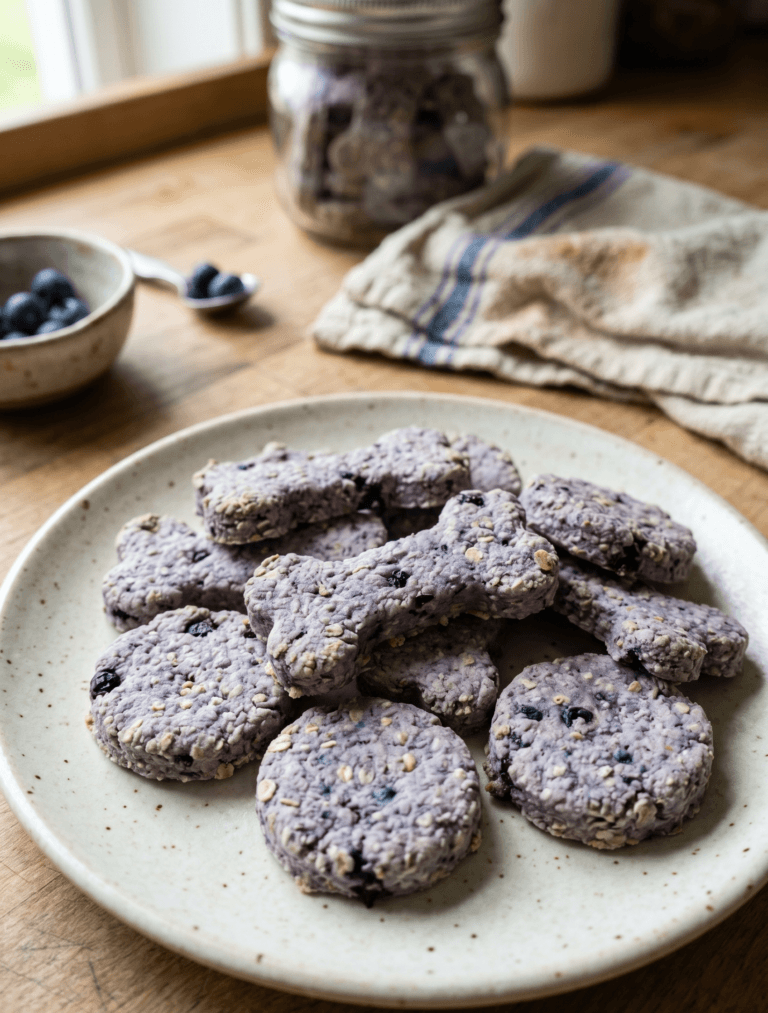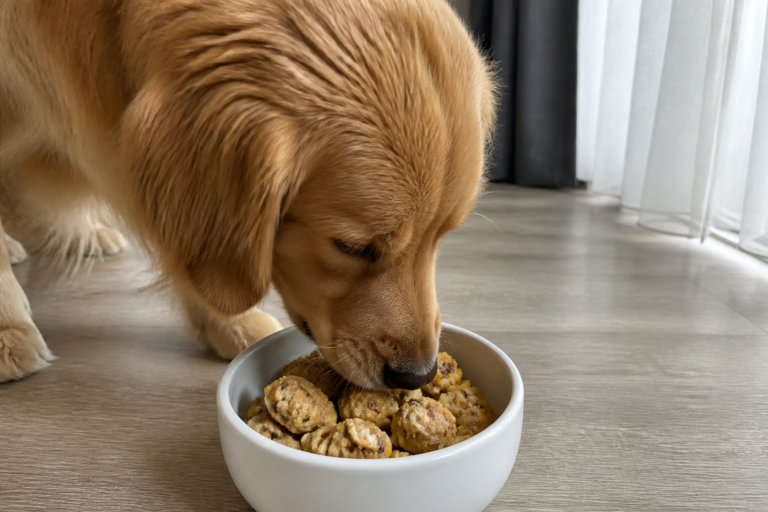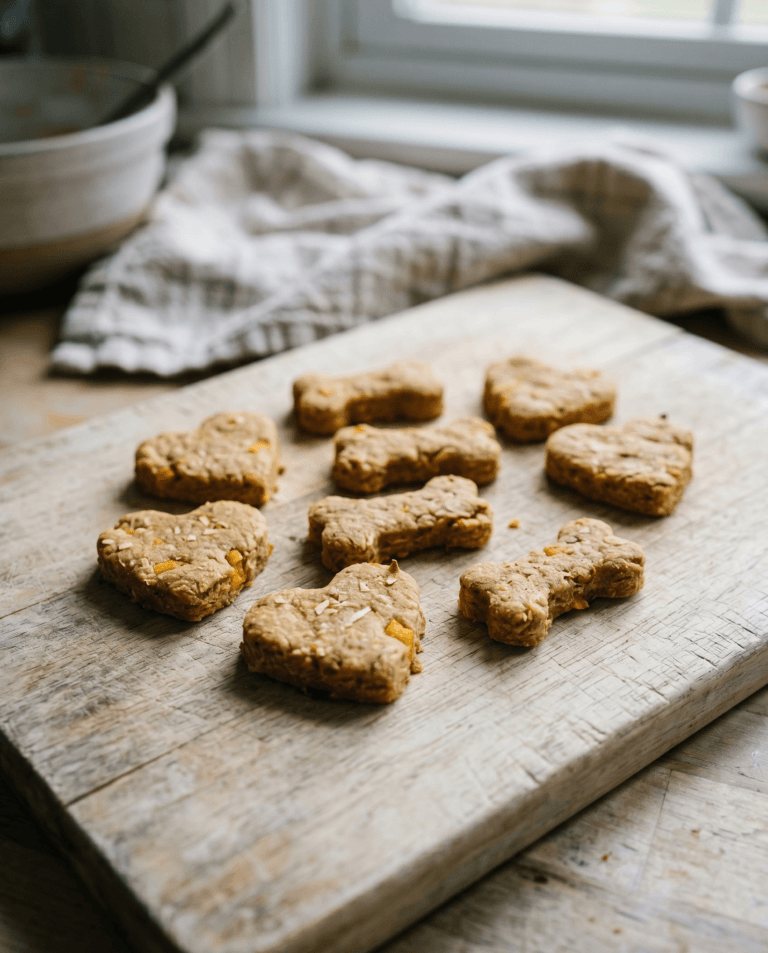
Short on time but want a tasty, healthy reward for your pup? These blueberry oat soft dog treats bake up fast, hold together well during training, and pack nutrients dogs love.
They use minimal, dog-safe ingredients and have a soft texture that makes them perfect for quick sessions.
Let’s get your furry protégé excited with a snack that’s wholesome and downright drool-worthy.
Ingredients
Here’s what you need for about 40 small, soft treats:
- 1 cup rolled oats, finely ground into flour
- 1/2 cup oat flour or whole wheat flour (optional)
- 1 cup fresh or frozen blueberries, thawed and drained
- 1/2 cup plain Greek yogurt (unsweetened, non-fat)
- 1 large egg
- 2 tablespoons natural peanut butter, no xylitol
- 1 tablespoon honey (optional, use sparingly)
- 1/2 teaspoon cinnamon (optional, for flavor)
Why these ingredients? Oats give structure and fiber, blueberries add antioxidants, Greek yogurt adds protein and probiotics, and peanut butter boosts flavor.
Keep peanut butter free of xylitol and avoid added sugars. If your vet advises against dairy for your dog, skip the yogurt and add a little water or unsweetened applesauce instead.
Ingredients to avoid
Never include chocolate, xylitol, grapes, raisins, macadamia nuts, onions, or garlic. These items cause toxicity or digestive upset in dogs.
Also avoid high levels of fat or sugar that can trigger pancreatitis in sensitive pups.
Preparation Steps
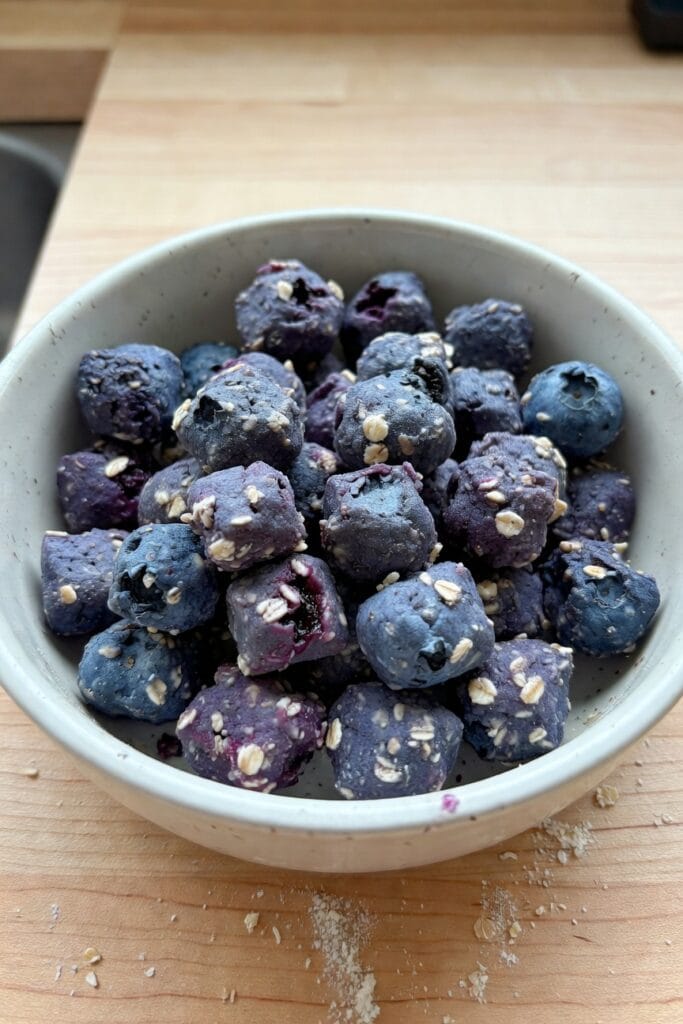
Follow these simple steps for soft, bakeable treats that break into training-friendly bits.
- Preheat your oven to 350 F (175 C). Line a baking sheet with parchment paper.
- Grind the rolled oats in a blender or food processor until they reach a flour-like texture.
- In a bowl, mix oat flour and any additional flour you choose.
- Mash the blueberries slightly with a fork, then add Greek yogurt, egg, peanut butter, and honey. Stir until smooth.
- Combine wet and dry ingredients. Mix until a soft dough forms. If it feels too sticky, add a tablespoon of oat flour at a time until manageable.
- Roll dough into small balls – about the size of a marble for tiny dogs, or a pea for larger ones. Press gently to flatten for even baking.
- Bake for 10 to 12 minutes, or until just set. The treats should stay soft, so don’t overbake.
- Cool completely on a wire rack before offering to your dog.
Use a small cookie scoop or piping bag to make uniform pieces for training. Dogs don’t care about aesthetics, but uniform size helps with consistent calorie control.
Texture tips
If you want an even softer treat, reduce baking time by a minute or two and let them cool fully – they continue to firm as they cool.
For chewier treats, add 1-2 tablespoons of oat flour. If you need a firmer treat for large dogs, swap some yogurt for mashed banana or canned pumpkin to change moisture content.
Nutritional Benefits for Dogs
Dogs benefit from these treats in practical ways.
- Blueberries provide antioxidants, which support cellular health and immune function.
- Oats offer soluble fiber that helps digestion and keeps stools regular.
- Greek yogurt contributes protein and probiotics, which help gut flora and can aid digestion for many dogs.
Small training treats should be low in calories and high in reward value. These treats hit that balance when served in small pieces.
FYI, treats should make up no more than 10% of your dog’s daily calories, so adjust portion size accordingly.
IMO, homemade treats let you control quality and avoid mystery ingredients from store-bought snacks.
Serving Suggestions
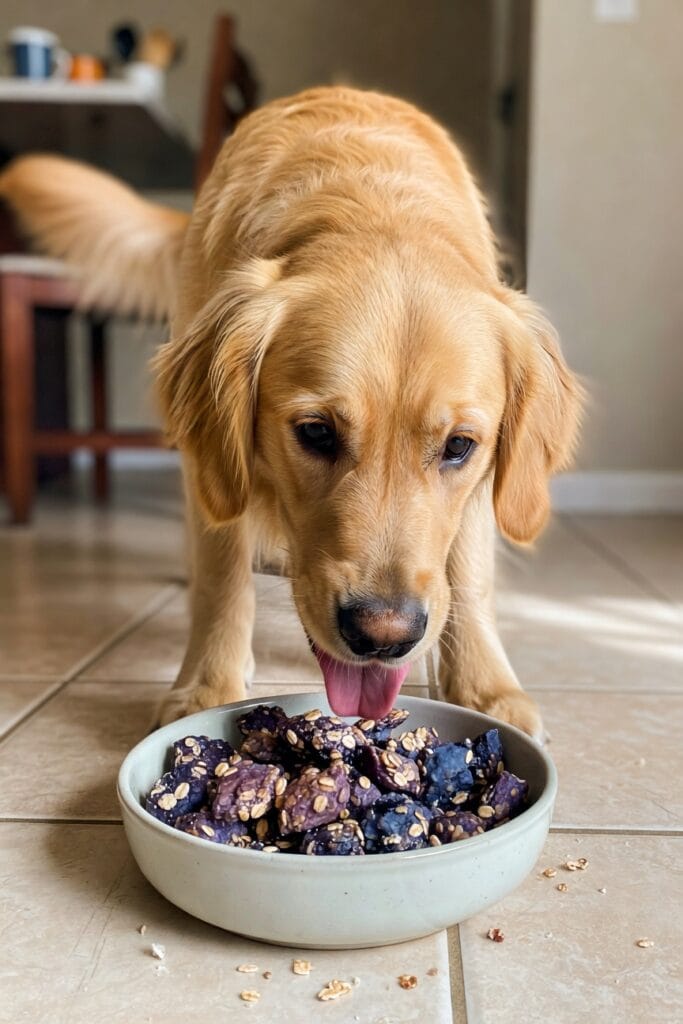
Training sessions demand tiny, irresistible bites that your dog will work for without slowing down.
Break these treats into pea-sized pieces for quick reinforcement. Use larger pieces for longer reward phases.
Offer treats as a high-value reward during leash training, recall drills, or rough performance training.
Blueberries may stain light-colored carpets, so toss a training towel down if your dog is a messy eater.
Pairing ideas
- Use during clicker training to mark and reward quick behaviors.
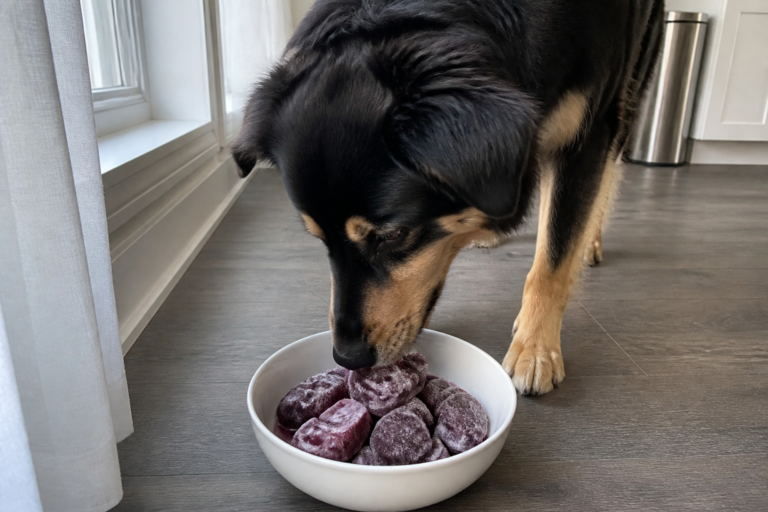
- Freeze a batch for a cool, long-lasting treat on hot days.
- Crumble a treat over your dog’s dry food to boost interest at mealtime.
Storage Tips
Store treats in an airtight container at room temperature for up to 3 days. Refrigerate for up to 7 days, especially if you use yogurt.
For longer storage, freeze treats in a single layer on a tray until solid, then transfer to a freezer bag for up to 3 months.
Thaw frozen treats in the fridge or at room temperature before serving. FYI, freezing keeps probiotics in yogurt more stable than prolonged room temperature storage.
Batch prep strategy
Make a double batch on weekends if you train daily. Freeze most of them and keep a small jar in the fridge for the week. Label the bag with the date so you rotate older batches first.
Ingredient Swaps and Variations
Want to switch things up? Here are safe swaps and tasty variations to keep your dog interested.
- Substitute plain cottage cheese or unsweetened applesauce if your dog cannot tolerate yogurt.
- Use mashed banana instead of honey for natural sweetness and potassium.
- Swap peanut butter for sunflower seed butter if your dog has a nut allergy, and always check the label for xylitol.
- Mix in a tablespoon of ground flaxseed for omega-3 fatty acids and extra fiber.
Keep new ingredients limited at first to watch for food sensitivities. Introduce one change at a time so you know how your dog reacts.
FAQs
Can puppies eat these blueberry oat treats?
Yes, puppies can enjoy these treats in small amounts. Adjust the treat size to tiny pieces and avoid giving too many calories. Always consult your vet before making major dietary changes for puppies.
How many treats can I give my dog per day?
Treats should make up no more than 10% of your dog’s daily calories. For an average 30-pound dog, that usually equals about 6 to 10 small training pieces per day. Tailor portions based on your dog’s size, activity level, and overall diet.
Are frozen treats safe for dogs?
Yes, frozen treats make great enrichment and help soothe teething puppies. Thaw partially if your dog has weak teeth, and always supervise when giving very hard or large frozen pieces.
Can I use canned blueberries or jam?
Do not use jam or sweetened blueberry preserves. Canned blueberries in water or plain frozen blueberries work fine as long as they contain no added sugars or sweeteners. Always check labels.
My dog has a sensitive stomach, any tips?
If your dog has a sensitive stomach, start with a tiny amount and watch for loose stools or vomiting. Consider using plain pumpkin puree as a binder instead of yogurt, and skip honey. Consult your vet for tailored advice.
What if my dog is allergic to oats?
If your dog reacts to oats, substitute with rice flour or oat-free gluten-free flour alternatives. Make changes gradually and monitor for allergic reactions like itching or ear infections.