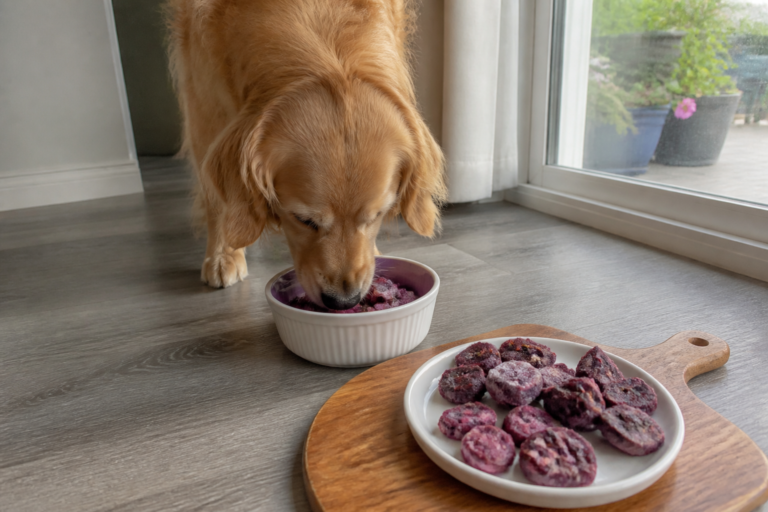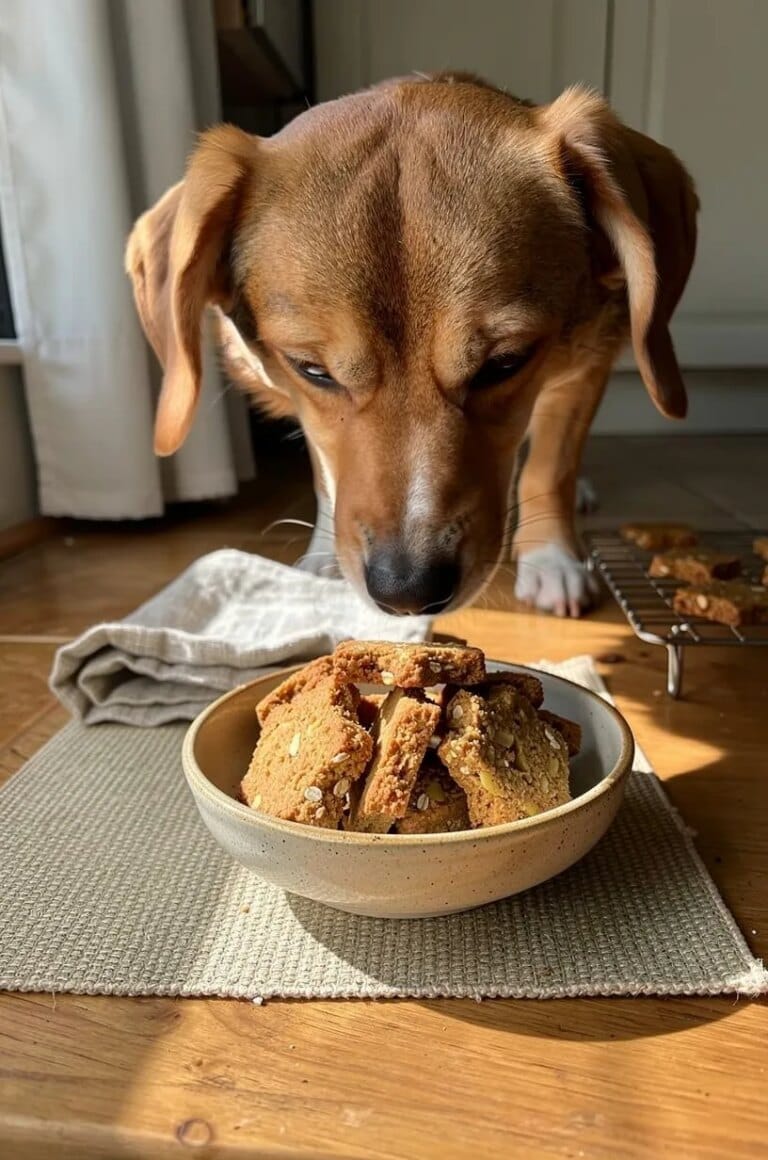
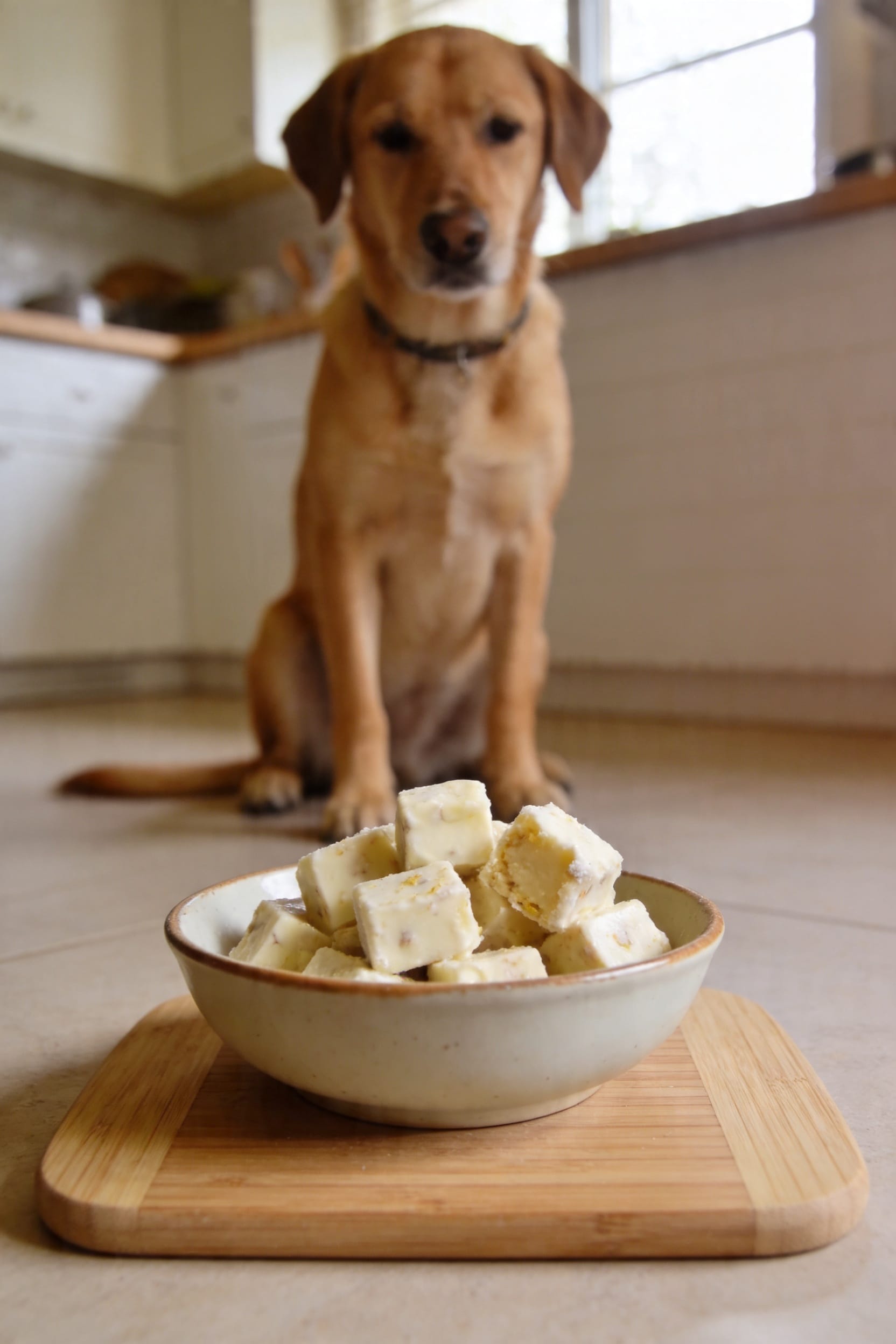
Cool, simple, and made just for your dog, these Pear Ginger Frozen Dog Treats are a fresh way to reward your pup on warm days.
They blend gentle fruit flavor with a touch of dog-safe ginger to help settle tummies. This recipe focuses on dog-friendly ingredients and easy preparation so pet owners can whip up a batch quickly.
What You’ll Need
- 2 ripe pears, peeled, cored, and chopped (about 1 1/2 cups)
- 1 cup plain low-fat yogurt (unsweetened, no xylitol)
- 1 tablespoon fresh ginger, grated (use less if dog is small)
- 1 tablespoon water or unsalted chicken broth for thinning, if needed
- Optional: 1/4 cup mashed banana or 1/4 cup plain canned pumpkin for texture
Instructions
- Prepare the fruit. Peel, core, and chop the pears into chunks so they blend easily.
- Blend ingredients. Add pears, yogurt, and grated ginger to a blender.
Add water or unsalted chicken broth if the mix is too thick.
- Check texture. Blend until smooth or slightly chunky depending on your dog’s preference. Stop and scrape down the sides as needed.
- Taste test for safety. Smell and inspect the mixture. It should look fresh and creamy. Do not taste if you used chicken broth with added salt.
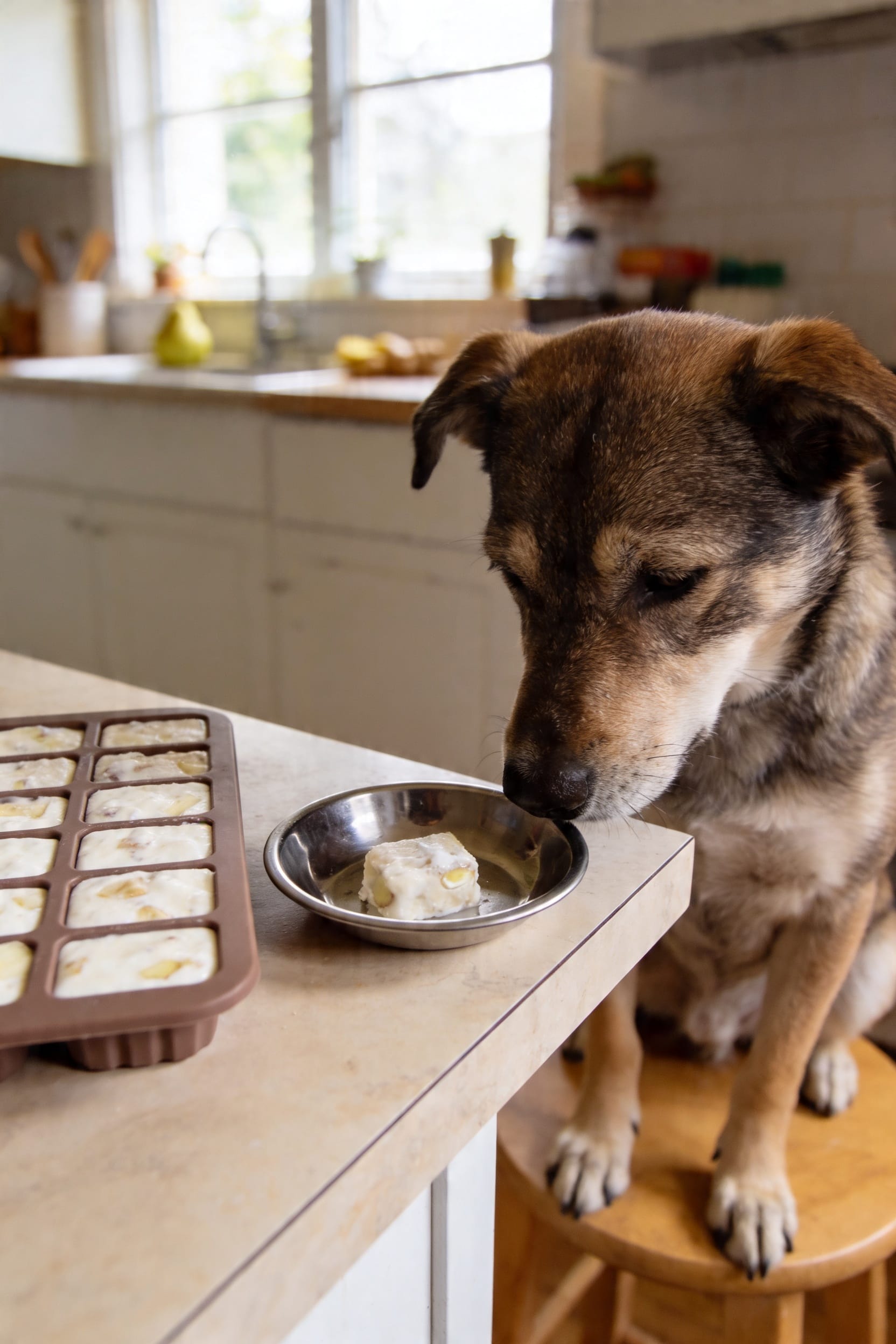
- Portion into molds. Spoon the mixture into silicone molds, ice cube trays, or small paper cups. Leave a little space at the top for expansion.
- Freeze. Place molds flat in the freezer for at least 4 hours or until solid.
- Serve safely. Pop treats out of molds and offer one as a cool snack. Adjust portion size by your dog’s weight and dietary needs.
How to Store
Place frozen treats in an airtight container or freezer-safe bag for storage. Use within 2 to 3 months for best flavor and freshness.
For daily use, thaw a treat in the refrigerator overnight or at room temperature for 10 to 15 minutes before serving.
Portion guidance helps prevent overfeeding. Small dogs can have one small cube, medium dogs one to two, and large dogs two to three, depending on their overall diet. Always adjust portions into your dog’s daily calorie plan.
Benefits of This Recipe
- Low-fat and light so it suits dogs that need a gentle snack.
- Pear fiber supports digestion and adds natural sweetness without added sugar.
- Yogurt adds probiotics when tolerated, which can support gut health and digestion.
- Freezing creates enrichment by slowing chewing and keeping dogs entertained longer.
What Not to Do
- Do not add ingredients toxic to dogs such as chocolate, grapes, raisins, onions, garlic, or anything containing xylitol.
- Do not oversalt or use salted broths.
Excessive salt harms dogs.
- Avoid large amounts of ginger for very small or sensitive dogs. Start with less and watch for stomach upset.
- Do not serve whole frozen blocks to puppies or small dogs without supervision. Large frozen pieces can be a choking hazard.
Alternatives
- Swap pear for apple (peeled and cored) if your dog prefers apples.
- Use plain canned pumpkin instead of part of the pear for a smoother, fiber-rich texture.
- Replace yogurt with plain kefir if your dog tolerates dairy better in that form.
- Swap water for unsalted chicken or beef broth for extra flavor, but use low-sodium, dog-safe options only.
FAQs
How long do these treats last in the freezer?
Stored in an airtight container, these treats keep well for about 2 to 3 months.
Beyond that they may lose some flavor and texture but remain safe if continuously frozen.
How many treats can I give my dog each day?
That depends on your dog’s size and daily calorie needs. As a guideline, offer one small cube for small dogs, one to two for medium dogs, and two to three for large dogs. Include these treats in your dog’s daily calorie count to avoid overfeeding.
Is ginger safe for dogs?
Small amounts of fresh ginger are generally safe and can help with mild stomach upset in some dogs.
Start with a small amount and watch for any changes. Avoid ginger for dogs with certain medical conditions or those on medications without talking to your veterinarian.
Can I use regular yogurt with sugar?
Do not use sweetened yogurts. Choose plain, unsweetened yogurt with no artificial sweeteners.
Sweetened or flavored varieties often contain added sugars or xylitol which are unsafe for dogs.
Can puppies eat these treats?
Puppies can enjoy these treats in small amounts, but supervise them with frozen pieces to prevent choking. Check with your vet about appropriate portion sizes for very young puppies.