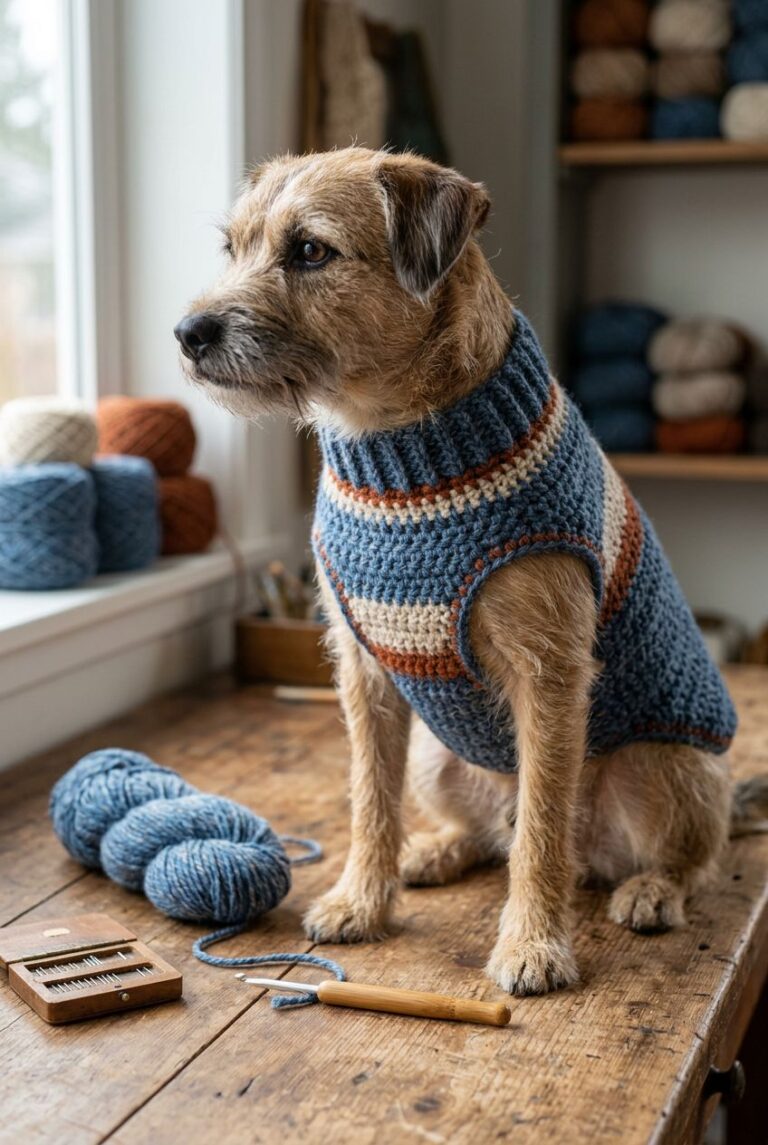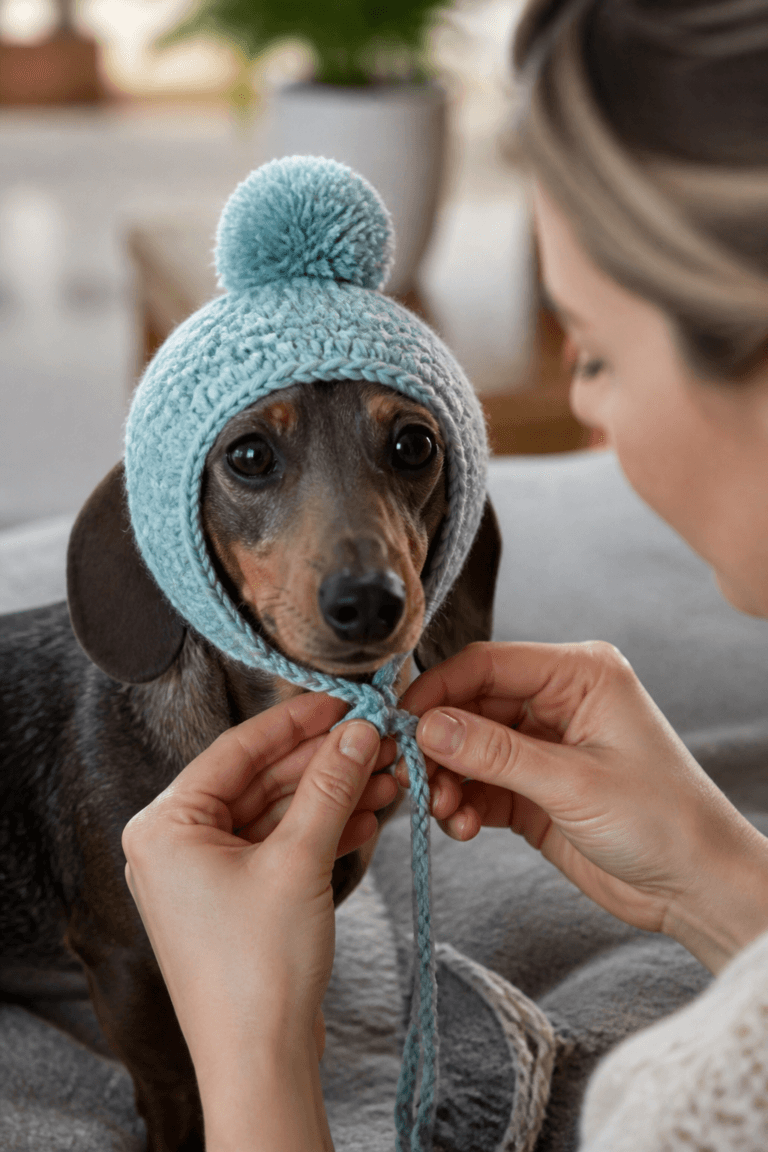
Every dog owner wants to keep their pup warm and stylish. A dog sweater crochet pattern gives you full control over the fit, yarn, and look of the final piece.
Whether your dog is a tiny Chihuahua or a stocky French Bulldog, crocheting a sweater at home is easier than most people think.
In this guide, we will walk you through everything you need to get started.
What You Need Before You Start
Before you pick up your hook, gather the right supplies. Using the correct tools makes the process much smoother.
| Supply | Recommended Option |
|---|---|
| Crochet hook size | 4.0 mm to 5.5 mm (varies by yarn weight) |
| Yarn type | Worsted weight yarn or DK weight yarn |
| Yarn fiber | Acrylic, cotton, or wool blend |
| Measuring tape | Flexible fabric tape for dog measurements |
| Stitch markers | Any type to track rounds |
| Yarn needle | For weaving in ends |
Choose yarn that is machine washable. Dog sweaters get dirty fast, and hand-washing every time is not practical.
How to Measure Your Dog for a Crochet Pattern
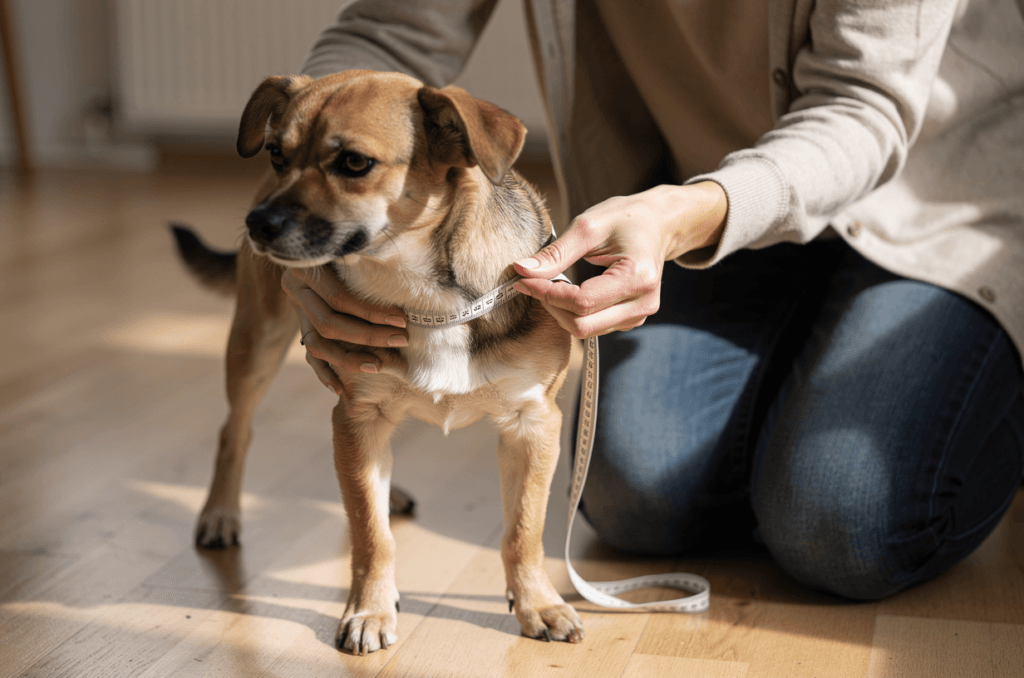
Getting the measurements right is the most important step. A sweater that is too tight will restrict movement, and one that is too loose will slip around.
Take these three measurements before you start:
- Back length (from the base of the neck to the base of the tail)
- Chest girth (the widest part of the chest, just behind the front legs)
- Neck girth (around the base of the neck)
Write these numbers down and compare them to the size chart in your chosen free dog sweater crochet pattern before you cast on.
Choosing the Right Crochet Stitch for a Dog Sweater
The stitch you choose affects how stretchy and warm the sweater turns out. Some stitches work better for small dogs that need more flexibility, while others are great for creating a thicker fabric for cold-weather breeds.
Single Crochet Stitch
Single crochet creates a dense, sturdy fabric. It is great for beginners and produces a warm sweater. The downside is that it has less stretch, so sizing accuracy really matters.
Half Double Crochet Stitch
Half double crochet gives you a slightly looser fabric with a bit more drape. It works up faster than single crochet and still holds its shape well. Many popular easy dog sweater crochet patterns use this stitch.
Ribbing Technique
Ribbing is commonly used at the neck, hem, and leg openings of dog sweaters. It is usually made with front post and back post double crochet stitches alternated in rows.
This creates that stretchy, fitted look that helps the sweater stay in place on your dog’s body.
Step-by-Step Dog Sweater Crochet Pattern (Basic Version)
This basic pattern works for small to medium dogs. Adjust the stitch count based on your dog’s measurements.
Step 1: Start at the Neck
Chain 30 stitches (or adjust to your dog’s neck girth) and join with a slip stitch to form a ring. Work 10 rows of ribbing using alternating front post and back post double crochet.
Step 2: Build the Body
Switch to half double crochet worked in the round. Increase evenly across the first round to expand from the neck to the chest width.
Continue crocheting in rounds until you reach the point just behind the front legs.
Step 3: Create the Leg Openings
On the next round, chain 8 stitches on each side where the front legs will go. Skip the same number of stitches to form the armhole.
Continue working the body in the round, crocheting into the chains on the next pass.
Step 4: Finish the Body
Continue in the round, decreasing slightly every few rows to taper the sweater toward the tail end. Work until you reach your dog’s measured back length.
Step 5: Add the Hem and Edging
Finish the bottom edge and leg openings with a row or two of single crochet ribbing for a clean, stretchy finish. Fasten off and weave in all ends.
Common Mistakes to Avoid
Even experienced crocheters make small errors when working on dog clothing crochet patterns. Keep an eye out for these:
| Mistake | How to Fix It |
|---|---|
| Sweater too tight at chest | Add extra increase rounds after the neck section |
| Leg holes too small | Chain more stitches when forming the opening |
| Sweater rolls at the hem | Use ribbing instead of plain single crochet |
| Yarn too scratchy | Switch to a softer acrylic or a cotton blend |
Tips for a Better Finished Sweater
- Always crochet a gauge swatch before starting the full pattern. Gauge affects the finished size more than most beginners expect.
- Block your finished sweater lightly if you use a natural fiber like wool. This helps the stitches settle and gives a cleaner look.
- Add a Velcro closure along the belly if your dog tends to wiggle out of sweaters easily.
- Use contrasting yarn colors to add stripes or a simple colorblock design without needing a complex pattern.
A handmade dog sweater is one of the most practical and personal things you can make for your pet.
With the right crochet hook, yarn weight, and accurate measurements, you can create a cozy, well-fitting sweater your dog will actually enjoy wearing.