If your dog loves to run, hike, or play fetch until they drop, they need fuel that keeps up.
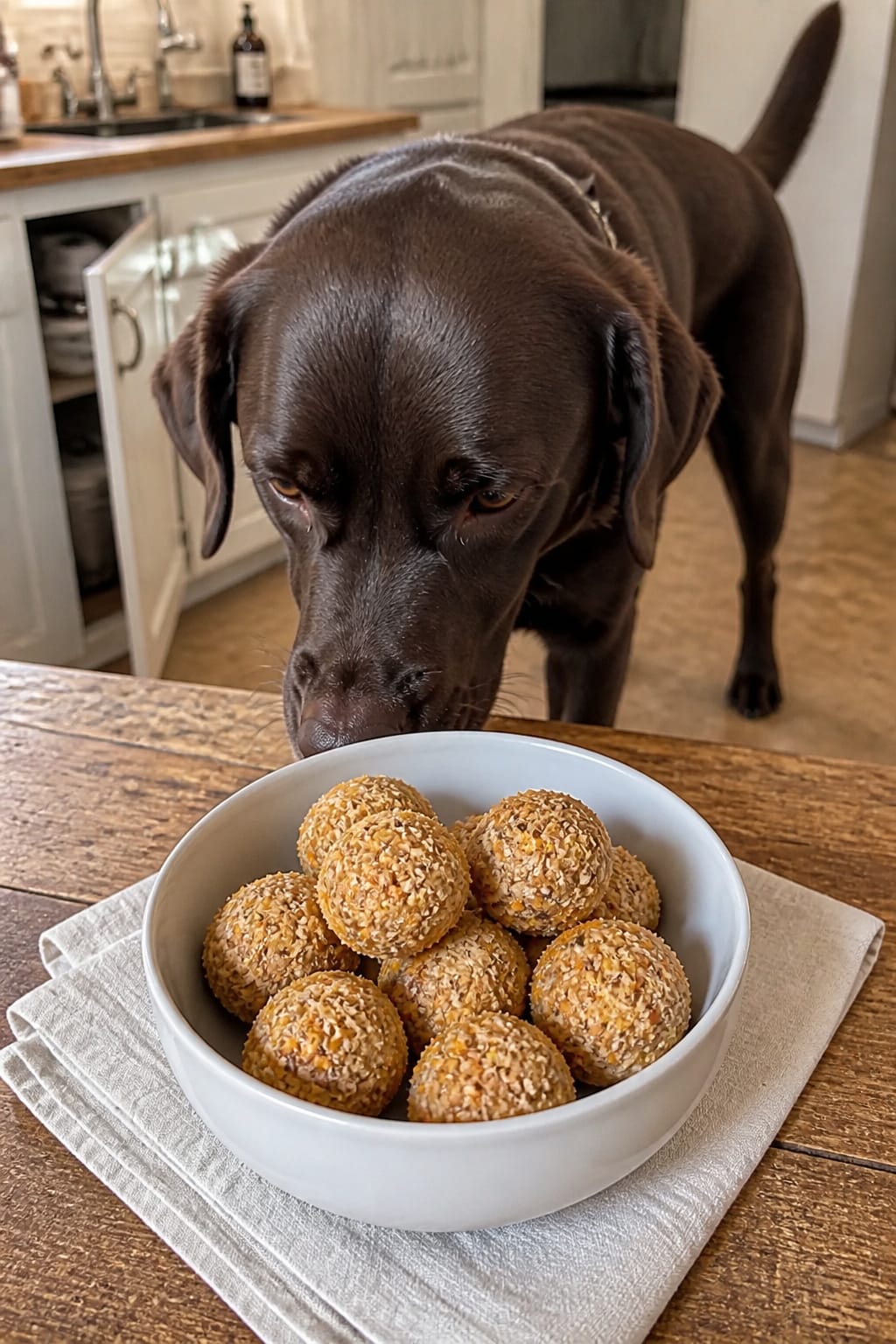
These homemade coconut carrot energy bites are designed for active dogs who need a quick, natural boost.
Made with simple ingredients you probably already have in your kitchen, these treats are a healthy way to reward your pup after exercise.
Ingredients
Gather these ingredients before you start. Make sure everything is fresh and dog safe.
- 1 cup shredded unsweetened coconut (no added sugar)
- 1/2 cup finely grated raw carrot (about one medium carrot)
- 1/2 cup natural peanut butter (no xylitol, no salt, no sugar added)
- 1/4 cup rolled oats (plain, not instant with flavoring)
- 2 tablespoons coconut oil (melted)
- 1 tablespoon flaxseed meal (optional, for extra fiber)
This small list means you can make these bites without a trip to a specialty store.
Step-by-Step Instructions
Follow these steps carefully to make the perfect energy bites for your dog.
- Grate the carrot. Use the fine side of a box grater to get small, soft shreds.
This helps your dog digest the carrot easily.
- Mix the dry ingredients. In a large bowl, combine the shredded coconut, rolled oats, and flaxseed meal. Stir them together with a fork.
- Add the wet ingredients. Add the grated carrot, peanut butter, and melted coconut oil to the dry mix. Stir everything until it forms a thick, sticky dough.
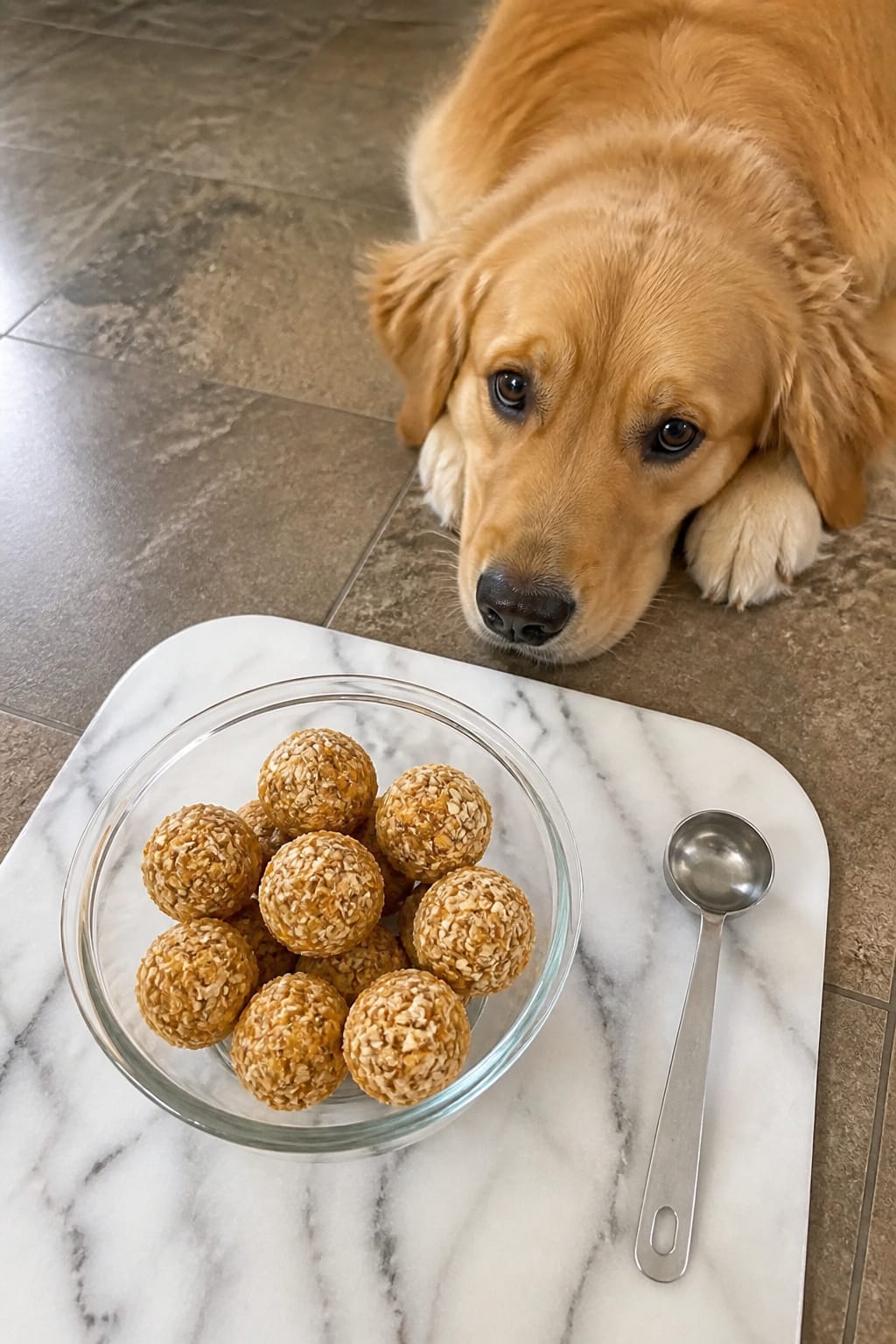
- Roll into bites. Scoop out about one tablespoon of dough and roll it into a small ball between your palms. Repeat until all the dough is used. You should get around 12 to 15 bites.
- Chill to set. Place the bites on a plate or tray lined with parchment paper. Refrigerate for at least 30 minutes before serving. This firms them up and makes them easier to handle.
That is it. No oven, no mess, and your dog gets a fresh treat in under an hour.
How to Store
Store these energy bites in an airtight container in the refrigerator. They will stay fresh for up to one week.
For longer storage, place them in a freezer safe bag and freeze for up to three months.
When you are ready to serve, just take one out and let it thaw for a few minutes at room temperature.
Do not microwave the bites, because the coconut oil can get too hot and burn your dog’s mouth.
For portioning, give one bite per 25 pounds of body weight per day. If your dog is smaller, cut a bite in half. If your dog is larger, you can give two bites as a post exercise reward.
Always adjust based on your dog’s overall diet and activity level.
Health Benefits
These bites offer practical nutrition for active dogs. The coconut oil provides medium chain triglycerides, which are a quick source of energy for muscles.
Carrots add beta carotene, which supports eye health and a strong immune system.
Peanut butter gives protein and healthy fats that help your dog feel satisfied. Rolled oats are a gentle source of complex carbohydrates for sustained energy.
Flaxseed meal adds omega 3 fatty acids that support a shiny coat and healthy skin.
This recipe is not a complete meal, but it works great as a training treat or an energy booster before or after exercise.
Keep treats to no more than 10 percent of your dog’s daily calorie intake.
Pitfalls to Watch Out For
Avoid these common mistakes when making dog treats at home.
- Using peanut butter with xylitol. Xylitol is extremely toxic to dogs, even in small amounts. Always check the label for this sweetener.
- Adding salt or sugar. Dogs do not need extra salt or sugar in their treats.
Stick to plain, unsalted ingredients.
- Leaving the bites too large. If your dog is a gulper, cut the bites into smaller pieces. Whole bites can be a choking hazard for small breeds.
- Skipping the refrigeration step. The bites need time to firm up or they will fall apart in your dog’s bowl.
- Feeding too many at once. Even healthy treats can cause an upset stomach if your dog eats too many. Stick to the portion guide above.
Alternatives
You can easily swap ingredients to fit your dog’s preferences or dietary needs.
- Peanut butter swap. Use unsweetened sunflower seed butter or pumpkin puree if your dog has a peanut allergy.
Make sure the pumpkin puree is plain, not pie filling.
- Oat substitute. Replace rolled oats with oat flour or crushed plain rice cakes for a different texture.
- Carrot swap. Finely grated apple (no seeds or core) or zucchini work well instead of carrot. Always remove seeds and stems from apples.
- Add protein. Mix in one tablespoon of plain, cooked, shredded chicken or turkey for extra protein. This is great for very active dogs.
These substitutions keep the recipe flexible and easy to adapt.
FAQ
Can I use sweetened coconut?
No.
Sweetened coconut has added sugar, which is not good for dogs. Stick to unsweetened shredded coconut to keep the treats safe and healthy.
How many bites can I give my dog per day?
Give one bite per 25 pounds of body weight. For a 50 pound dog, that means two bites per day.
For a 10 pound dog, give half a bite. Always reduce their regular meal portions slightly if you are giving treats.
Do I need to refrigerate these bites?
Yes. The coconut oil softens at room temperature, so the bites will get mushy if left out.
Store them in the fridge for up to a week or in the freezer for up to three months.
Can I use coconut flour instead of shredded coconut?
You can, but the texture will be different. Coconut flour is very dry and absorbs a lot of moisture. If you swap, start with two tablespoons of coconut flour and add a little water if the dough seems too crumbly.
Are these bites safe for puppies?
These bites are safe for puppies over 12 weeks old, but make the pieces very small.
Puppies have tiny throats and can choke on larger treats. Always supervise your puppy when they eat.
Can I add protein powder?
Only use plain, unsweetened, dog safe protein powder. Many human protein powders contain xylitol, artificial sweeteners, or whey that can upset a dog’s stomach.
Stick to the simple ingredients listed above for the safest results.