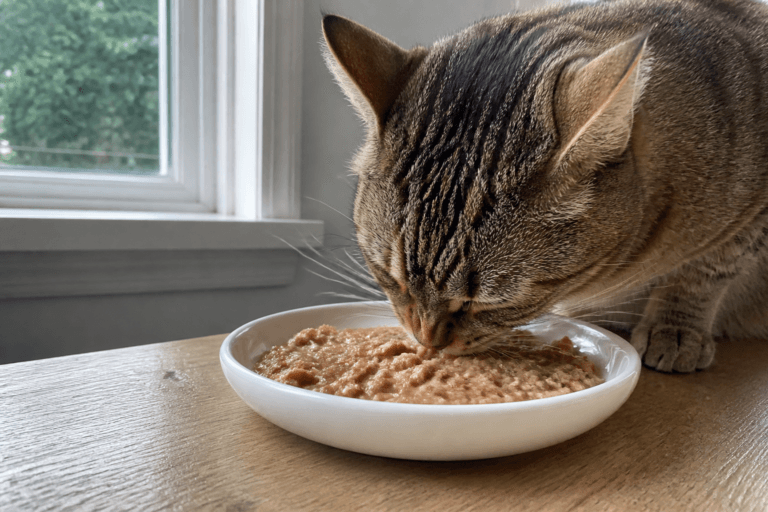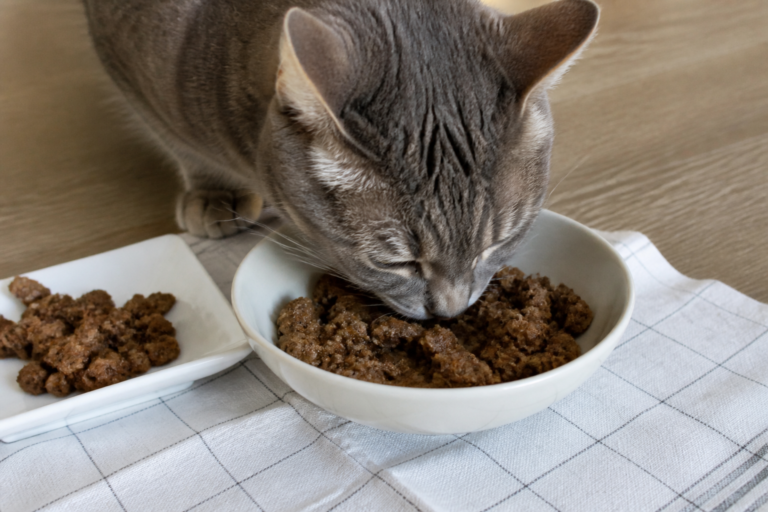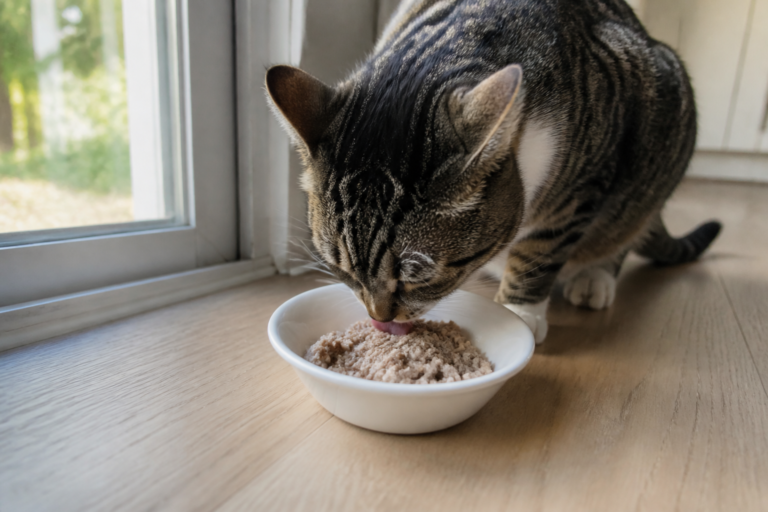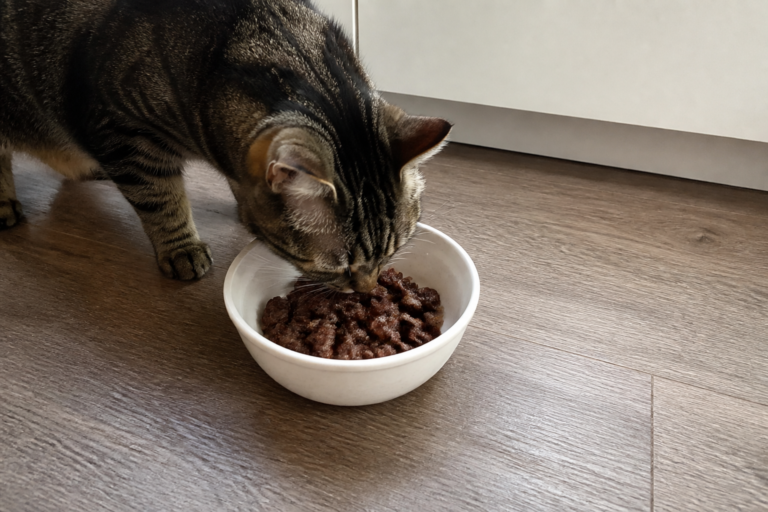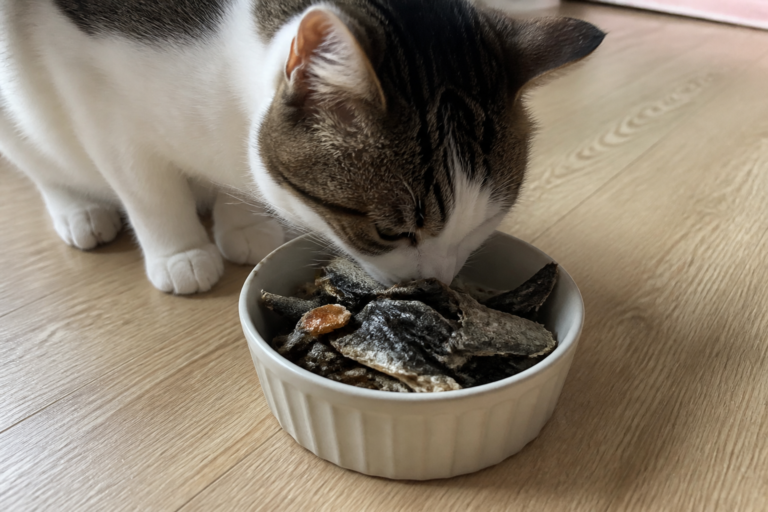
If your cat turns up their nose at plain food or you just want to add something special to their bowl, this recipe is a game changer.
Homemade chicken bone broth gravy is a simple way to get your feline friend excited about mealtime. It is packed with natural flavor and gentle on sensitive stomachs.
Plus, it is incredibly easy to make with just a few items from your kitchen. Your cat will thank you with happy purrs and a clean bowl.
What Makes This Recipe So Good

This gravy is practical because it uses simple, cat safe ingredients that you probably already have at home.
It is a great way to add moisture to your cat’s diet, which is especially helpful for cats who do not drink enough water.
The broth is slow simmered to extract natural collagen and nutrients from the chicken bones, which makes it gentle on digestion. You control exactly what goes in, so there are no preservatives, fillers, or hidden additives.
It also freezes well, so you can make a big batch and have it ready whenever you need it.
Ingredients
Gather these ingredients before you start. Make sure you have everything ready to go.
- 2 pounds raw chicken bones (backs, necks, or wings work well; remove most of the meat if possible)
- 4 cups filtered water
- 1 tablespoon apple cider vinegar (helps pull nutrients from the bones)
- Optional: 1 small carrot, roughly chopped (for a hint of flavor; remove before serving)
- Optional: small handful of fresh parsley (catsafe and adds a tiny nutrient boost)
Note: Never use onion, garlic, leeks, or chives in any form. These are toxic to cats.
How to Make It
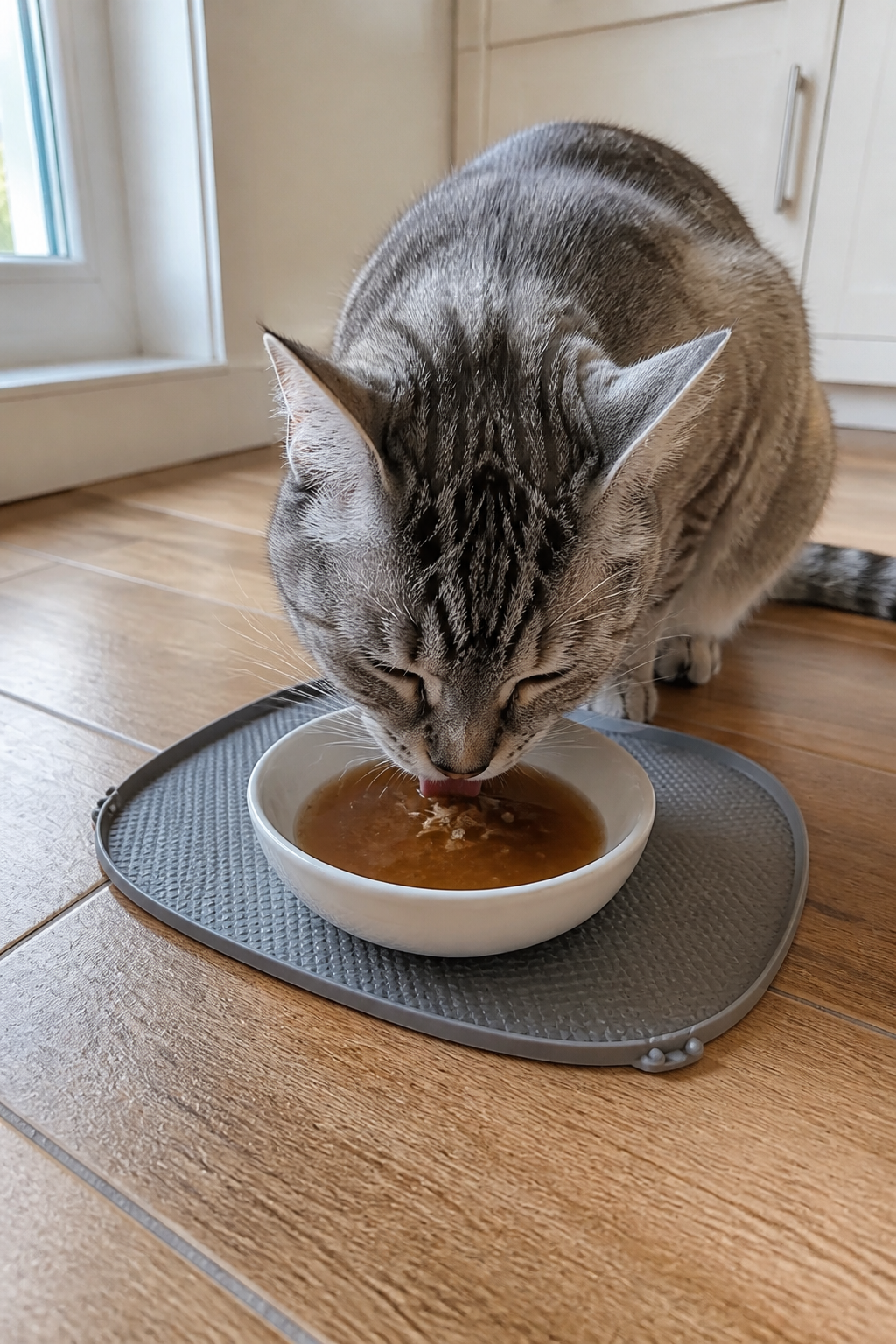
Follow these steps carefully to create a safe, tasty gravy for your cat.
- Rinse the chicken bones under cool water to remove any debris. Place them in a large pot or slow cooker.
- Add the filtered water and apple cider vinegar. Let it sit for 30 minutes. This helps break down the bones and release nutrients.
- If using carrot or parsley, add it to the pot now. Do not add salt, pepper, or any seasonings.
- Bring to a low boil over medium high heat, then immediately reduce to a gentle simmer. Cover the pot.
- Simmer for 12 to 24 hours (24 hours is best if you have time). Check every few hours to make sure the bones are still covered with water.
Add more water if needed.
- Turn off the heat and let the broth cool slightly. Remove the bones and vegetables using tongs or a slotted spoon.
- Strain the broth through a fine mesh strainer or cheesecloth into a clean bowl. This catches any small bone fragments.
- Let the broth cool completely at room temperature, then refrigerate.
The fat will rise to the top and solidify. Skim off and discard the fat layer before using.
- If you want a thicker gravy, simmer the strained broth on low heat until it reduces by half. This concentrates the flavor and creates a richer texture.
How to Store
Store the finished broth or gravy in the fridge for up to 5 days. Use a glass jar or airtight container.
For longer storage, pour the cooled broth into ice cube trays or small freezer safe containers. Freeze for up to 3 months.
Each cube or portion is about 1 to 2 tablespoons, which is a perfect single serving for most cats.
When you are ready to serve, thaw a cube in the fridge overnight or warm it gently in a bowl of hot water. Never microwave the broth, as it can create hot spots that might burn your cat’s mouth.
Health Benefits
This chicken bone broth gravy is a great way to support your cat’s overall wellness. It provides a natural source of collagen and gelatin, which can help support healthy joints, skin, and coat.
The slow simmering process makes the broth easy to digest, which is helpful for cats with sensitive stomachs or after a bout of illness.
Adding this gravy to your cat’s regular food increases their water intake, which supports kidney function and urinary tract health.
It also adds a small amount of protein without adding unnecessary calories or fillers. Use it as a topper, not a meal replacement, to keep your cat’s diet balanced.
What Not to Do
Avoid these common mistakes to keep your cat safe and happy.
- Never add salt, pepper, garlic, onion, or any seasoning. These are harmful to cats, even in small amounts.
- Do not use cooked bones. Leftover roast chicken bones can splinter and cause serious injury. Always use raw bones.
- Do not leave the fat in the broth. Skim off the hardened fat before serving. Too much fat can upset your cat’s stomach or lead to pancreatitis.
- Do not serve the broth hot. Always let it cool to room temperature or warm it slightly. Hot liquid can burn your cat’s mouth and throat.
- Do not replace your cat’s complete and balanced food. This gravy is a supplement, not a main meal.
- Avoid adding vegetables like onions or garlic to the broth for flavor.
Stick to cat safe options like carrot (removed before serving) or plain parsley.
- Do not rush the simmering process. Short cooking times will not extract enough nutrients or flavor.
FAQs
How much gravy should I give my cat each day?
Start with 1 to 2 tablespoons per day, depending on your cat’s size. For a 10 pound cat, 1 tablespoon is a good amount. Adjust based on your cat’s reaction and their total calorie needs.
This is a supplement, so it should not replace their regular food.
Can I use this gravy for cats with kidney disease?
This plain bone broth is low in phosphorus compared to commercial broths, but you should always check with your veterinarian before adding any new food to a cat with kidney issues. Every cat is different, and your vet knows your pet’s specific needs.
How long does the broth stay fresh in the fridge?
Store it in a sealed container in the fridge for up to 5 days. Always check for any off smell or mold before serving.
If in doubt, throw it out.
Can I make this in a slow cooker?
Yes, a slow cooker works perfectly. Set it on low for 12 to 24 hours. Make sure the bones stay covered with water.
A slow cooker is actually easier because you do not have to watch it as closely.
Is the apple cider vinegar necessary?
It helps pull calcium and minerals from the bones, which makes the broth more nutritious. You can leave it out, but the broth will have fewer nutrients. Use a small amount of plain white vinegar if you do not have apple cider vinegar.
Can I use this gravy for picky cats who do not drink water?
Absolutely. Many cats do not drink enough water, and adding this gravy to their food is a great way to increase hydration. It is especially helpful for cats who eat dry food only.