Teaching your puppy basic commands early sets the foundation for a well-behaved dog. Puppy obedience training does not have to be long or exhausting.
In fact, short, focused sessions work better for young dogs. You can teach your puppy to sit with just 5 to 10 minutes of daily practice.
Why Short Training Sessions Work Best for Puppies
Puppies have short attention spans. Their brains are still developing, so they get tired and distracted fast. Long sessions lead to frustration for both you and your dog.
Short daily training sessions of 5 to 10 minutes keep your puppy engaged and eager to learn.
Studies in canine cognitive development show that repetition over multiple short sessions leads to faster skill retention than one long session.
Think of it like learning a new language. Small, consistent practice every day beats cramming once a week.
Aim for two to three short sessions per day. Morning, afternoon, and evening work well. Keep the energy positive and end each session on a successful note.
What You Need Before You Start
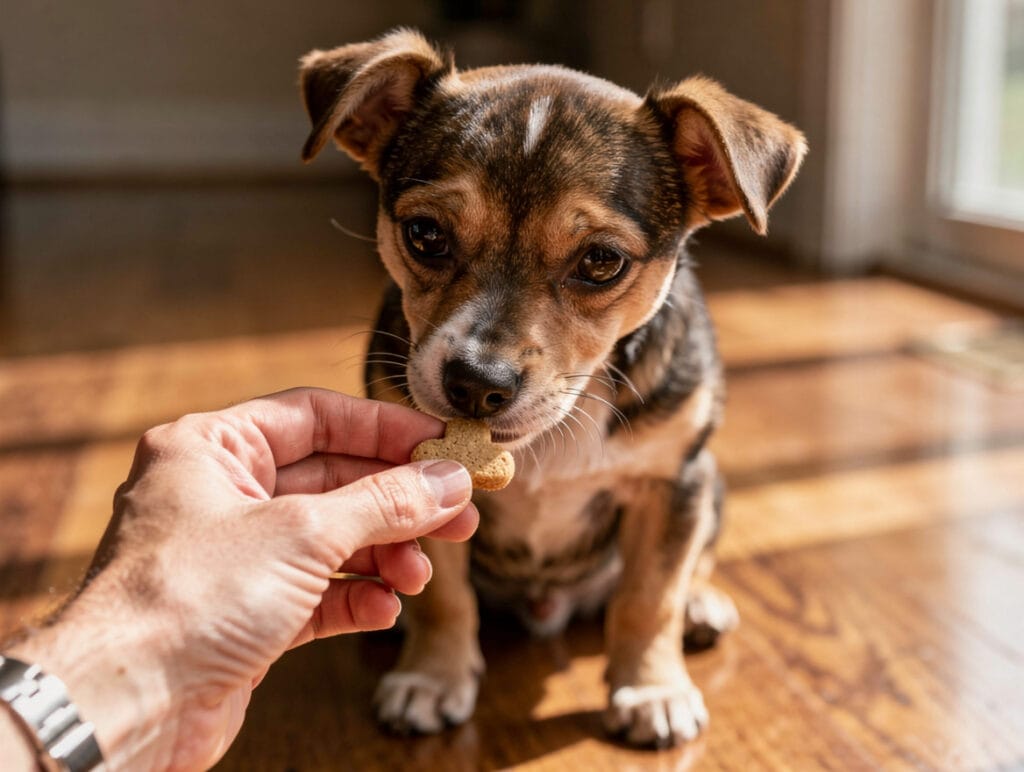
Before your first session, gather a few things to make positive reinforcement dog training as smooth as possible.
| Item | Purpose |
|---|---|
| Small soft treats | Reward good behavior instantly |
| Quiet training space | Reduces distractions for your puppy |
| Clicker (optional) | Marks the exact moment of correct behavior |
| Leash and collar | Helps manage movement in early stages |
Choose high-value dog treats that your puppy loves. Small pieces of cooked chicken, cheese, or commercial training treats work well.
The treat needs to be small enough to eat in one second so your puppy stays focused.
How to Teach a Puppy to Sit Step by Step
Step 1: Get Your Puppy’s Attention
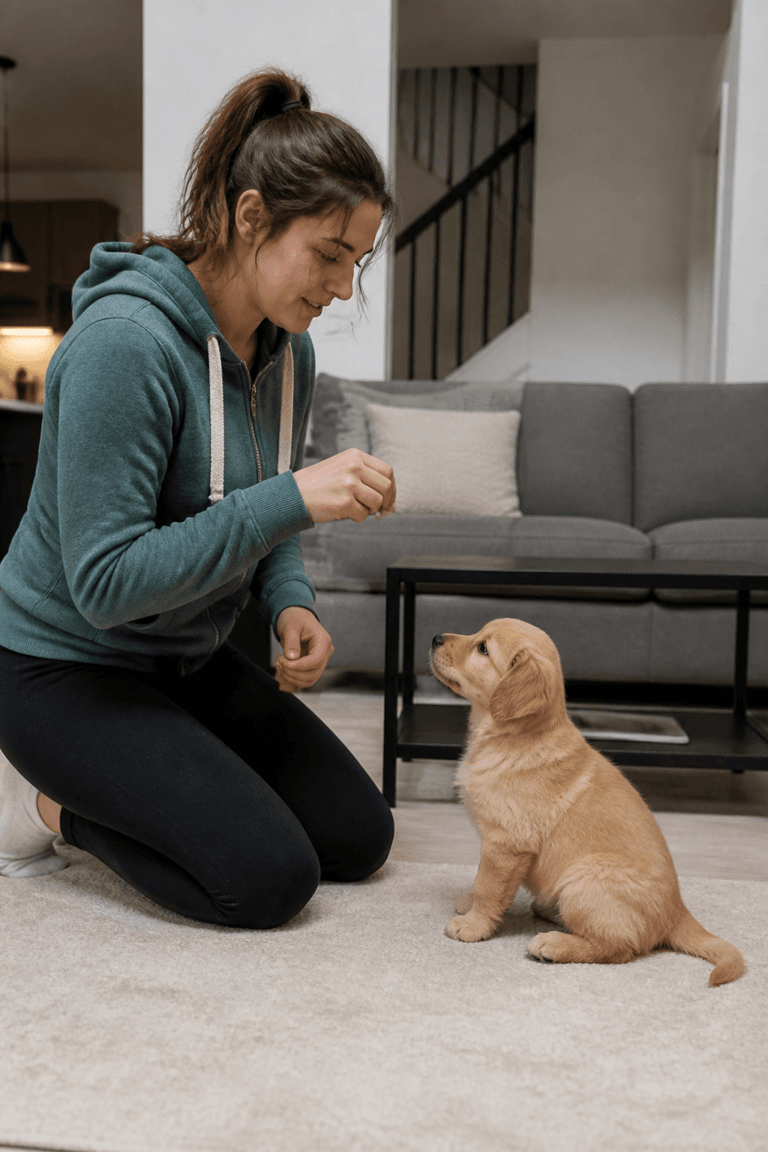
Stand in front of your puppy with a treat in your hand. Let your puppy sniff it so they know it is there. This activates their food motivation and keeps their focus on you.
Step 2: Use the Lure Method
Hold the treat close to your puppy’s nose. Slowly move it upward and slightly back over their head.
As the treat moves up, your puppy’s nose will follow it. Their bottom will naturally lower to the ground.
The moment their hindquarters touch the floor, say “sit” in a calm, clear voice. This is called lure-based training and it works extremely well for young dogs.
Step 3: Mark and Reward Immediately
The second your puppy sits, mark the behavior. You can say “yes!” in a bright tone or click your clicker if you use one. Then give the treat right away.
Timing is everything in reward-based training. If you wait too long, your puppy does not connect the treat with the action. Mark and reward within one to two seconds.
Step 4: Repeat and Build the Habit
Repeat this five to eight times per session. Do not push for more if your puppy loses interest. Consistent repetition is how the behavior gets locked in over days, not one afternoon.
After a few sessions, start asking for the sit before showing the treat. Say “sit,” wait a moment, and reward when they do it. This moves from luring to a verbal cue response.
Common Mistakes to Avoid
Many first-time owners slow down progress without realizing it. Watch out for these habits.
| Mistake | Why It Hurts Training |
|---|---|
| Repeating the cue multiple times | Teaches your puppy to ignore the first command |
| Training when your puppy is tired or overstimulated | Leads to poor focus and frustration |
| Using treats that are too big | Slows down repetitions and reduces engagement |
| Skipping sessions | Breaks the habit loop and delays long-term behavior retention |
| Punishing mistakes | Damages trust and slows puppy learning progress |
Force-free dog training is the most effective and humane approach. Never push your puppy into the sit position. Let the lure do the work.
How to Progress After Your Puppy Learns to Sit
Once your puppy sits reliably in a quiet space, it is time to add small challenges.
Introduce mild distractions like training in a different room or outdoors. Practice with other people present.
Ask for the sit before meals, before putting on the leash, and before play. This is called real-life rewards training and it reinforces good behavior throughout the day.
Gradually reduce treat frequency but keep verbal praise high. Your puppy learns that listening brings good things, treat or not.
How Long Does It Take for a Puppy to Learn to Sit?
Most puppies learn the sit command within three to five days of consistent short sessions. Some pick it up in the very first session.
Others need a week or two, especially if they are very young or easily distracted.
Puppy training timelines vary by breed, age, and individual personality. Herding breeds like Border Collies often learn faster.
Stubborn breeds like Basset Hounds may need more patience. What matters most is consistency, not speed.
Stay patient. Keep sessions fun. Every puppy learns at their own pace.