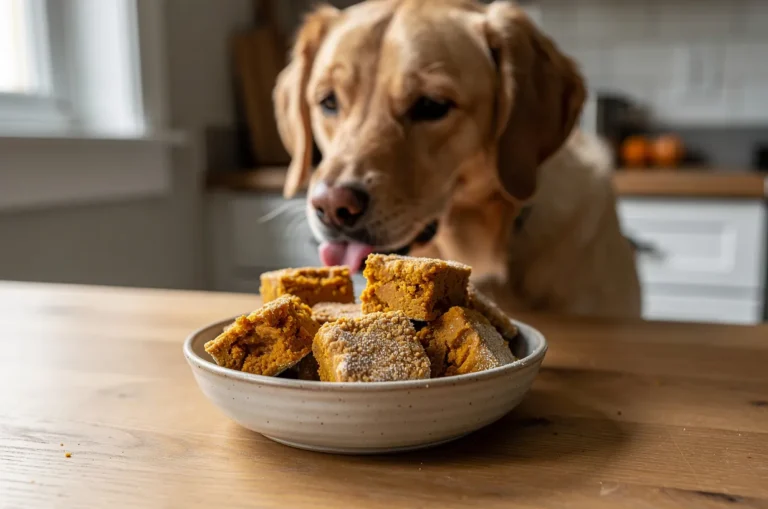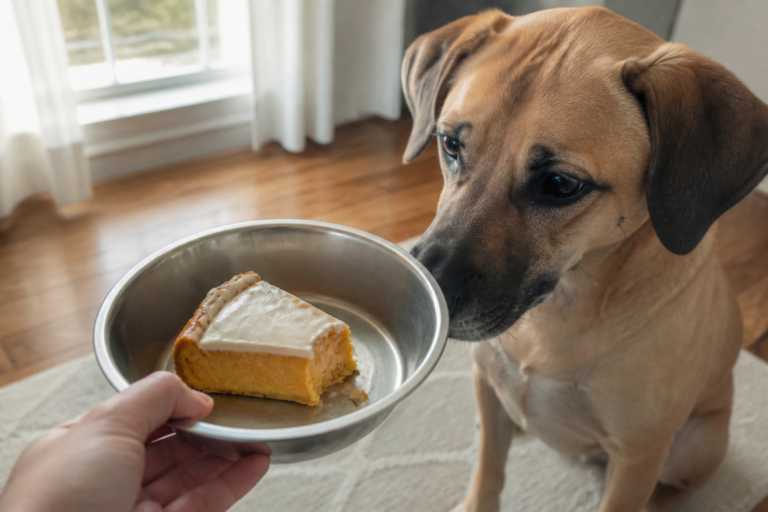
Salmon and oats make a powerhouse combo for your dog’s coat, brain, and overall glow-up.
These crunchy-soft treats pack omega fatty acids, protein, and gentle fiber that most pups love.
Quick to make, easy to store, and way tastier than store-bought kibble samples, these treats are a home run for training, rewards, or just because.
Ingredients
Here’s what you need for about 40 small treats, depending on cutter size:
- 1 cup cooked salmon, flaked and bones removed
- 1 cup rolled oats, ground into a flour or used whole for texture
- 1/2 cup plain pumpkin puree or mashed sweet potato
- 1 large egg
- 2 tablespoons olive oil or fish oil (for extra omega-3)
- 1/4 cup oat flour or whole wheat flour, as needed to adjust dough
- 1 teaspoon dried parsley (optional, for fresh breath)
- Pinch of turmeric (optional, anti-inflammatory benefits)
Make sure the salmon has no bones and avoid any added seasonings like garlic, onion, or excessive salt. FYI, plain canned salmon in water works great if fresh is not available.
Preparation Steps
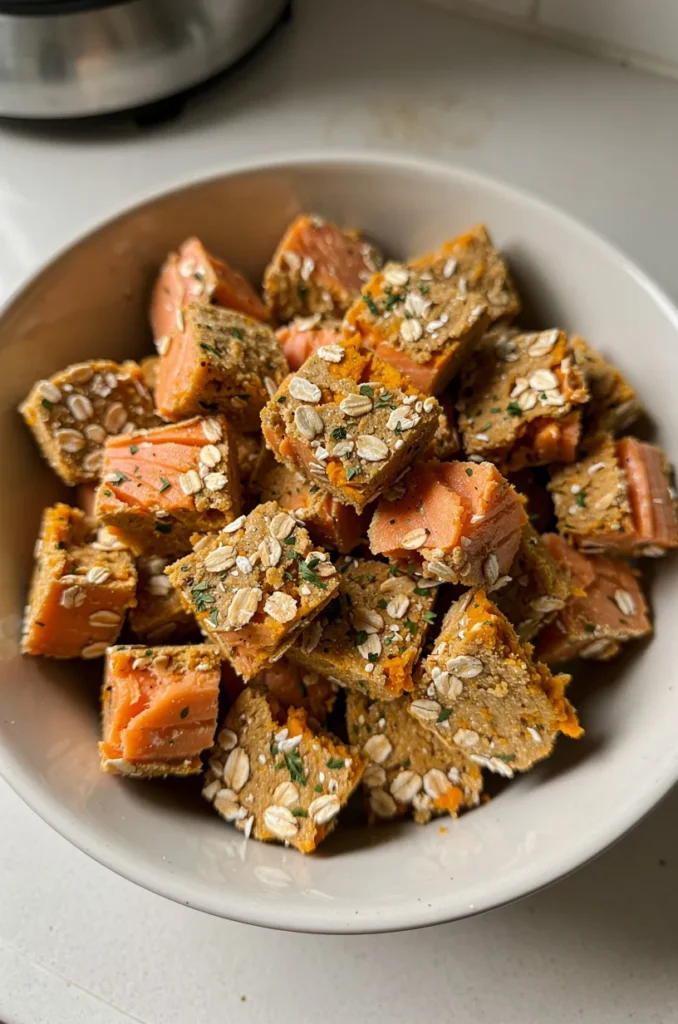
Follow these simple steps for tasty, consistent treats.
- Preheat oven to 325 F (165 C). Line a baking sheet with parchment paper.
- If using whole rolled oats, blitz them in a food processor for a few seconds to make oat flour. You can leave some texture for chewiness.
- Mix flaked salmon, pumpkin puree, egg, oil, and parsley in a bowl. Stir until combined.
- Gradually add oat flour and regular flour a tablespoon at a time until dough holds together. The dough should be slightly sticky but pliable.
- Lightly flour a surface with oat flour and roll dough to about 1/4 inch thickness. Use small cookie cutters or a knife to shape treats.
- Place pieces on the baking sheet, spacing them slightly apart. Bake for 20-25 minutes, or until edges turn lightly golden.
- Let cool completely on a rack. Treats firm up as they cool.
If your dog prefers softer treats, bake a little less time. For crispier treats, flatten shapes slightly and bake a few minutes longer.
Tips for Texture and Flavor
- Add a teaspoon of low-sodium chicken broth if the dough feels too dry.
- For picky eaters, fold in a small spoonful of plain yogurt after baking, then freeze into tiny bites.
- Try mixing in a tablespoon of chia seeds for added fiber and omega benefits.
Nutritional Benefits for Dogs
These treats do more than taste great. They bring several real benefits:
- Omega-3 fatty acids from salmon and fish oil support brain health, reduce inflammation, and promote a glossy coat.
- Lean protein helps maintain muscle and supports energy.
- Oats provide gentle fiber for digestion and keep bowls full without heavy carbs.
- Pumpkin or sweet potato add vitamins, minerals, and digestive support.
IMO, these treats make a better training reward than many commercial options packed with preservatives and fillers. Always balance treats within your dog’s daily calorie needs.
Serving Suggestions
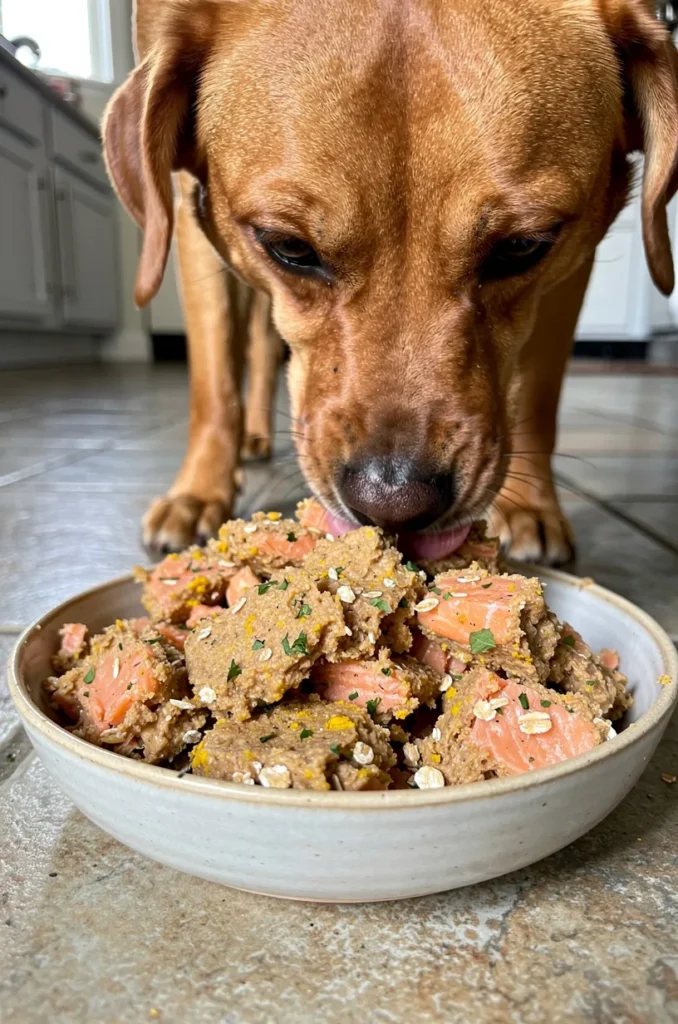
Use these treats for training, stuffing into puzzle toys, or as a special after-walk reward. They break easily, so you can cut them into smaller pieces for long sessions.
- For puppies or small breeds, cut into pea-sized pieces to avoid overfeeding.
- For senior dogs, warm a treat slightly to soften it, making it easier to chew.
- For reactive dogs with allergies, omit the pumpkin and use sweet potato if that works better.
Remember to factor treats into your dog’s daily calorie intake. These treats have healthy ingredients, but they still add calories.
Storage Tips
Store treats correctly to keep them fresh and safe.
- Room temperature: Keep in an airtight container for up to 3 days.
- Refrigerator: Store in an airtight container for up to 7 days.
- Freezer: Lay treats flat on a baking sheet to freeze, then transfer to a zip-top bag. They last up to 3 months.
Thaw frozen treats at room temperature for a few minutes or warm gently in a microwave for 5-10 seconds. Always let your hand test the temperature before giving to your dog.
Ingredients to Avoid and Safety Notes
Safety first. Do not include these items:
- Garlic or onion powder, whole garlic, or onion – toxic to dogs.
- Salt and sugar – unnecessary and harmful in excess.
- Xylitol, raisins, grapes, chocolate, or macadamia nuts – toxic to dogs.
- Uncooked salmon or other raw fish without vet guidance – risk of parasites.
If your dog has fish allergies, skip this recipe and use cooked turkey or chicken instead.
If your dog has a sensitive stomach, introduce new treats slowly and watch for any digestive changes.
When to Check with Your Vet
- If your dog has a known food allergy.
- If your dog is on a medical diet or has pancreatitis, since fish oil and fats can trigger issues.
- When changing a senior dog or puppy’s diet significantly.
FAQs
Can I use canned salmon instead of fresh?
Yes, canned salmon in water works well. Drain well and remove any soft bones. Canned salmon has similar omega benefits and makes prep faster.
How many treats can I give my dog each day?
Treats should make up no more than 10 percent of your dog’s daily calories. For small dogs, that could be 2-4 treats. For larger dogs, maybe 6-10. Adjust based on your dog’s size and activity level.
Can I substitute flaxseed or chia for fish oil?
You can use flaxseed or chia for some omega-3 benefits, but they provide ALA, a form dogs convert less efficiently than the EPA and DHA from fish oil. For skin and coat benefits, fish oil delivers stronger results.
Are these treats safe for puppies?
Yes, if you use age-appropriate portion sizes and ensure the treats are soft enough to chew. For very young puppies, consult your vet before introducing new foods.
How do I make the treats less smelly while baking?
Salmon has a natural aroma, but you can reduce smell by baking at a slightly lower temperature for longer, and running a kitchen fan or opening a window. FYI, some smell will linger, but most dogs will think it’s a culinary masterpiece.
My dog has allergies to fish. What can I use instead?
Swap the salmon for cooked chicken or turkey and add a teaspoon of olive oil for healthy fats. Keep oats and pumpkin for the fiber and texture.