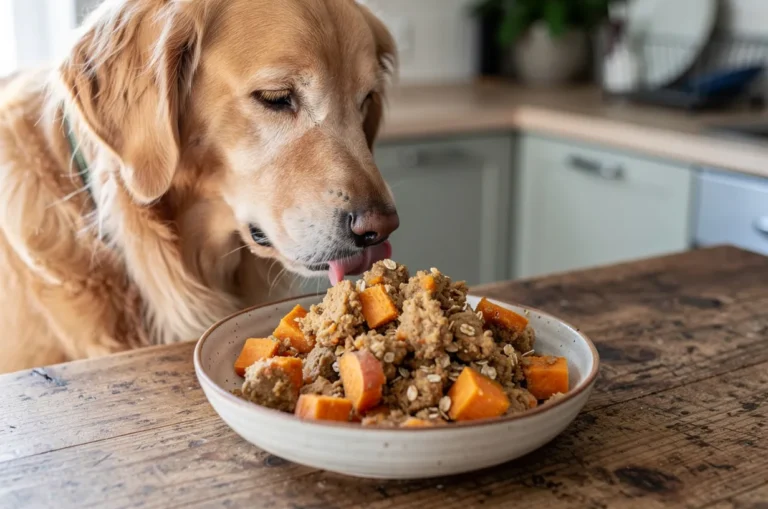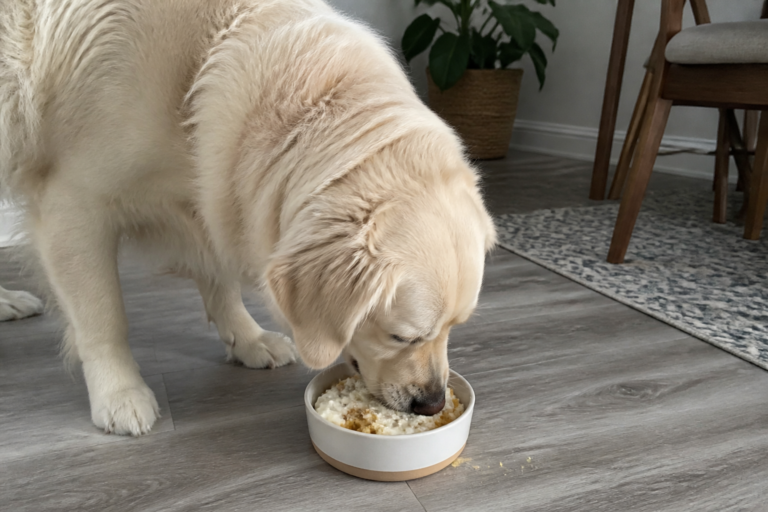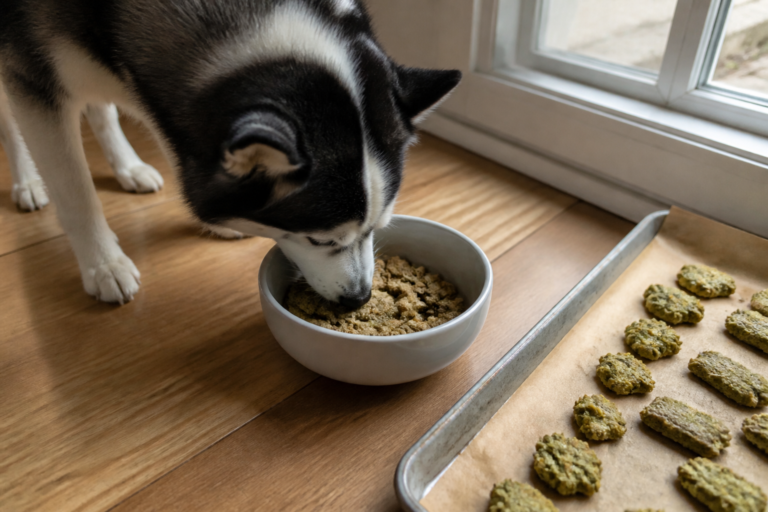
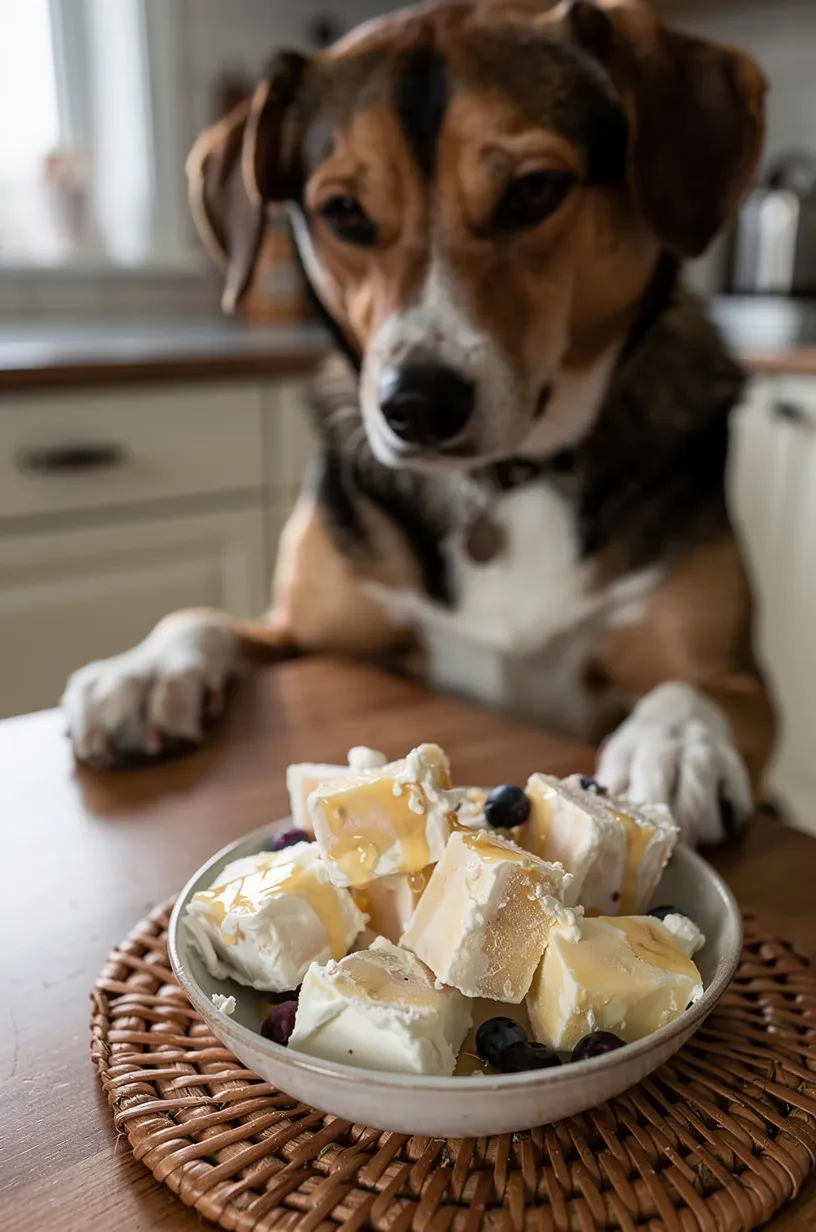
These frozen treats are a simple, healthy snack you can make at home for your dog.
They use plain Greek yogurt and a touch of honey for sweetness that dogs generally enjoy.
Keep treats as occasional snacks, not full meals, and always supervise your pet when trying a new food.
What You’ll Need
- 1 cup plain Greek yogurt (use unsweetened, no artificial sweeteners)
- 1 tablespoon honey (raw or regular, but sparingly)
- 1/2 cup mashed ripe banana (about one small banana)
- 2 tablespoons natural peanut butter (no xylitol, low salt)
- Optional: 1/4 cup finely chopped blueberries (fresh or frozen)
- Optional: silicone molds or ice cube tray for freezing
Instructions
- Measure out the Greek yogurt into a medium bowl and stir until smooth.
- Add the honey and mashed banana. Mix well so the honey distributes evenly through the yogurt.
- Spoon in the peanut butter. Stir until the mixture looks uniform.
If it is too thick, add a teaspoon of water or plain yogurt to loosen it.
- Fold in the chopped blueberries if using. Keep the pieces small so dogs can eat the frozen treats easily.
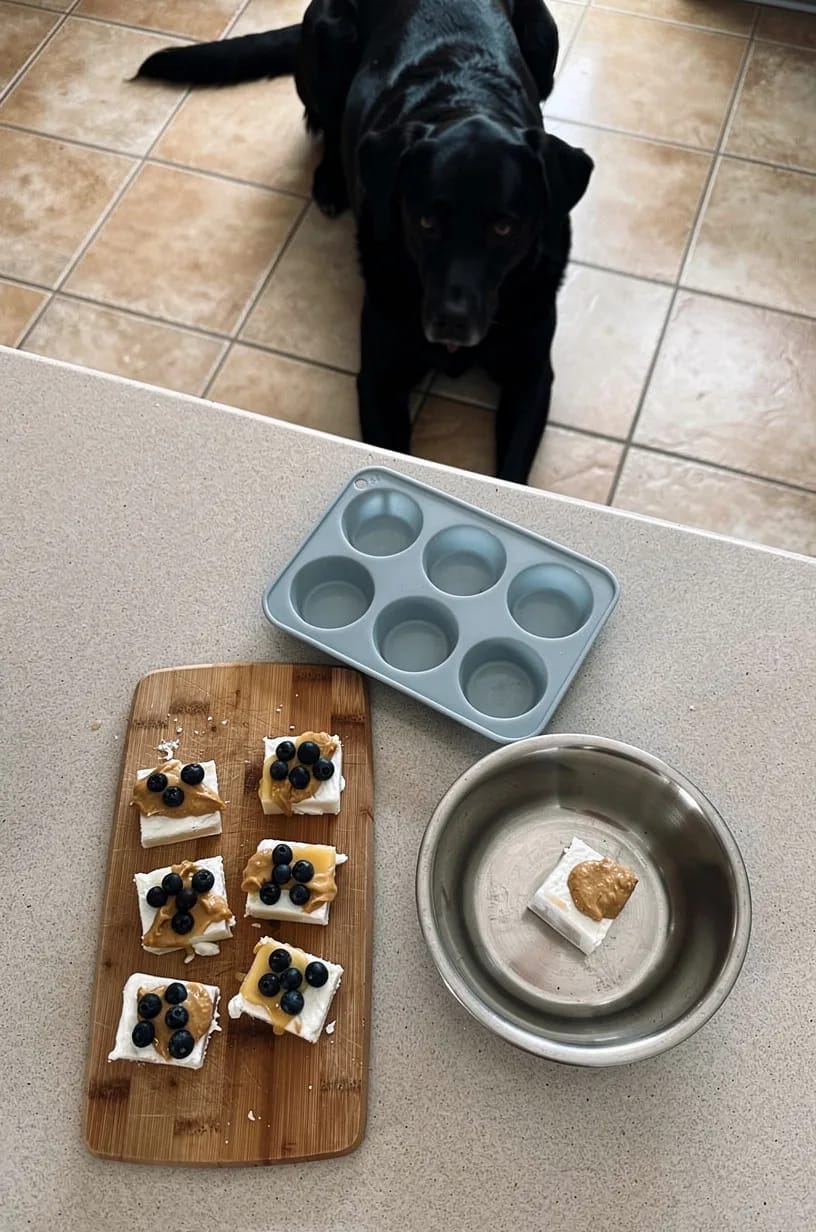
- Fill silicone molds or an ice cube tray with the mixture. Leave a little space at the top for expansion when freezing.
- Freeze for at least 4 hours or until solid. For firmer treats, freeze overnight.
- Pop treats from molds and store or serve. If using an ice cube tray, gently tap the tray to release cubes.
Keeping It Fresh
Store frozen treats in an airtight container or zip-top bag in the freezer for up to three months.
For easier portioning, freeze on a tray first and then transfer the treats to a bag so you can pull out single servings.
In the refrigerator, thawed treats will keep for 24 to 48 hours. Only thaw what you plan to use within a day or two to avoid spoilage.
Health Benefits
Greek yogurt provides a good source of protein and calcium in a form that many dogs digest easily.
The live cultures in plain yogurt can support gut health for some dogs, though not every dog benefits the same way.
Bananas add potassium and fiber, which help digestion and regularity. Peanut butter gives healthy fats and protein, and blueberries offer antioxidants in small amounts.
These treats give a mix of texture, protein, and gentle nutrients that make them a nice supplement to your dog’s regular diet.
Common Mistakes to Avoid
- Do not use flavored yogurts that contain artificial sweeteners or added sugars.
- Avoid peanut butter with xylitol. Check labels carefully since xylitol is toxic to dogs.
- Do not overfeed. Frozen treats are calorie-dense and should not replace balanced meals.
- Avoid adding human seasonings or salty ingredients. Keep flavors plain and dog-friendly.
- Do not use grapes, raisins, or chocolate in any form. These are harmful to dogs.
Alternatives
- Protein swaps: Replace banana with cooked, mashed sweet potato for a lower-sugar alternative.
- Texture variations: Blend in small pieces of apple (no seeds) for crunch, or use pureed pumpkin for a creamier feel.
- Dairy-free option: Use plain unsweetened coconut yogurt if your dog is sensitive to dairy, but introduce slowly.
- Treat shapes: Use small molds for training treats or larger molds for cooling chews during summer walks.
FAQs
How many treats can I give my dog per day?
Portion size depends on your dog’s weight and calorie needs. As a general rule, offer one or two small cubes for a small dog and up to three or four for a larger dog as an occasional snack. Adjust based on activity level and total daily calories.
Is plain Greek yogurt safe for puppies?
Many puppies can tolerate small amounts of plain Greek yogurt, but you should introduce it slowly and watch for digestive upset.
Consult your veterinarian if your puppy has a known sensitivity to dairy.
Can I use honey every day?
Honey is safe in small amounts but is high in natural sugars. Use it sparingly and avoid daily use for dogs with diabetes or weight issues unless your vet approves.
How do I know if my dog is allergic to an ingredient?
Introduce new ingredients one at a time and watch for signs like itching, vomiting, or diarrhea. If you notice any of these signs, stop giving the treat and consult your veterinarian.