
As a dog lover, there is nothing more terrifying than when your best friend gets sick or injured.
In those moments, you want to focus entirely on comforting them and getting them the help they need.
The very last thing you want to worry about is whether or not you can afford the care they require.
A startling new report from the ASPCA has revealed a heartbreaking reality for many pet owners in America.
Their data shows that the vast majority of us are completely unprepared for the high costs associated with sudden veterinary medical emergencies.
This news is a critical wake up call for all pet parents.
We have gathered the essential takeaways from the ASPCA’s findings and their recommendations for proactive prevention, to help you navigate this challenging situation before it happens to your family.
Understanding the Growing Vet Care Crisis
The recently released ASPCA survey paints a sobering picture.
More than half of all American pet owners (that is 6 in 10 respondents) admitted they lack confidence in their ability to afford a necessary medical emergency for their pet.
This financial anxiety is not unfounded. The nationwide cost of veterinary care continues to climb steeply.
This creates a deeply concerning situation, with the ASPCA estimating that over 100 million pets may currently be at risk because their owners cannot comfortably handle unexpected, costly bills.
It is a difficult and stressful position for any pet parent, but the ASPCA emphasizes that there are steps we can take, specifically focusing on prevention.
The Most Dangerous Household Toxins Facing Your Pet Right Now
One of the most effective ways to lower the financial burden of pet care is to prevent costly emergency visits in the first place. This is especially relevant regarding pet poisoning.
To aid in prevention efforts, the ASPCA Poison Control Center shared its top ten most common toxins of 2025.
In that year alone, their veterinary experts assisted with over 376,000 cases of exposure to dangerous substances, showing a 3.7 percent increase from the year before.
This data is incredibly important for dog lovers. While toxins like chocolate or antifreeze get a lot of attention, the real dangers might surprise you.
They are likely in your medicine cabinet or on your kitchen counter right now.
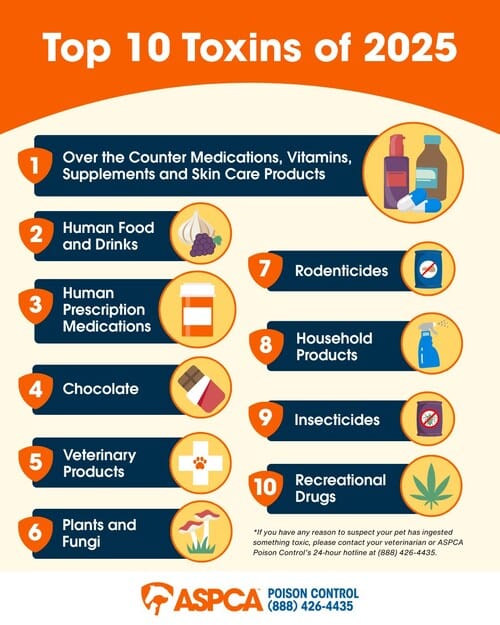
According to the ASPCA, here are the leading toxic exposures for pets:
1. Human Over the Counter Medications
For eight consecutive years, human over the counter medications have held the top spot as the number one toxin. This includes everything from common pain relievers to supplements.
The ASPCA staff pointed out that a large portion of this category includes skincare products, specifically face masks, creams, toners, and cleansers.
Experts suspect this increase in exposures might be directly linked to the rise of social media marketing and influencer trends promoting these very products.
These medications also often pose a secondary threat: xylitol. This common sweetener is frequently found in “safer” seeming human items like herbal supplements, vitamins, cough syrups, and throat lozenges.
For pets, however, xylitol is deadly. It causes a dangerous insulin release that can lead to rapid liver failure.
2. Common Household Food and Drink
Coming in at number two for the fourth year in a row is ordinary human food. This is an incredibly common area for dog owners to mistakenly assume certain items are safe.
The items the ASPCA Poison Control Center received the most calls about are known pet dangers, including grapes and raisins, onions, garlic, and chewing gum that contains xylitol.
What might be a healthy snack for you can be a critical emergency for your dog.
3. Human Prescription Medications
The number three danger is human prescription medications. When accidents happen and pets ingest these drugs, it is often critical.
The most common prescriptions involved in pet exposures are cardiac medications, antidepressants, and treatments for ADHD.
Our Takeaway: Prevention and Preparation are Key for Every Pet Owner
The data from the ASPCA Poison Control is extremely eye opening, demonstrating how many pets are affected by dangerous toxins every year.
A staggering 50 to 75 percent of the cases they handle can be managed safely at home, which can provide immense reassurance to panic stricken pet owners or veterinarians.
Knowing that expert help is available around the clock can make all the difference in an emergency.
This report serves as a strong reminder for all us dog enthusiasts: we need to be proactive.
First, we must “pet-proof” our homes, ensuring all medications (including those seemingly harmless face creams and vitamins) and dangerous foods are stored securely out of reach.
Second, we must be financially prepared.
Looking into pet insurance or establishing a dedicated “pet emergency fund” before a crisis hits is no longer optional. It is a necessary part of responsible pet ownership.
If you believe your pet has ingested any toxic substance, do not wait. The ASPCA Poison Control experts are available 24 hours a day, 365 days a year.
Contact them immediately at (888) 426-4435 or call your local veterinarian. Your fast action is their best chance for recovery and can save you from an even larger emergency bill.