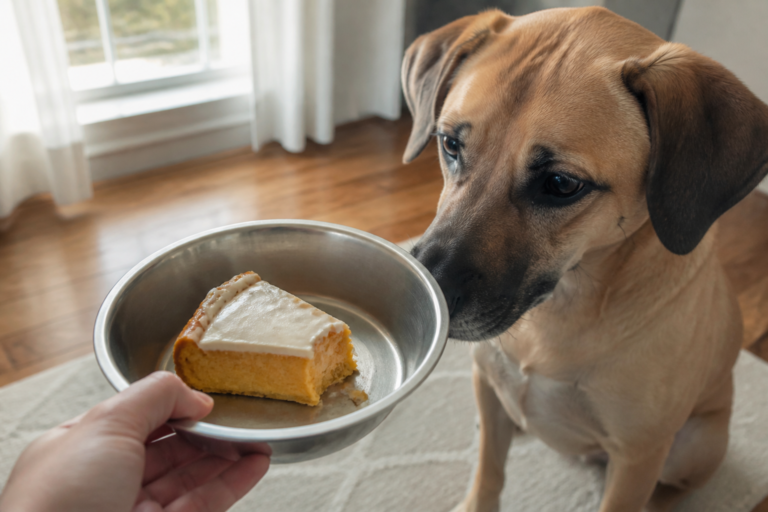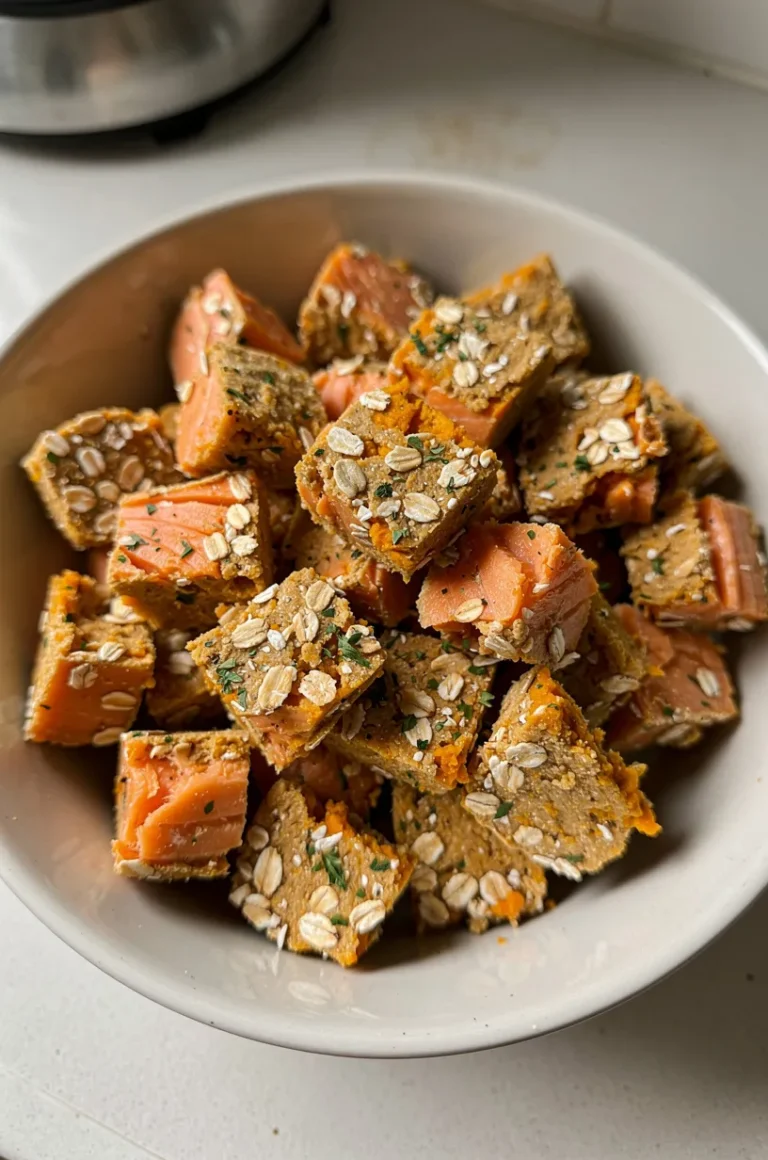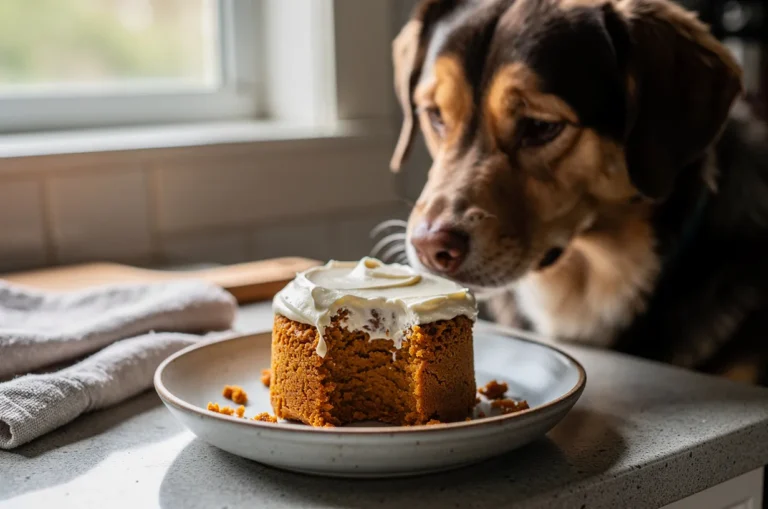
This easy cookie recipe is a tasty, wholesome treat you can make at home for your dog. It focuses on simple, dog-safe ingredients and avoids grains for pets with sensitivities.
The cookies use fresh carrots and apples for flavor and texture plus a grain-free binder to hold everything together.
They make great training rewards, snack-time treats, or small meal supplements.
Ingredients
- 1 cup finely grated carrot (about 1 large carrot)
- 1 medium apple, peeled, cored, and grated (about 1/2 to 3/4 cup)
- 1 large egg
- 1 cup canned pumpkin puree (plain, not spiced)
- 1 1/4 cups almond flour (or coconut flour – see variations)
- 1/4 cup ground flaxseed
- 1 tsp cinnamon (optional; small amount is safe for most dogs)
- 1-2 tbsp water as needed to adjust dough
Instructions
- Preheat oven to 350°F (175°C). Line a baking sheet with parchment paper or a silicone mat.
- Grate the carrot and apple finely so the pieces mix well and cook evenly.
- In a medium bowl, whisk the egg and pumpkin until combined. Stir in grated carrot and apple.
- Add almond flour, ground flaxseed, and cinnamon.
Mix until a dough forms. Add 1 tablespoon water if the dough is too dry.
- Turn dough onto a lightly floured surface. Roll to about 1/4 inch thickness.
If dough is sticky, chill 10 minutes first.
- Use a small cookie cutter or knife to cut cookies. Aim for bite-size pieces for training or larger ones for treats.
- Place cookies on the prepared sheet and bake 20 to 25 minutes, until edges are golden and cookies feel firm.
- Cool completely on a wire rack. Store or serve once cooled. Supervise your dog the first time they try a new treat.
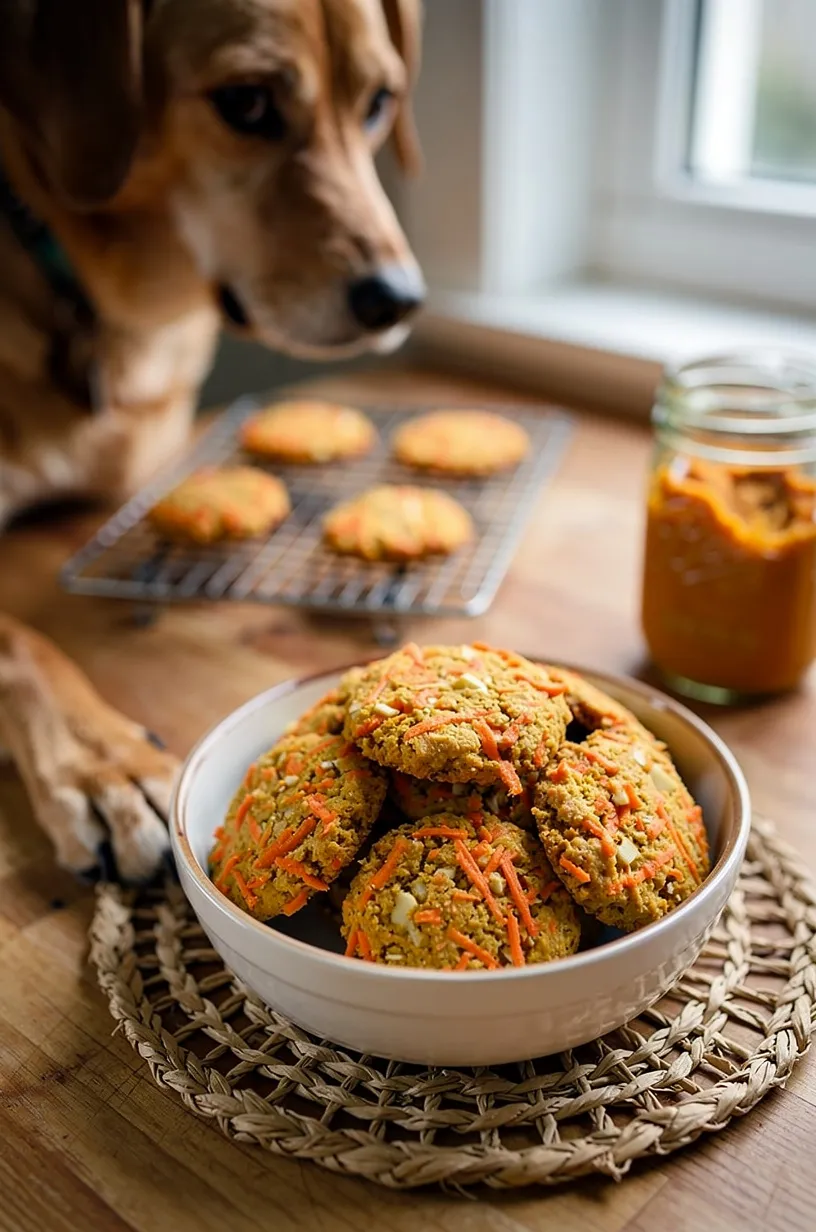
Storage Instructions
- Refrigerator: Keep cookies in an airtight container for up to 7 days.
- Freezer: Freeze in a sealed bag or container for up to 3 months. Thaw a few at a time in the fridge or at room temperature.
- Portioning: For training, cut into small bite-size pieces. For regular treats, one or two cookies per small dog and up to three for medium to large dogs, depending on calorie needs.
What Not to Do
- Do not add onion, garlic, or other alliums. They are toxic to dogs.
- Do not use sweeteners like xylitol or heavy amounts of sugar or salt.
- Avoid using raisins, grapes, chocolate, or macadamia nuts in any form.
- Do not overfeed treats. Count treats as part of your dog’s daily calories.
- Do not offer cookies that are still hot. Let them cool completely to avoid burns and soft spots.
Variations You Can Try
- Protein add-in: Mix in 1/4 cup cooked, shredded chicken or turkey for extra protein. Reduce pumpkin slightly if dough gets too wet.
- Flour swap: Use 3/4 cup coconut flour instead of almond flour, but start with less and add liquid as coconut flour absorbs more moisture.
- Texture change: Press cookies thinner and bake longer for extra crunch. Make them thicker and bake a bit less for a chewier treat.
- Herbs: A pinch of fresh parsley can freshen breath and is safe in small amounts.
FAQs
How many cookies can I give my dog per day?
Treats should make up no more than 10 percent of your dog’s daily calories.
For small dogs this may be one to two small cookies, while larger dogs might get two to four, depending on size and activity.
Can I use fresh pumpkin instead of canned?
Yes. Cook and puree fresh pumpkin first and let it cool. Use it in the same amount as canned pumpkin.
Avoid spiced or sweetened pumpkin mixes.
Is almond flour safe for all dogs?
Most dogs tolerate almond flour in small amounts, but some dogs can have nut sensitivities. If you are unsure, try a small test piece first or use coconut flour as an alternative.
Can I freeze these cookies for long-term storage?
Yes. Freeze in a sealed bag or container for up to three months.
Thaw in the refrigerator or at room temperature before serving.
What if my dog has a food allergy?
If your dog has known allergies, substitute problematic ingredients. For example, swap almond flour for coconut flour or use a single-protein add-in like cooked fish if poultry is an issue. Consult your veterinarian if you need help building a safe recipe.