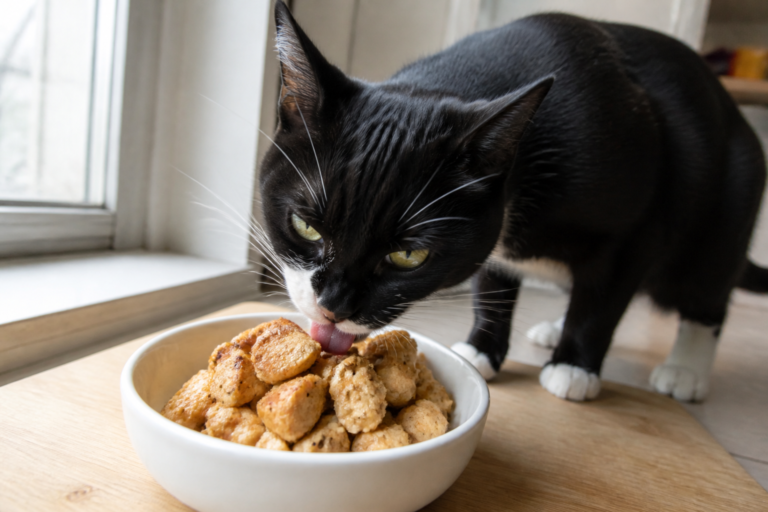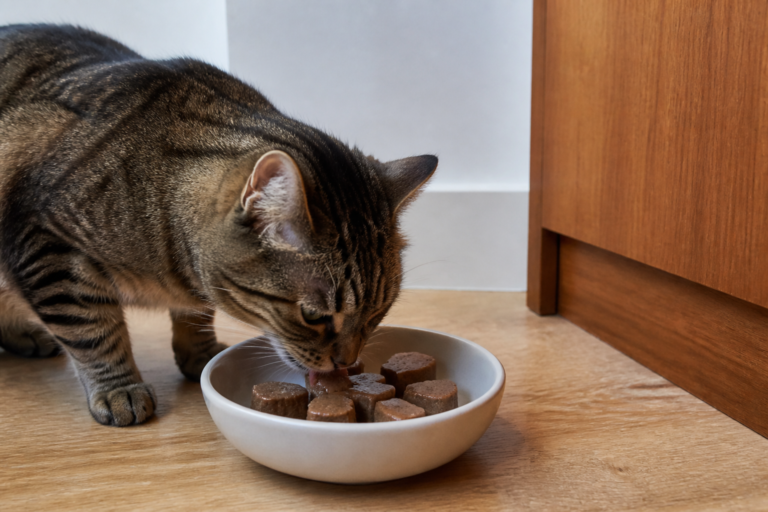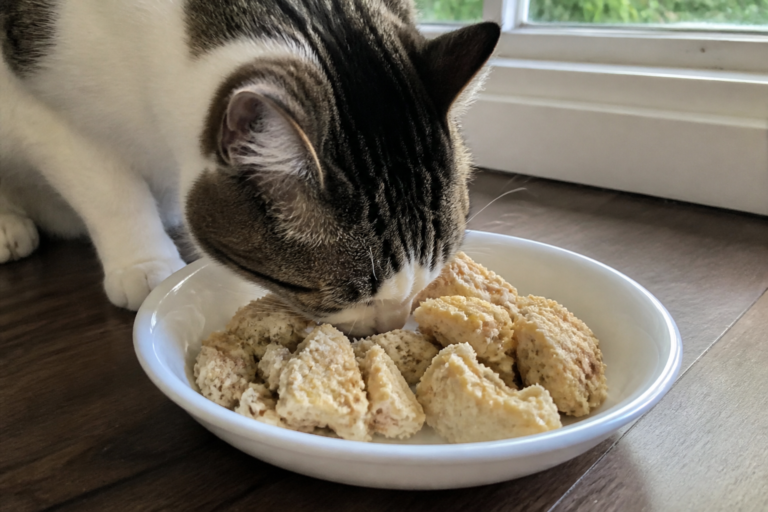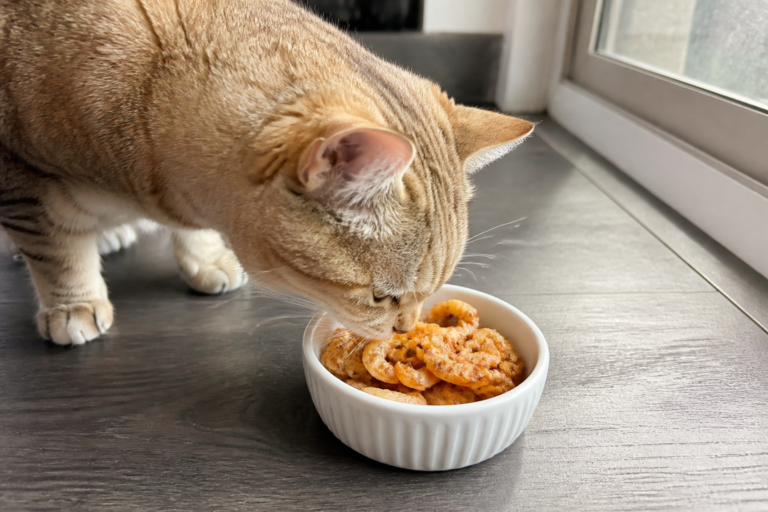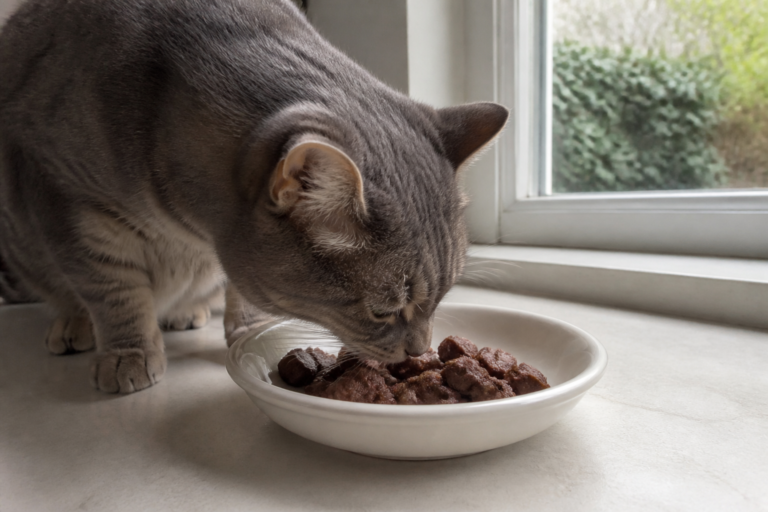
Does your cat turn their nose up at standard store-bought treats? Most feline friends crave strong scents and creamy textures, which makes this recipe a guaranteed winner for even the pickiest eaters.
These Frozen Goat Milk and Tuna Cat Treat Cubes offer a hydrating, nutrient-dense snack that keeps your cat cool and satisfied.
You only need two main ingredients and a freezer to create a gourmet experience for your favorite fluffball.
Ingredients
- 1 can (5 oz) of skipjack or light tuna in water: Ensure you choose a variety with no added salt or seasonings. Avoid tuna in oil, as the excess fat can cause digestive upset for cats.
- 1 cup of raw or pasteurized goat milk: You can find this in the pet supplement aisle or the dairy section of your local health food store. If you use powdered goat milk, rehydrate it according to the package instructions before starting.
- 1 tablespoon of fresh parsley (optional): Chop this very finely to provide a tiny boost of antioxidants and help freshen that notorious “tuna breath.”
- 1/4 cup of water: Use this only if you need to thin out the mixture for easier pouring into smaller molds.
Instructions
- Drain the tuna liquid: Open your can of tuna and pour the water into a small bowl. Do not throw this away, as it contains plenty of flavor that your cat will love.
- Flake the fish: Place the tuna meat into a blender or a food processor. Use a fork to break up any large chunks before you start blending to ensure a smooth consistency.
- Add the goat milk: Pour the goat milk and the reserved tuna water into the blender with the fish. If you decided to use parsley for a bit of green goodness, toss that in now too.
- Blend until smooth: Pulse the mixture until it reaches a liquid, pourable consistency. You want to eliminate large chunks that might get stuck in the corners of your silicone molds.
- Prepare your molds: Place a silicone treat mold or a standard ice cube tray on a flat baking sheet. This makes it much easier to move the tray to the freezer without spilling fishy milk all over your kitchen floor.
- Fill the trays: Carefully pour the mixture into each cavity. IMO, using a measuring cup with a spout or a clean turkey baster gives you the best control and prevents a massive mess.
- Freeze the treats: Place the tray in the freezer for at least four to six hours. For the best results, leave them overnight to ensure they are solid all the way through.
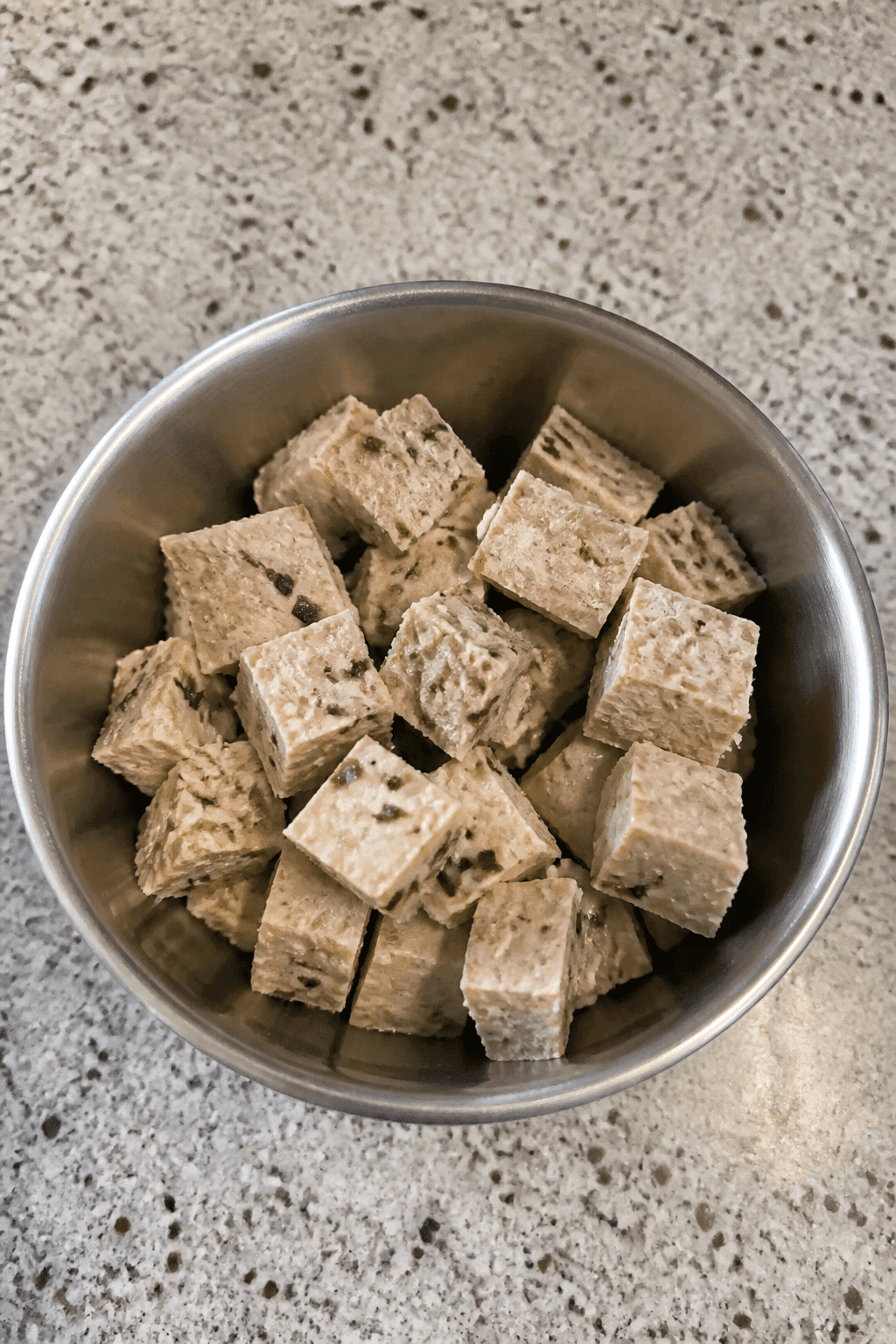
- Pop and serve: Once the treats feel firm to the touch, pop one out and let your cat enjoy their icy reward.
Calories and Nutrition
| Nutrient | Amount Per Treat (Approx. 1 tbsp size) |
|---|---|
| Calories | 8 kcal |
| Protein | 1.2g |
| Fat | 0.4g |
| Carbohydrates | 0.2g |
| Moisture | 85% |
Cat Serving Guidance:
Feed your cat no more than one to two cubes per day. While these treats are healthy, they should never replace a balanced meal.
Always account for these calories within your cat’s daily caloric limit to prevent unwanted weight gain.
Storage Tips
Proper storage keeps these Frozen Goat Milk and Tuna Cat Treat Cubes fresh and prevents them from picking up “freezer burn” smells that might offend a cat’s sensitive nose. Once the cubes freeze completely, remove them from the silicone molds immediately.
- Use airtight containers: Transfer the frozen cubes into a heavy-duty freezer bag or a glass container with a locking lid. This prevents the smell of tuna from migrating to your own food.
- Label the date: Homemade treats do not contain the preservatives found in commercial snacks. Use a permanent marker to write the “made on” date on the bag so you know exactly how long they have been in there.
- Keep them frozen: Only take out the exact number of treats you plan to feed your cat at that moment. These melt quite quickly once they hit room temperature, and a melted goat milk treat makes a sticky mess on the carpet.
- Shelf life: These treats stay fresh in the freezer for up to two months. If you notice any ice crystals or a change in color, toss them out and whip up a fresh batch.
Feeding Suggestions
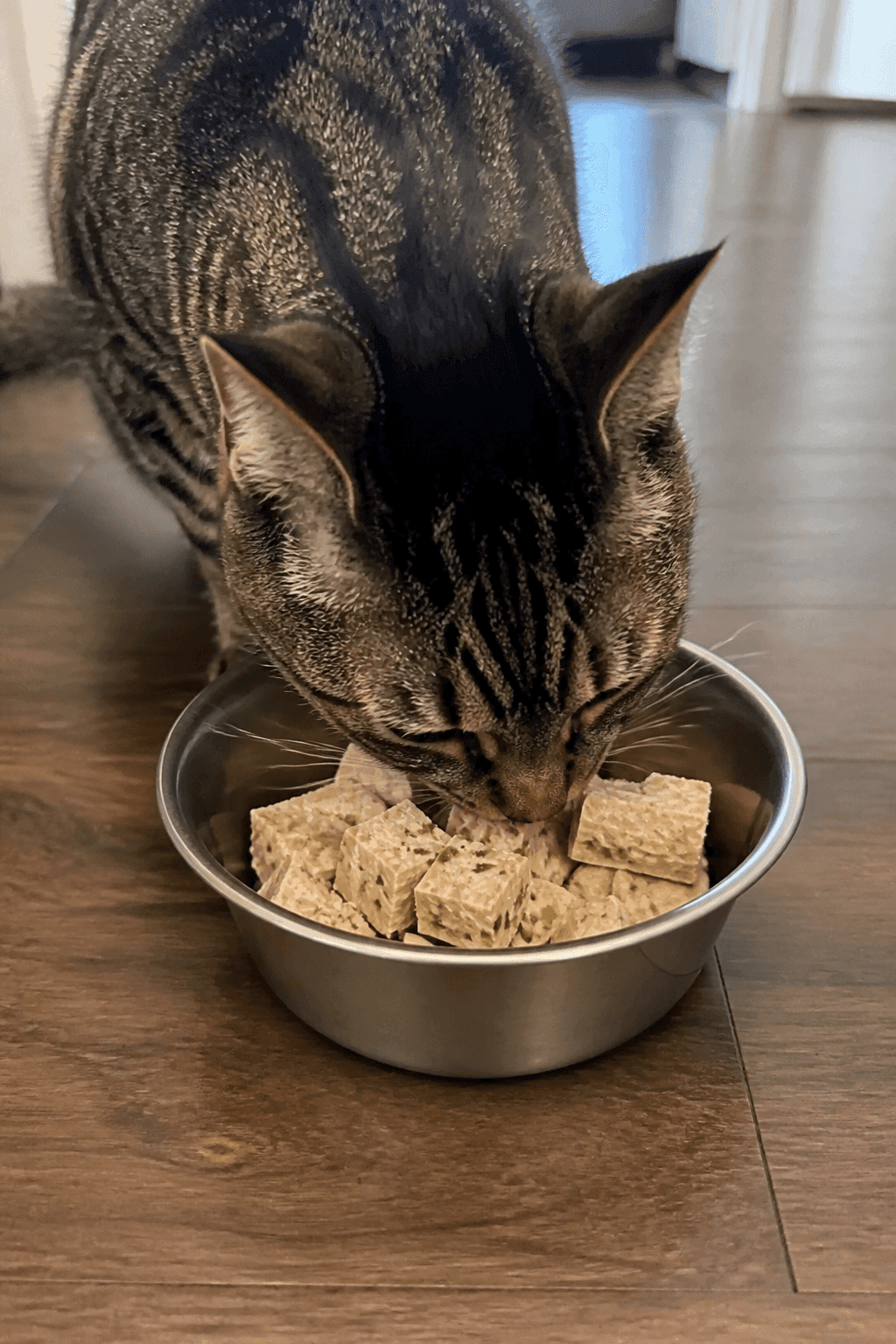
Feeding frozen treats requires a bit of strategy, especially if your cat has sensitive teeth or a “gulping” habit. Some cats love to lick the cube until it disappears, while others might try to crunch through it immediately.
- Serve in a shallow bowl: Place the cube in a wide, shallow ceramic dish. This prevents the treat from sliding across the floor and keeps the melting liquid contained for your cat to lap up.
- Use as a meal topper: If your cat is struggling with a low appetite, crumble half a frozen cube over their regular wet food. The scent of the tuna and the creaminess of the milk often entice them to start eating.
- Let it soften slightly: For older cats or those with dental issues, let the cube sit on the counter for two or three minutes before serving. This takes the “edge” off the cold and makes it easier for them to lick.
- Hydration boost: These treats are excellent for cats who refuse to drink enough water. Since they are primarily liquid, they provide a tasty way to increase your cat’s moisture intake during hot summer months.
Nutritional Benefits
These Frozen Goat Milk and Tuna Cat Treat Cubes pack a punch when it comes to feline health. Unlike cow’s milk, which often causes diarrhea in cats, goat milk contains smaller fat globules and lower levels of lactose.
This makes it much easier for the feline digestive system to process while providing essential probiotics.
- Digestive support: Goat milk acts as a natural prebiotic and probiotic. It helps maintain a healthy balance of gut bacteria, which can lead to better nutrient absorption and a stronger immune system.
- High-quality protein: Tuna provides the essential amino acids cats need to maintain lean muscle mass. It also contains Omega-3 fatty acids, which promote a shiny coat and reduce skin inflammation.
- Taurine content: Both tuna and goat milk contain taurine, an amino acid critical for a cat’s heart health and vision. While these treats don’t replace their main diet, every little bit helps.
- Improved hydration: Many cats live in a state of chronic mild dehydration because they have a low thirst drive. These frozen cubes provide a high moisture content that supports kidney and bladder health.
Health Considerations and What to Avoid
While these treats are generally safe, you must keep a few things in mind to protect your cat’s health. Not all human foods belong in a cat’s bowl, and certain ingredients in commercial tuna can be dangerous.
- Avoid added sodium: Always check the label on your canned tuna. Many brands add salt or vegetable broth that contains onions or garlic. Both onions and garlic are highly toxic to cats and can cause life-threatening anemia.
- Watch for bones: Even canned tuna can occasionally contain small bone fragments. Give the fish a quick feel with your fingers while flaking it to ensure nothing sharp makes it into the blender.
- Mercury concerns: Tuna is a large predator fish and can contain higher levels of mercury than smaller fish like sardines. Limit these treats to a few times a week rather than every single day.
- Lactose sensitivity: While goat milk is better tolerated than cow milk, some cats are still sensitive to any dairy. Start with a very small piece of a treat and monitor your cat for 24 hours for any signs of gas or loose stools.
- Skip the sweeteners: Never add honey, maple syrup, or any artificial sweeteners to these treats. Cats cannot taste “sweet,” and ingredients like Xylitol (often found in human supplements) are deadly to pets.