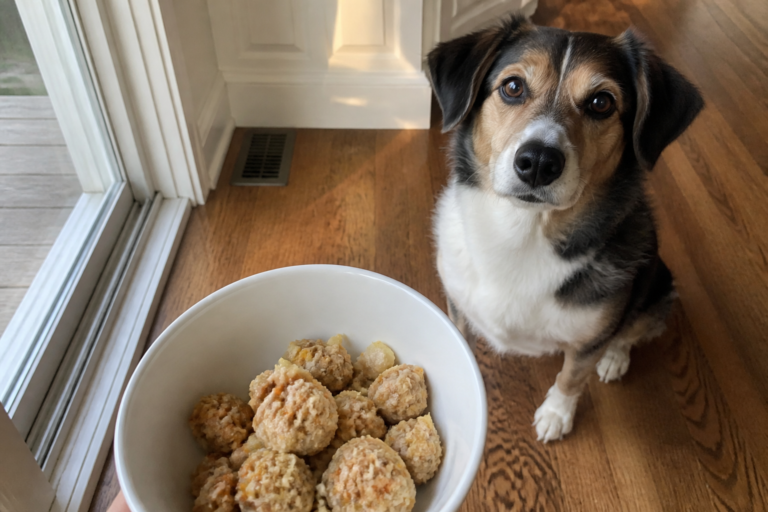
Stop settling for those dry, flavorless biscuits from the grocery store that your dog barely sniffs.
If you want your pup to actually listen during training, you need something that smells like a Sunday morning breakfast.
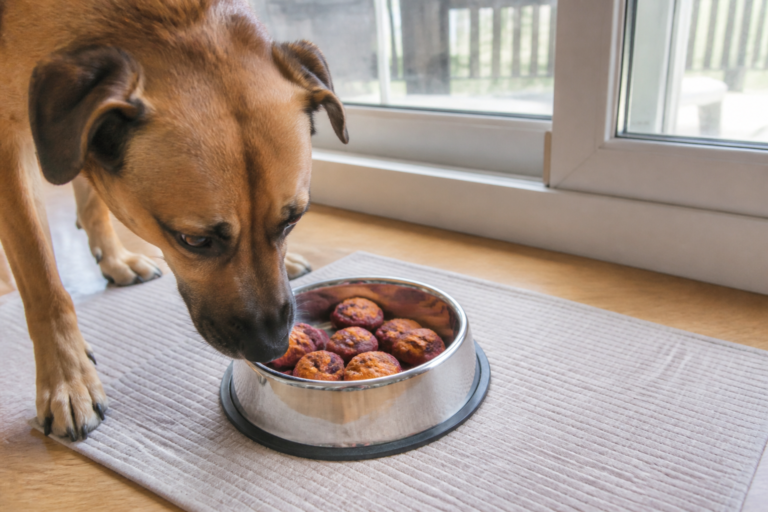
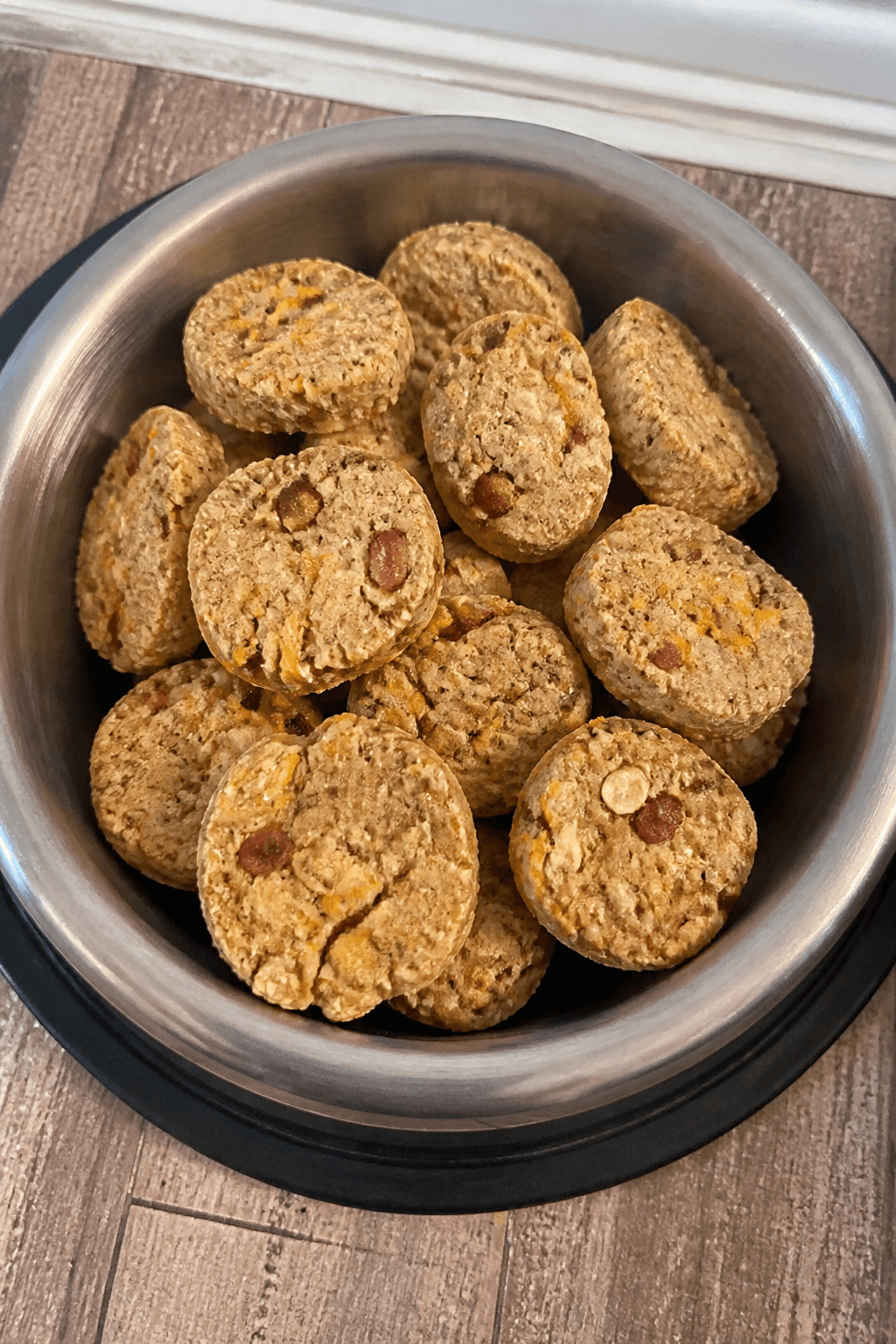
These Cheddar Bacon Dog Cookies for High-Value Rewards are the ultimate motivation for everything from basic sits to complex trick training.
Ingredients
- 2 cups whole wheat flour (you can swap for oat flour if your dog is sensitive to wheat)
- 1/2 cup old-fashioned oats
- 1/2 cup shredded sharp cheddar cheese (avoid “fat-free” versions with weird additives)
- 4 strips of crispy cooked bacon, crumbled into tiny bits (ensure it is plain, low-sodium bacon with no onion or garlic seasoning)
- 1 large egg, lightly beaten
- 1/2 cup low-sodium chicken broth (check the label to ensure it contains no onions, garlic, or xylitol)
- 1 tablespoon melted coconut oil
Instructions
- Preheat your oven to 350 degrees Fahrenheit and line a large baking sheet with parchment paper or a silicone baking mat.
- In a large mixing bowl, whisk together the whole wheat flour and old-fashioned oats until they are well combined.
- Stir in the shredded cheddar cheese and the crumbled bacon bits, making sure the bacon is evenly distributed so every cookie gets a smoky punch.
- Create a well in the center of the dry ingredients and pour in the beaten egg, chicken broth, and melted coconut oil.
- Mix the ingredients with a sturdy spoon until a stiff dough forms. If the dough feels too dry or crumbly, add an extra tablespoon of broth; if it is too sticky, sprinkle in a little more flour.
- Turn the dough out onto a lightly floured surface and knead it a few times until it holds together in a smooth ball.
- Roll the dough out to about 1/4 inch thickness. Use a small cookie cutter (bone shapes are classic, but small circles work best for training) to cut out the treats.
- Place the cookies onto the prepared baking sheet. Since these do not spread much, you can place them fairly close together.
- Bake for 20 to 25 minutes, or until the cookies feel firm to the touch and the edges start to turn a golden brown.
- Turn off the oven and leave the cookies inside for another 10 minutes with the door cracked. This extra step helps them get that “crunch” that dogs love.
- Remove the cookies from the oven and let them cool completely on a wire rack before serving them to your pup.
Calories and Nutrition
| Nutrient | Amount Per Cookie (Approx. 1-inch size) |
|---|---|
| Calories | 28 kcal |
| Protein | 1.2g |
| Fat | 1.5g |
| Carbohydrates | 3.2g |
| Fiber | 0.4g |
Serving Guidance for Dogs:
* Small Dogs (under 20 lbs): 1-2 cookies per day.
* Medium Dogs (20-50 lbs): 3-4 cookies per day.
* Large Dogs (over 50 lbs): 5-6 cookies per day.
* Always remember that treats should make up no more than 10% of your dog’s daily caloric intake. Use smaller pieces for intensive training sessions.
Storage Tips
Because these cookies contain real meat and cheese, you cannot treat them like shelf-stable processed biscuits. They lack the heavy preservatives found in commercial bags, so you need to keep them fresh.
- Refrigeration: Store the cooled cookies in an airtight container in the fridge for up to 7 to 10 days.
- Freezing: These cookies freeze beautifully. Place them in a freezer bag and keep them for up to 3 months. You can even give them to your dog straight from the freezer for a crunchy, cold snack.
- Keep them dry: If you want a longer shelf life at room temperature, bake them a bit longer at a lower temperature to remove more moisture. However, for the best flavor and safety, the fridge is your best bet.
Feeding Suggestions
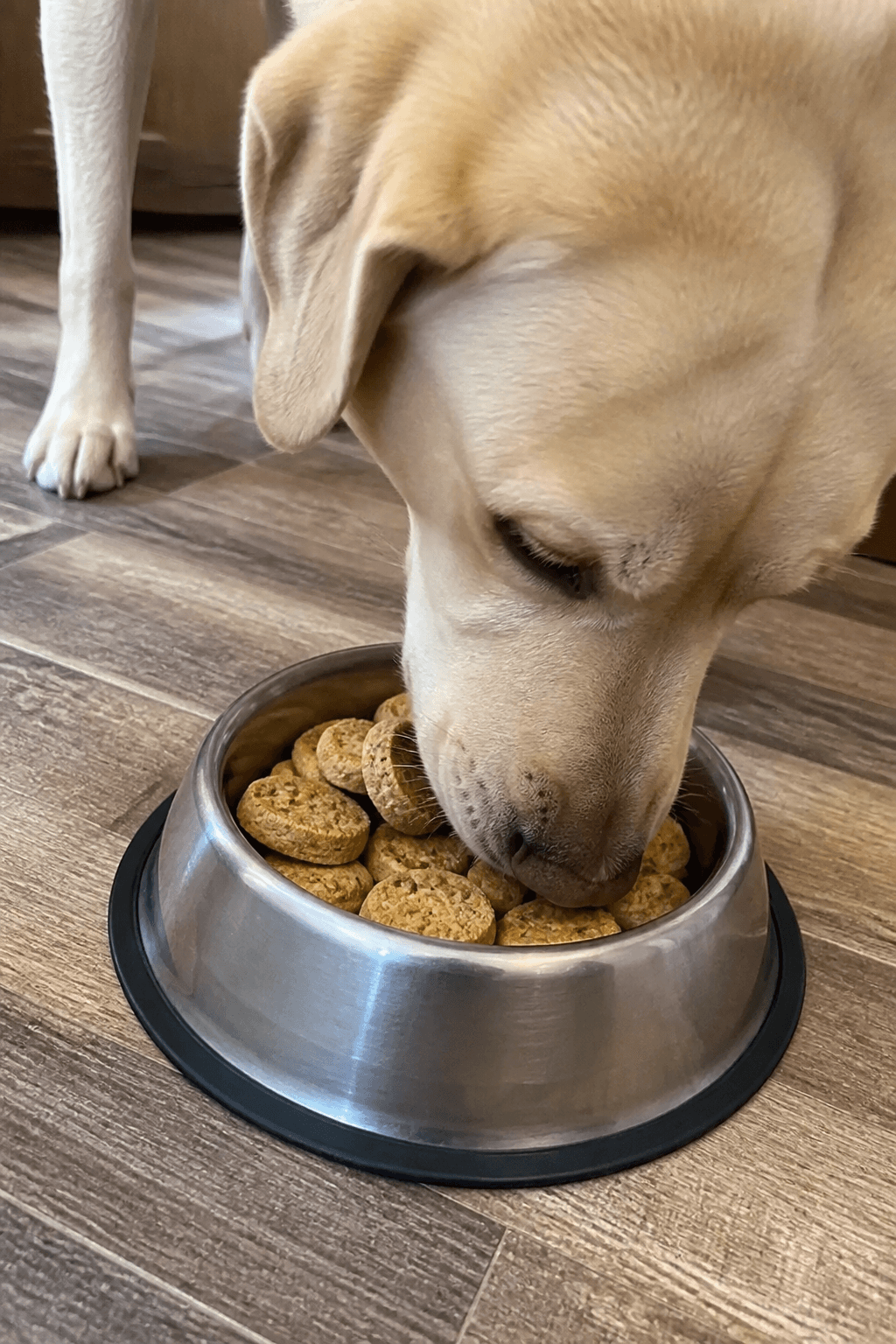
These are specifically designed as “high-value” rewards. In the dog training world, high-value means the “good stuff” that your dog will do anything for.
Use these cookies when you are teaching a difficult new command or working in a distracting environment like a busy park.
- Training sessions: Break the cookies into quarters. A tiny taste of bacon and cheese is often enough to keep a dog’s focus without overfeeding them.
- The “Jackpot”: If your dog finally nails a difficult behavior like a perfect “recall” from across the yard, give them a whole cookie as a jackpot reward.
- Crumble topper: If you have a picky eater, you can crumble one of these cookies over their regular kibble to encourage them to finish their meal.
- Bedtime snack: A single cookie before bed can be a nice ritual for a well-behaved pup.
Nutritional Benefits
You might think of bacon and cheese as “junk food,” but when prepared at home with quality ingredients, they offer some solid benefits.
The cheddar cheese provides a boost of calcium and protein, which supports bone health and muscle maintenance.
Bacon, while fatty, is an incredible source of B vitamins and selenium. The scent alone acts as a powerful mental stimulant for dogs.
The whole wheat flour and oats provide complex carbohydrates and dietary fiber. Fiber is essential for keeping your dog’s digestive system moving smoothly.
By using coconut oil, you are also adding healthy medium-chain triglycerides (MCTs) which can help improve your dog’s coat shine and skin health.
Health Considerations and What to Avoid
While most dogs will go crazy for these treats, you must keep a few safety rules in mind. Bacon is high in fat and sodium.
If your dog has a history of pancreatitis or a very sensitive stomach, you should consult your vet before introducing high-fat treats. Always use the lowest sodium bacon you can find.
CRITICAL: Never use ingredients containing Xylitol (often found in some peanut butters or “sugar-free” products), onions, or garlic.
Onions and garlic in any form (powdered or fresh) are toxic to dogs and can cause damage to their red blood cells. Also, ensure the chicken broth you use is specifically “pet safe” or made without added onions and salt.
If your dog is allergic to grains, you can easily substitute the wheat flour for a grain-free alternative like chickpea flour or coconut flour, though you may need to adjust the liquid content.