Does your dog turn every visitor into a target? You open the front door, and within seconds your dog is up on two legs, paws on someone’s chest, tail wagging a mile a minute.
It might feel sweet, but dog jumping behavior is one of the most common problems pet owners deal with. And it gets worse the longer you wait.
The good news is that you can fix this. No harsh methods needed. Just consistency, the right technique, and a little patience.
Why Dogs Jump on People
Before fixing the behavior, it helps to know why it happens.
Dogs are social animals. Puppies naturally lick their mother’s face to greet her. When your dog jumps up at you or a guest, they are trying to reach your face the same way. It is a natural greeting instinct, not aggression.
The real problem is that jumping almost always gets rewarded without owners noticing.
When your dog jumps and you push them down, say “no,” or even laugh, your dog still gets your attention. To a dog, any attention is a reward, good or bad.
So the jumping continues. Often it gets worse.
Mistakes That Make Jumping Worse
Most owners accidentally reinforce the very behavior they want to stop. Here are the most common errors:
| Mistake | Why It Backfires |
|---|---|
| Pushing the dog off with your hands | Physical contact still counts as attention and feels playful |
| Saying “off” in an excited tone | An energetic voice stimulates the dog even more |
| Letting guests pet the dog while jumping | Directly rewards the behavior you want to stop |
| Allowing it sometimes but not others | Confuses the dog and slows training significantly |
| Correcting after the fact | Dogs live in the moment and cannot connect a late correction to the behavior |
Consistency matters more than anything else. Every person your dog interacts with, including guests, needs to respond the same way every time.
How to Stop a Dog From Jumping on Guests
The “Four on the Floor” Rule
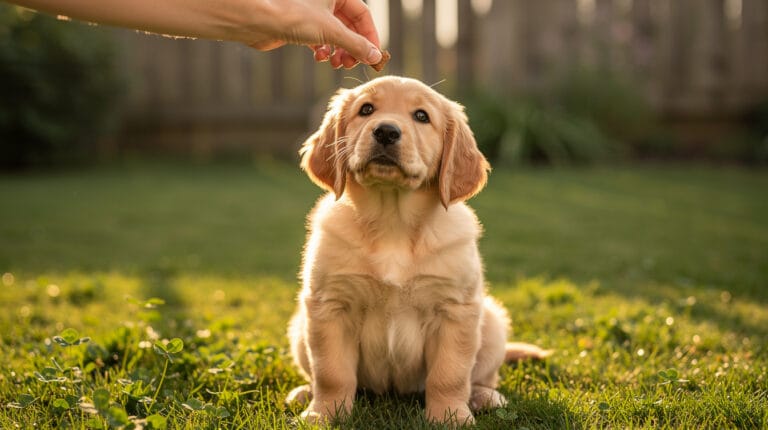
The most widely used method among professional dog trainers and certified animal behaviorists is called the “four on the floor” rule. The concept is straightforward: your dog only gets attention when all four paws are on the ground.
Here is how to practice it:
- The moment your dog jumps, turn your back completely. Cross your arms. Zero eye contact.
- The instant all four paws hit the floor, turn around and give calm, quiet praise.
- If your dog jumps again, turn away again.
- Repeat until your dog figures out what earns the reward.
This works because it removes the reward entirely. No touch, no eye contact, no reaction. Most dogs catch on within a few sessions when everyone applies the rule consistently.
Train an Incompatible Behavior
One of the most effective tools in positive reinforcement dog training is teaching your dog what to do instead of just reacting to what you do not want.
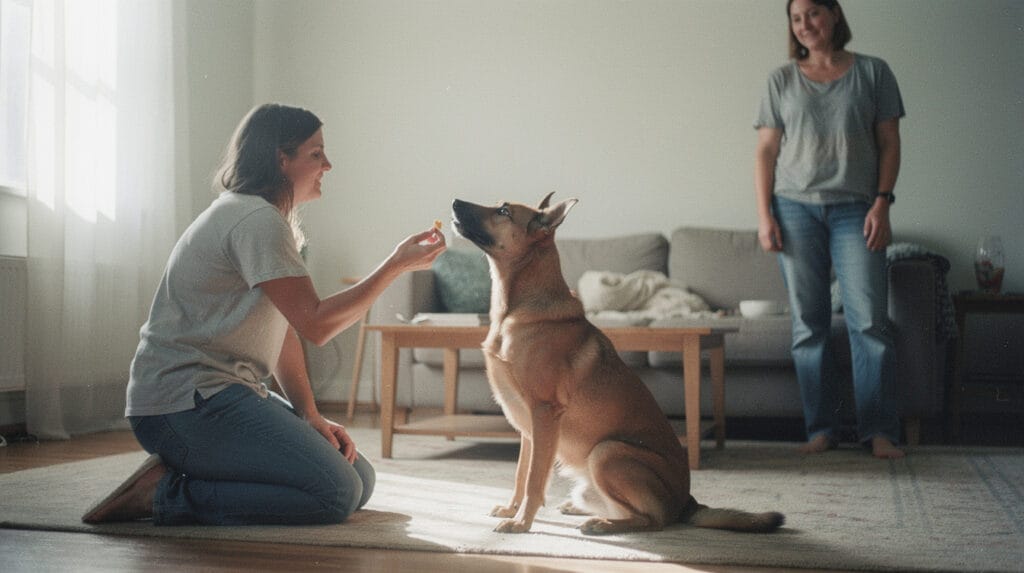
Sit is the perfect choice. A dog cannot sit and jump at the same time.
Here is how to build it step by step:
Step 1: Get a solid sit first. Practice away from the front door using high-value treats like small pieces of chicken or cheese. Do not move to the next step until the sit is reliable.
Step 2: Add distractions. Practice the sit while you move around, talk loudly, and open and close doors. Build the skill in more exciting conditions before introducing guests.
Step 3: Practice at the door. Have a family member knock or ring the bell. Ask for a sit before opening the door. Reward generously when your dog holds it.
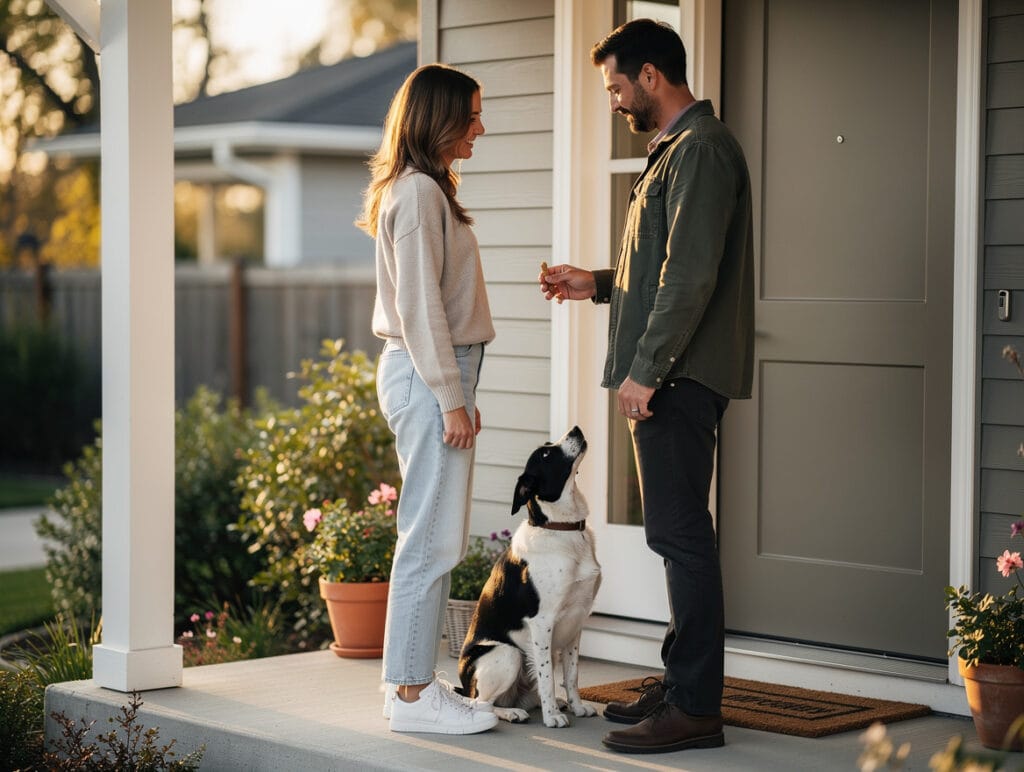
Step 4: Bring in guests. Ask guests to wait outside until your dog is sitting. Open the door. Hand the guest a treat in advance and have them reward the sit right away.
This builds a new habit: guests arriving means sit and earn a treat.
Use a Leash During Arrivals
If your dog is large, very excitable, or has been jumping for a long time, physical management during training makes the whole process easier.
Keep your dog on a house leash (a short, lightweight leash dragged indoors) when you are expecting guests.
When the doorbell rings, step on the leash or hold it to prevent jumping. Ask for a sit. Reward it.
This is not a permanent fix. It is a tool that gives you control while your dog is still learning. As the new behavior gets stronger, you can phase the leash out.
Teach a “Go to Your Place” Command
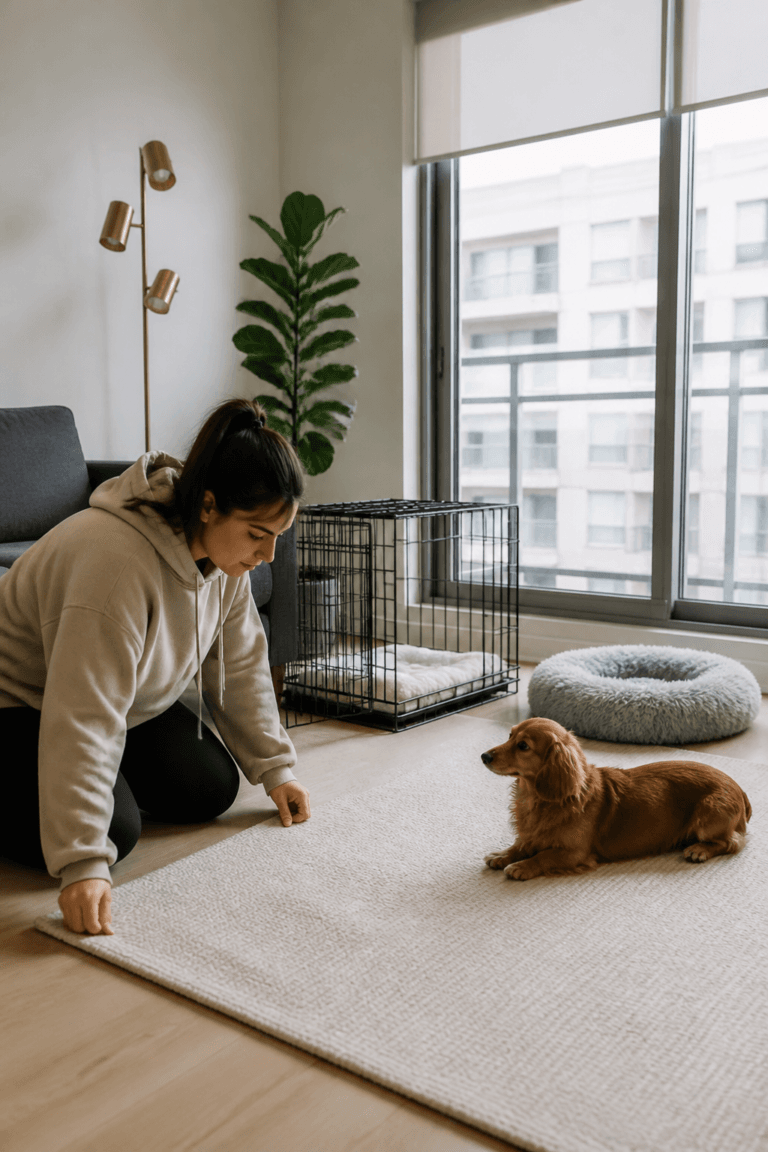
“Go to your place” tells your dog to move to a specific spot, like a mat or dog bed, and stay there while guests come in.
This works especially well for dogs that get overly excited or anxious around new people.
| Training Stage | What to Do |
|---|---|
| Stage 1 | Teach your dog to go to the mat and lie down on cue |
| Stage 2 | Practice with mild distractions around the house |
| Stage 3 | Send your dog to the mat before opening the front door |
| Stage 4 | Have guests enter while your dog holds the position |
| Stage 5 | Release your dog only once they are calm |
This method works especially well for dogs with high arousal levels or ongoing impulse control challenges.
Brief Your Guests
Your training will not stick if guests do not play along. This is where a lot of owners get stuck.
Before anyone walks in, give them simple, clear instructions:
- “Please ignore the dog completely if he jumps. No eye contact, no talking, no touching.”
- “Once all four paws are on the floor, you can calmly say hello.”
- “Here is a treat. If he sits when you walk in, give him this.”
Most people are happy to help once they understand the reason behind it. Children can be harder to manage because they tend to get excited and reach for the dog immediately.
Keep young children and excitable dogs separated during arrivals until the behavior is consistently under control.
Training Tips by Dog Size and Age
Different dogs need slightly different approaches. Here is a quick guide:
| Dog Type | Key Considerations |
|---|---|
| Puppies under 6 months | Start early. Habits form fast at this age. Keep sessions short and fun. |
| Adult dogs with long-standing habits | Takes more repetition, but it is completely fixable with consistency. |
| Small breeds | Apply the same rules. Do not allow jumping just because it feels harmless. |
| Large and giant breeds | Address this right away. A jumping large dog can knock people over and cause injuries. |
| Senior dogs | Be patient with any physical limits. Focus on rewarding calm greetings. |
One thing worth repeating about small dogs: many owners let small dog jumping go because the dog is light and it seems cute.
But this creates real confusion for your dog. They do not understand why jumping is fine at home but not okay at the vet or with strangers. Keep the rules the same no matter the size.
How Long Will This Take?
There is no one-size-fits-all timeline, but here is a realistic picture.
Puppies who have only been jumping for a few weeks can often learn the new behavior in 1 to 2 weeks of consistent practice.
Adult dogs who have been jumping for months or years may need 4 to 8 weeks of steady work before the behavior fades reliably in most situations.
The biggest variable is how consistent everyone around your dog is. One person who lets the dog jump can undo weeks of progress quickly.
When to Get Professional Help
Most dogs can be trained out of jumping at home.
But if the jumping comes with other concerning behaviors like resource guarding, nipping, anxiety around strangers, or over excitement that results in accidents, it is worth working with a qualified expert.
Consider reaching out to a certified professional dog trainer (CPDT-KA) or a veterinary behaviorist if:
- The jumping has gotten worse despite consistent training
- Guests are being knocked down or injured
- The jumping comes with growling or snapping
- Your dog cannot settle down even several minutes after guests arrive
A qualified trainer can assess the behavior in person and build a customized behavior modification plan for your specific dog.
Quick Reference: Do This, Not That
| Do This | Avoid This |
|---|---|
| Turn your back the moment your dog jumps | Pushing the dog off with your hands |
| Reward four paws on the floor every time | Giving any attention while jumping is happening |
| Build a reliable sit before guests arrive | Practicing only when guests are already there |
| Give guests clear, simple instructions | Assuming guests will figure it out on their own |
| Use a house leash during arrivals while training | Letting the dog roam freely during greetings before the behavior is solid |
| Reward calm behavior right away | Waiting too long after the good behavior to give the reward |