Crate training at night can feel challenging, especially when your puppy cries and keeps you awake.
But with the right approach, you can help your puppy feel safe, calm, and comfortable in their crate.
In this guide, we will explain how to crate train a puppy at night without crying, using simple, proven steps that work for most breeds.
Why Night Crate Training Is Important
Nighttime crate training helps your puppy build good sleeping habits and reduces accidents inside the house.
According to American Kennel Club, a crate provides a safe and secure space that mimics a natural den.
Key benefits include:
- Helps with house training
- Prevents destructive behavior at night
- Builds a routine and structure
- Keeps your puppy safe while you sleep
Choose the Right Crate Setup
Your crate setup plays a big role in reducing crying.
Crate Size Matters
Pick a crate that is:
| Puppy Size | Crate Space Needed |
|---|---|
| Small breeds | Just enough to stand and turn |
| Medium breeds | Slightly roomier but not too large |
| Large breeds | Use divider panels |
A crate that is too big can lead to accidents. A crate that is too small feels uncomfortable.
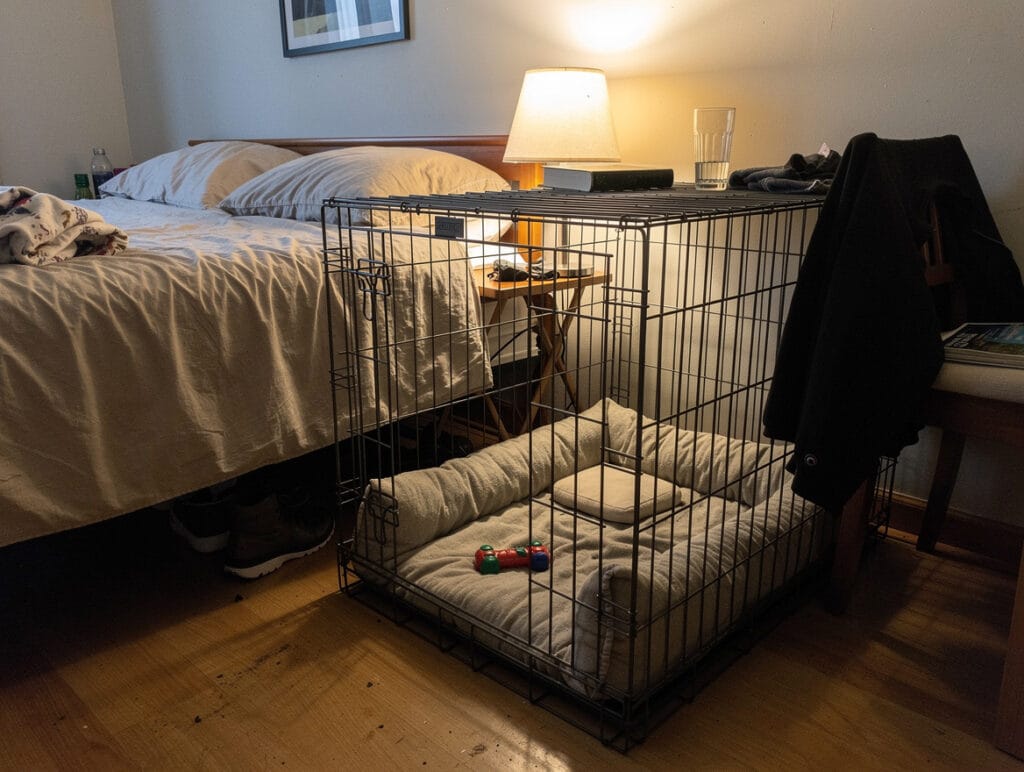
Make the Crate Comfortable
Add items that help your puppy feel relaxed:
- Soft bedding or blanket
- A safe chew toy
- An item with your scent
This creates a secure sleeping environment and reduces anxiety.
Create a Bedtime Routine
Puppies love routines. A consistent schedule helps them settle faster.
Ideal Night Routine
- Feed dinner 2–3 hours before bedtime
- Take your puppy for a short walk or play session
- Allow a final bathroom break
- Calm things down before placing them in the crate
Avoid high-energy play right before bedtime. It makes it harder for your puppy to relax.
Place the Crate in the Right Location
Where you keep the crate matters more than most people think.
- Keep the crate in your bedroom initially
- Your presence helps reduce separation anxiety
- You can respond quickly if they need to go outside
Over time, you can slowly move the crate to another area if needed.
Use Positive Crate Association
Never force your puppy into the crate. Instead, make it a place they enjoy.
How to Build Positive Association
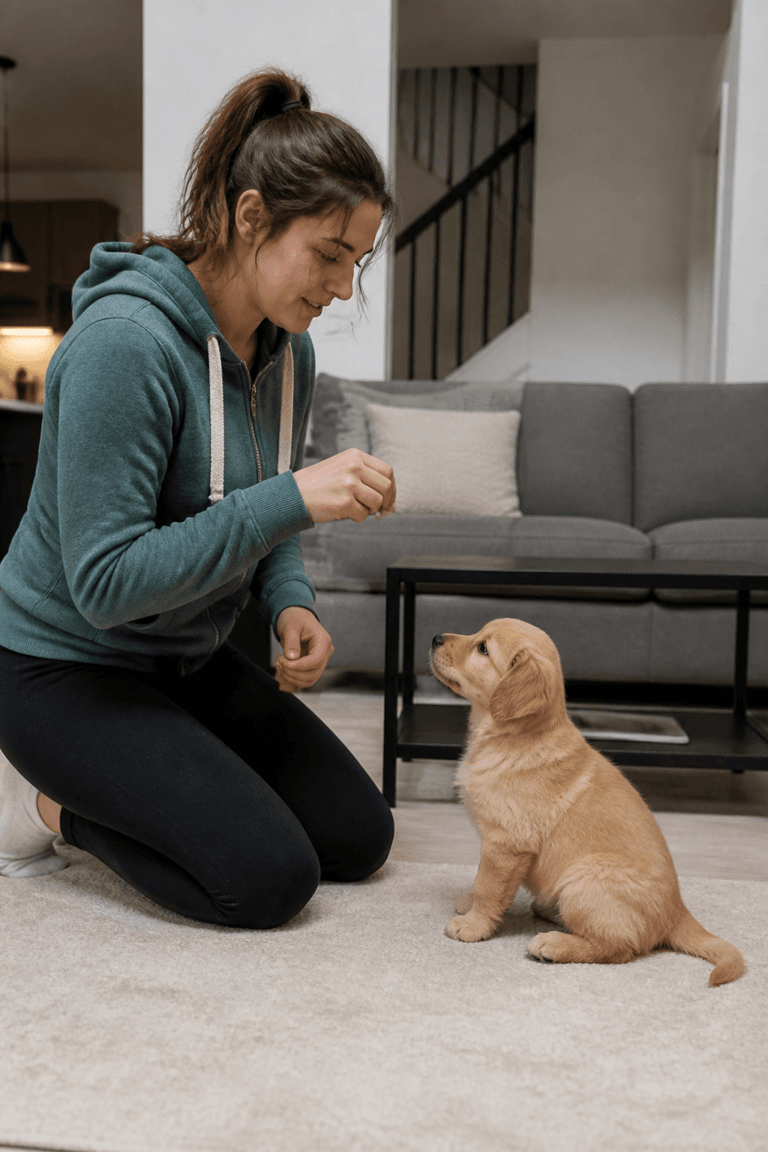
- Use treats and praise when they enter
- Feed meals inside the crate
- Use commands like “crate” or “bed”
- Keep the door open during the day
This helps your puppy connect the crate with comfort and rewards.
Handle Crying the Right Way
This is the most important part.
When to Ignore Crying
If your puppy has:
- Already gone potty
- Been exercised
- Been fed
Then the crying is likely for attention. In this case, ignore it. Responding too quickly teaches them that crying gets attention.
When to Respond
Respond only if:
- The crying becomes intense or unusual
- It has been a few hours since the last potty break
Take them out calmly, without playing or talking too much. This keeps the focus on bathroom needs only.
Use Gradual Crate Training
If your puppy struggles at night, train them during the day first.
Step-by-Step Approach
| Step | What to Do |
|---|---|
| Step 1 | Let puppy explore crate freely |
| Step 2 | Close door for short periods |
| Step 3 | Increase duration gradually |
| Step 4 | Practice short naps in crate |
This builds comfort before nighttime training begins.
Tire Your Puppy Before Bed
A tired puppy sleeps better. Make sure your puppy gets enough activity.
Good options include:
- Light play sessions
- Basic training exercises
- Short walks
Avoid over-exercising. Too much activity can make puppies overtired and restless.
Try Comfort Techniques
Some puppies need extra comfort during the first few nights.
Helpful Tricks
- Cover crate partially with a blanket (creates a den-like feel)
- Use a warm water bottle wrapped in cloth
- Add a ticking clock to mimic a heartbeat
These tricks help reduce anxiety, especially in very young puppies.
Avoid Common Mistakes
Many owners accidentally make crate training harder.
Mistakes to Avoid
- Using the crate as punishment
- Letting puppy out every time they cry
- Skipping the bedtime routine
- Keeping crate too far away at night
These mistakes can increase fear and slow down progress.
How Long Does It Take?
Most puppies adjust within 3 to 7 days if you stay consistent.
Factors that affect progress:
- Age of the puppy
- Breed temperament
- Previous experiences
- Consistency of training
Patience is key. Every puppy learns at a slightly different pace.
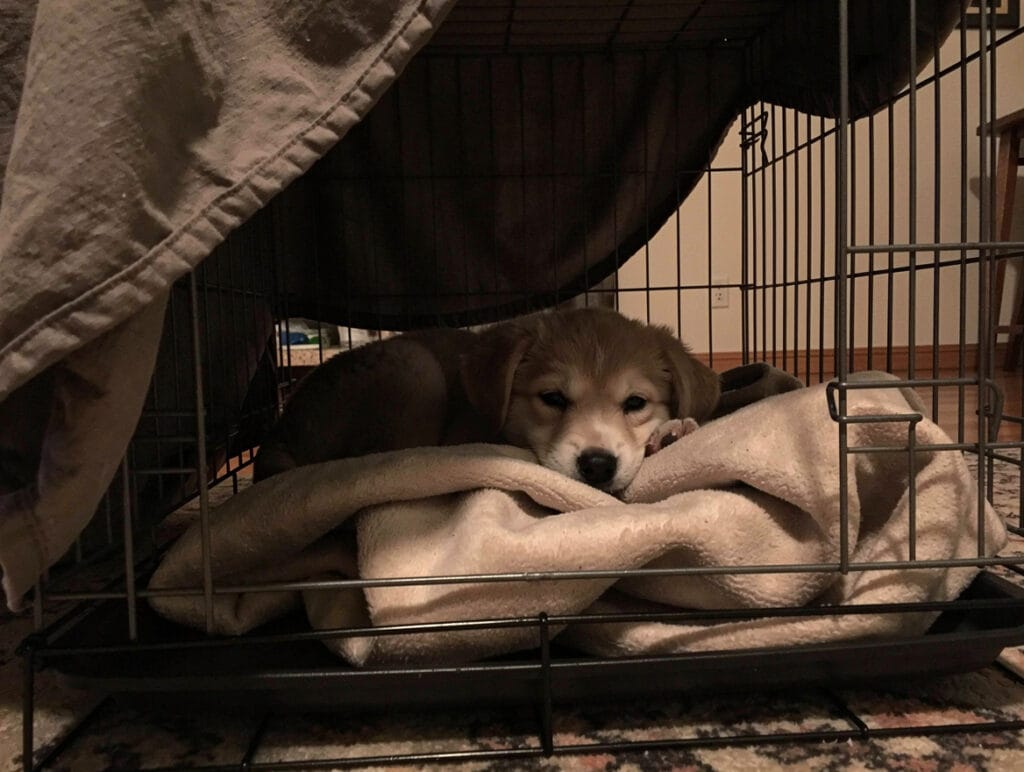
Signs Your Puppy Is Adjusting
You will know your training is working when:
- Crying reduces or stops
- Puppy enters crate willingly
- Sleeps longer through the night
- Fewer accidents occur
These are strong signs of successful crate training.
FAQs
How long will my puppy cry during crate training at night?
Most puppies cry for a few nights, usually 3 to 7 days. With a consistent routine and proper crate setup, the crying reduces quickly as they feel safe and comfortable.
Should I ignore my puppy crying in the crate at night?
You can ignore mild crying if your puppy has already eaten, exercised, and gone potty. However, respond calmly if the crying sounds urgent or it has been several hours since the last bathroom break.
Where should I place my puppy’s crate at night?
It is best to keep the crate in your bedroom during the first few weeks. Your presence helps reduce anxiety and allows you to respond quickly if your puppy needs to go outside.
Can I put toys or blankets inside the crate?
Yes, you can add soft bedding, a safe chew toy, and an item with your scent. These help create a cozy and secure environment that encourages your puppy to relax and sleep.
How often should I take my puppy out at night?
Young puppies usually need a bathroom break every 2 to 4 hours. As they grow, they can hold it longer and sleep through the night without interruptions.
Is it okay to cover the crate at night?
Yes, partially covering the crate can make it feel like a den and help reduce distractions. Just ensure there is proper airflow and your puppy stays comfortable.