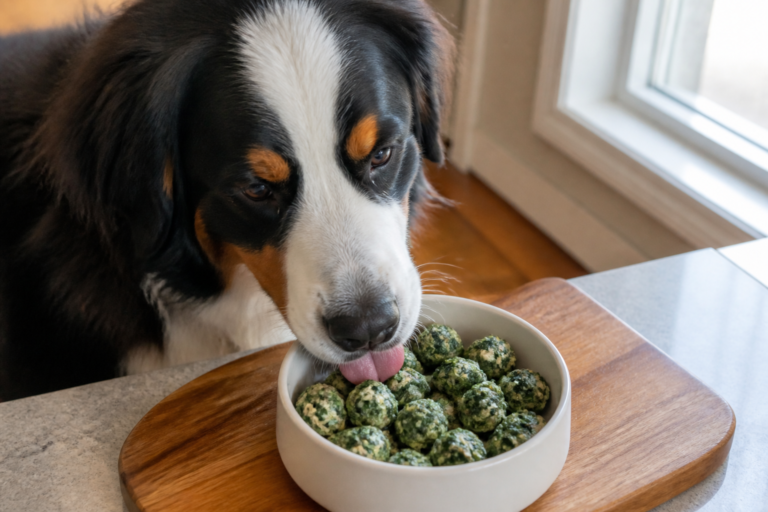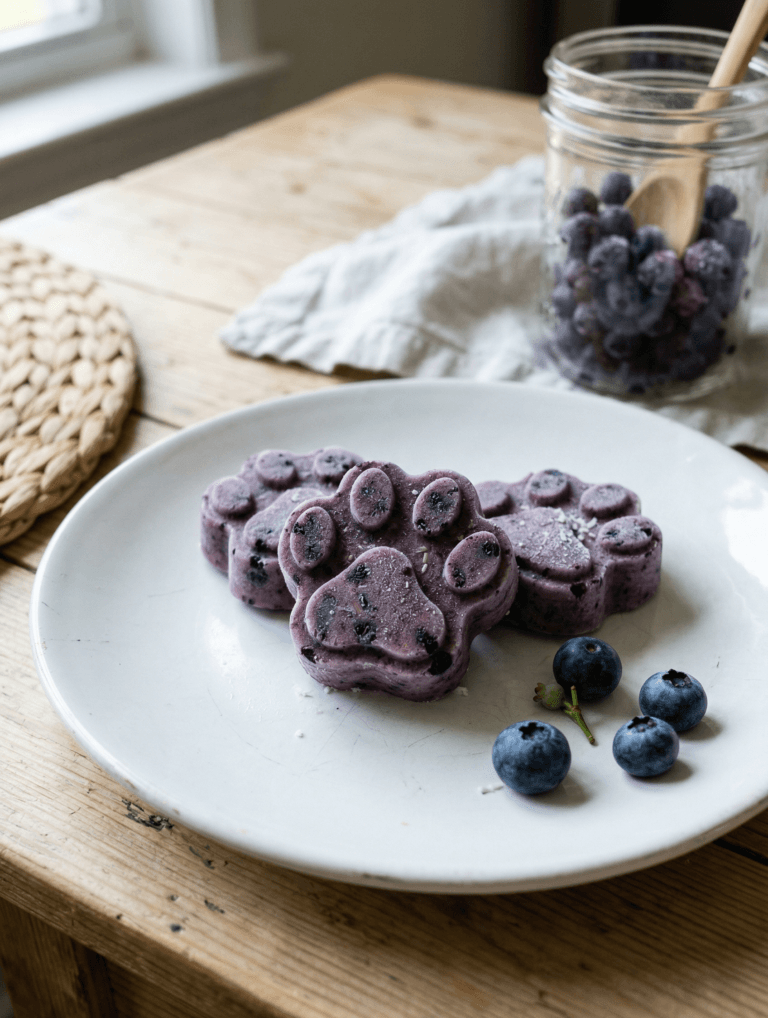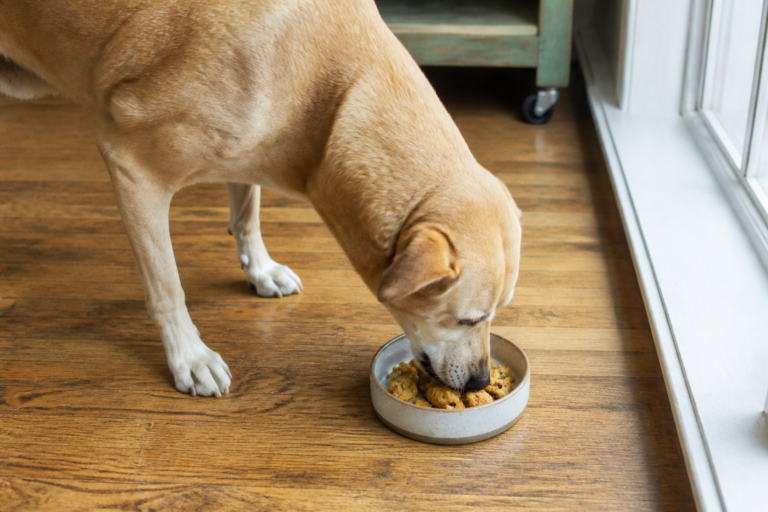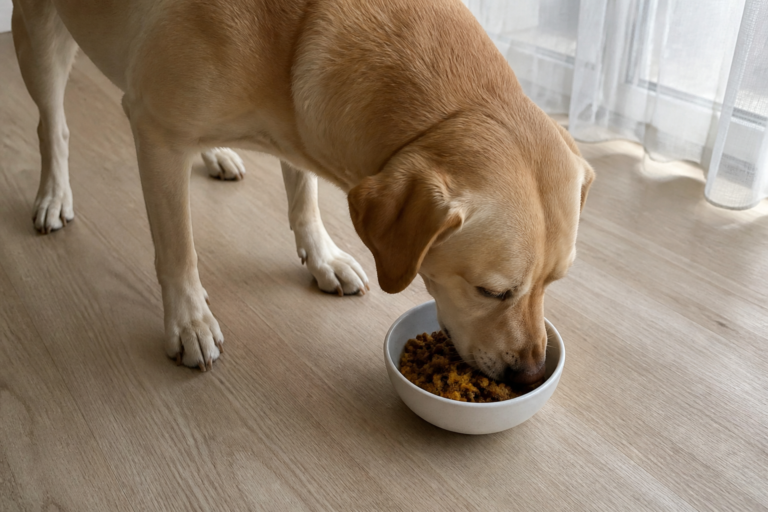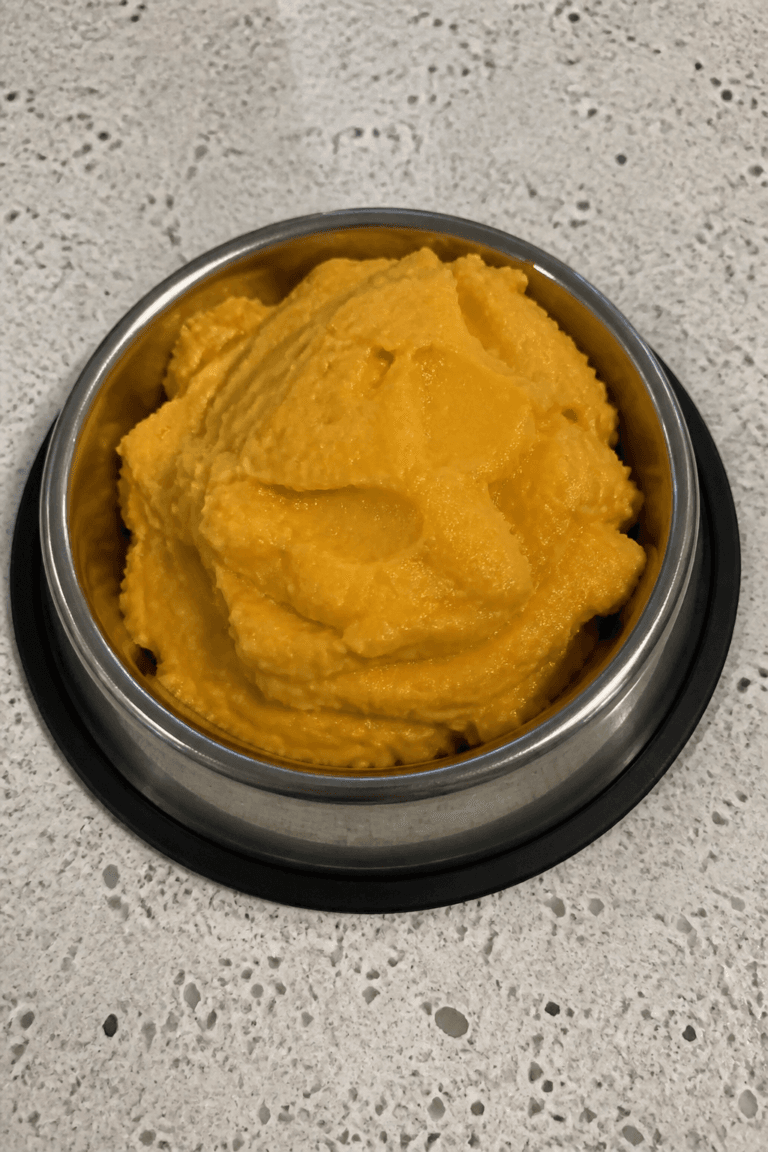
These Chicken & Rice Training Bites for Dogs are small, soft, and made just for your pup.
They work great as rewards during training or as tasty snacks between meals.
The recipe focuses on simple, dog-safe ingredients and easy prep so busy owners can make them at home.
What You’ll Need
- 1 cup cooked white rice (soft, fully cooked)
- 1 cup cooked, shredded chicken (skinless, boneless)
- 1 large egg (helps bind the mixture)
- 1/4 cup plain pumpkin puree (canned, not spiced)
- 2 tablespoons plain low-fat cottage cheese (optional for texture)
- 1 tablespoon olive oil (or a teaspoon of fish oil for omega-3)
- 1/4 teaspoon dried parsley (optional, for freshness)
Instructions
- Preheat your oven to 350°F (175°C). Line a baking sheet with parchment paper or a silicone mat.
- Place the cooked rice and shredded chicken in a large bowl. Use a fork to mash the rice slightly so the mixture will stick together.
- Add the egg, pumpkin puree, cottage cheese if using, and olive oil. Mix until the mixture becomes a thick, workable dough.
- If the mixture feels too wet, add a tablespoon of cooked rice at a time until it firms up. If too dry, add a teaspoon of water or pumpkin.
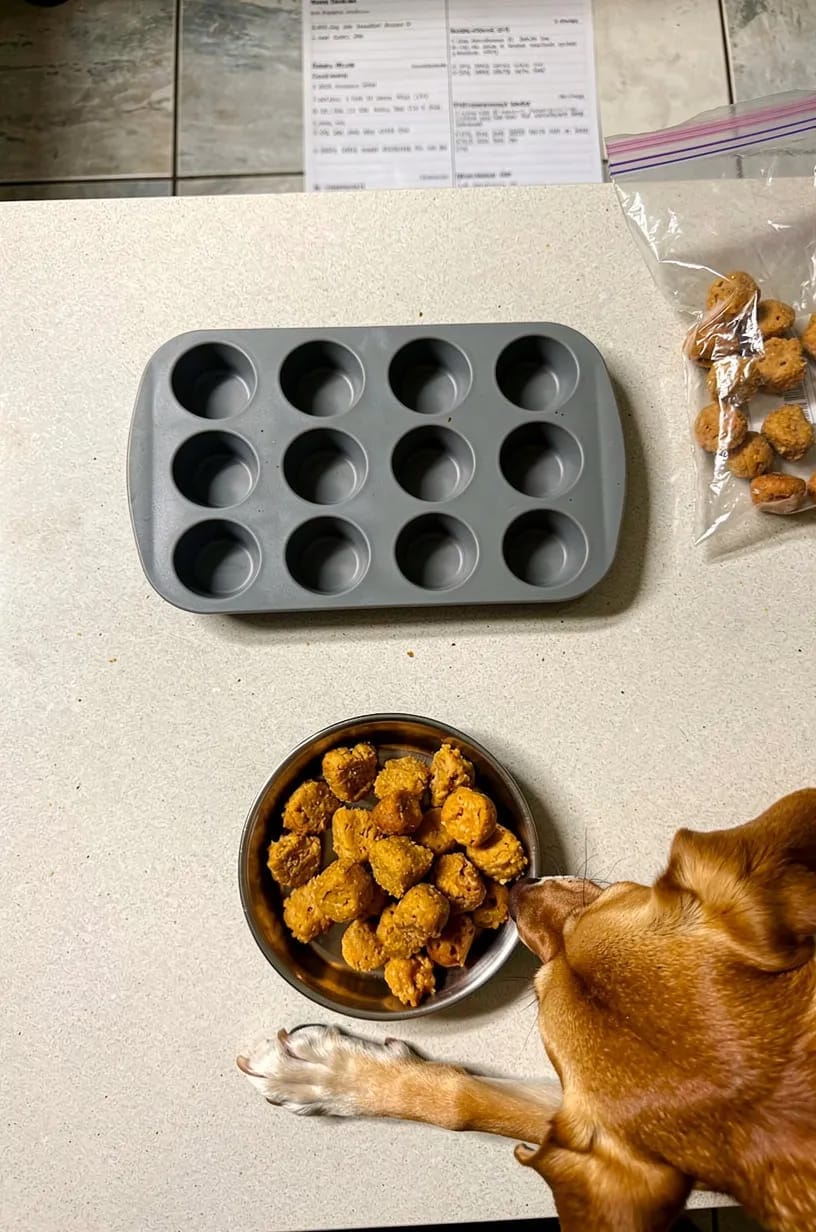
- Roll small portions into bite-sized balls or press the mixture into a lightly oiled mini-muffin tin for uniform pieces.
- Place the bites on the prepared baking sheet or bake the mini-muffins for 12 to 15 minutes. For firmer treats, bake up to 20 minutes but watch carefully so they do not dry out.
- Allow the bites to cool completely on a wire rack before offering them to your dog.
Break into training-size pieces if needed.
Storage Instructions
Store cooled treats in an airtight container in the fridge for up to 4–5 days.
For longer storage, freeze treats in a single layer on a tray until firm, then transfer to a freezer bag for up to 3 months.
Thaw individual pieces as needed and warm briefly to room temperature before serving.
Portion treats into small containers or zip bags, using tiny pieces for training sessions.
This helps avoid overfeeding and makes treats easy to grab on walks.
What Not to Do
- Do not add onion, garlic, or chives. These are toxic to dogs even in small amounts.
- Do not use salted or heavily seasoned chicken. Keep sodium low for your dog’s health.
- Avoid fatty skin or bones. Use boneless, skinless chicken only and remove any small bones.
- Do not use artificial sweeteners like xylitol. Never include chocolate, grapes, or raisins.
- Do not overfeed treats. Training treats should be small and count toward your dog’s daily calorie intake.
Variations You Can Try
- Swap the chicken for cooked turkey for a mild alternative.
- Replace white rice with cooked quinoa or brown rice for added fiber if your dog tolerates it well.
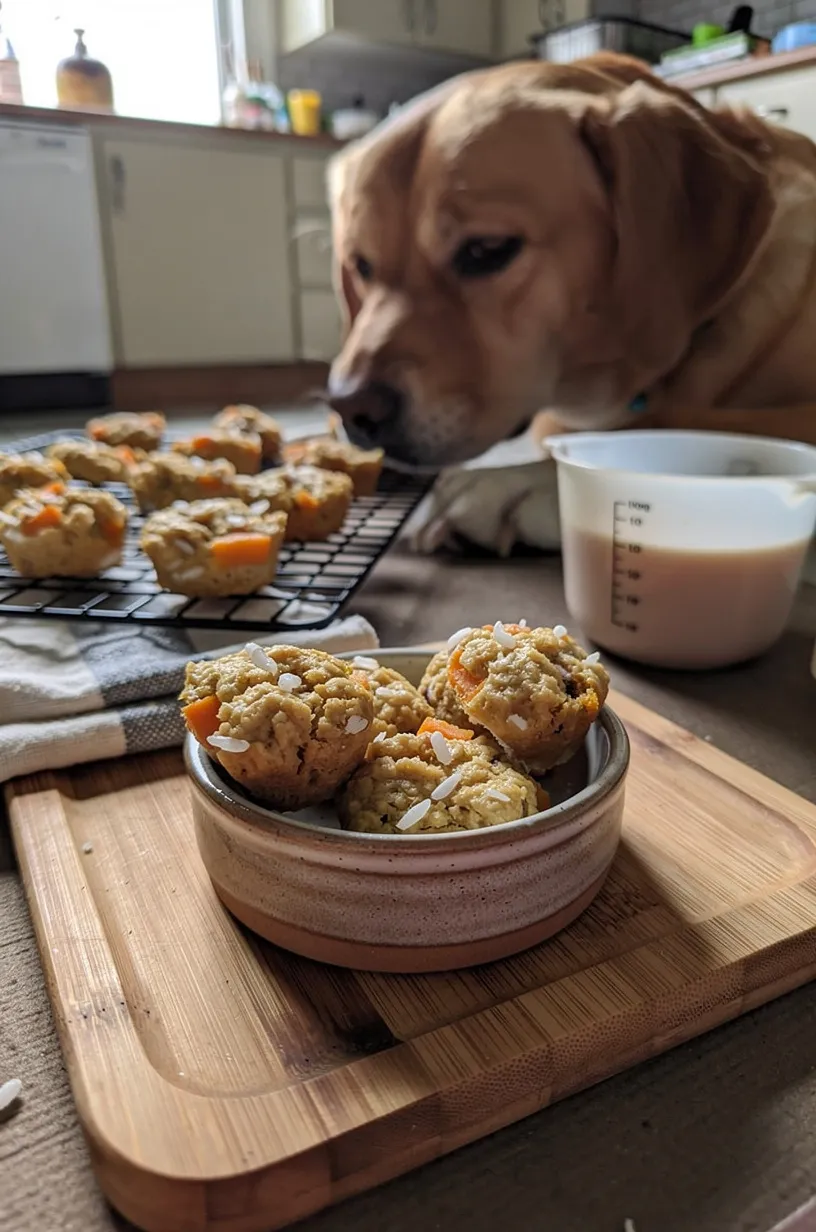
- Add a tablespoon of finely grated carrot or zucchini for extra vitamins and moisture.
- Use a teaspoon of canned sardine oil instead of olive oil to boost omega-3 fatty acids.
- Make a softer version by increasing pumpkin to 1/3 cup for very young puppies or senior dogs.
FAQ
How many treats can I give my dog per day?
It depends on your dog’s size and daily calorie needs.
For most dogs, give treats sparingly and count them as part of daily calories. Small dogs might get 4 to 8 tiny pieces; larger dogs might get 10 to 20. Adjust based on activity and body condition.
Can I use raw chicken instead of cooked?
It is safer to use fully cooked chicken to avoid bacterial risks.
If you prefer raw diets, consult your veterinarian about safe handling and proper balance. This recipe is designed for cooked ingredients.
Are eggs safe for dogs?
Yes, cooked eggs are a safe and nutritious binder and protein source for most dogs. Avoid raw eggs due to potential bacterial contamination and reduced nutrient absorption.
Can I feed these to a puppy?
Yes, these bites are soft and suitable for most puppies.
Keep pieces very small and consult your veterinarian about how many treats fit into your puppy’s feeding plan.
Is pumpkin really necessary?
Pumpkin adds moisture and fiber, helping with texture and digestion. You can reduce or omit it, but the treats may be drier and firmer without it.