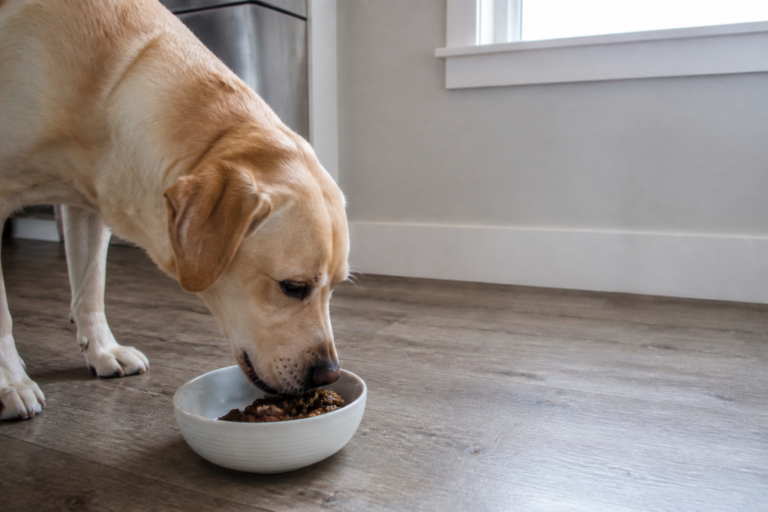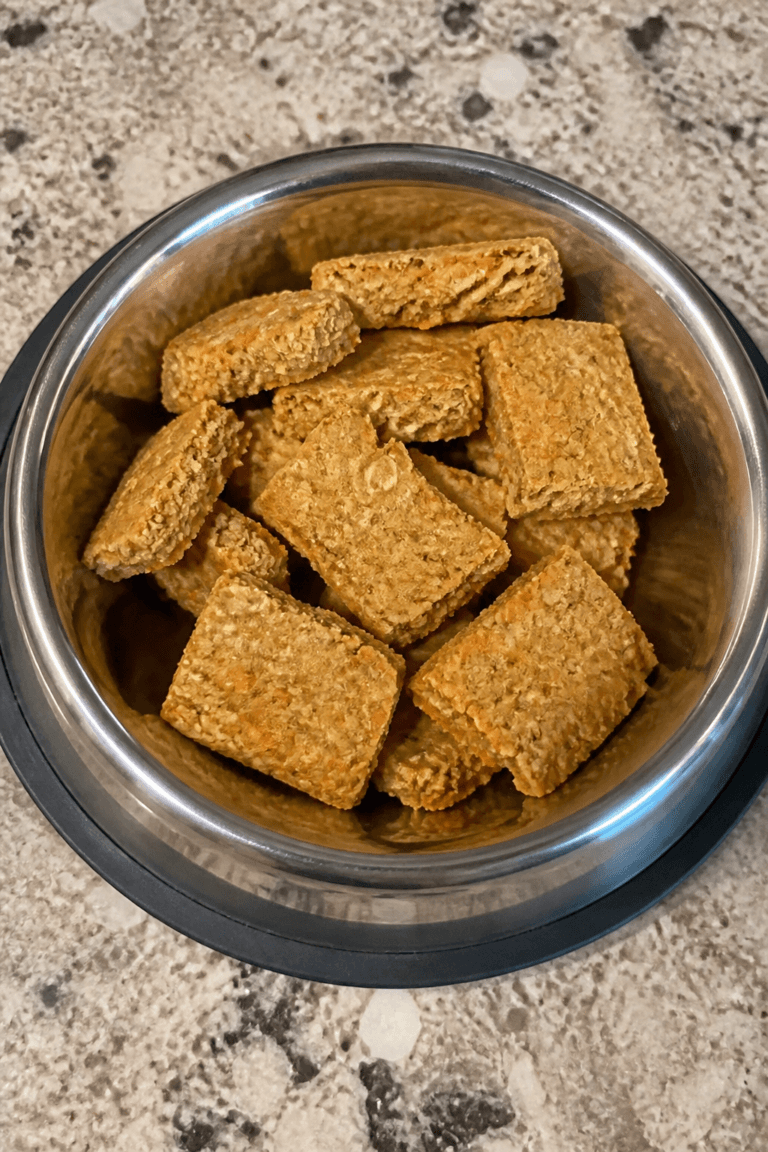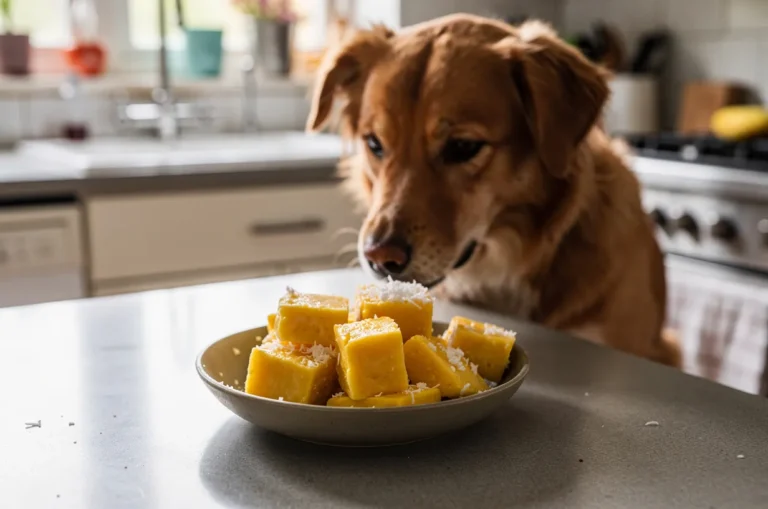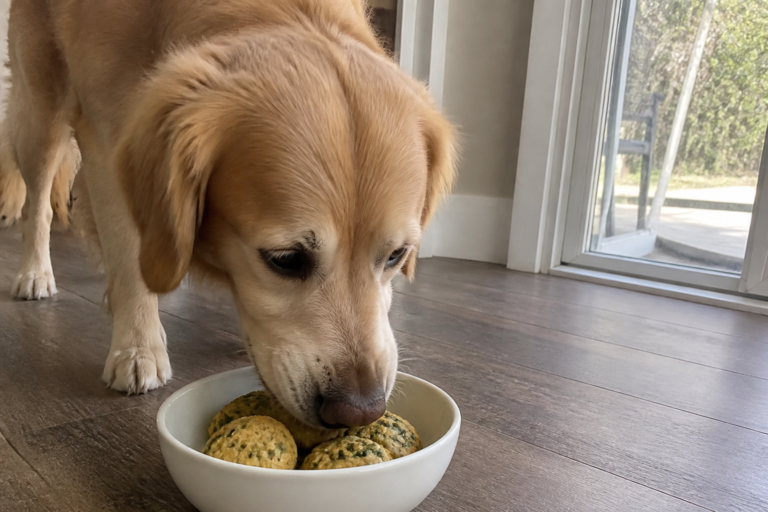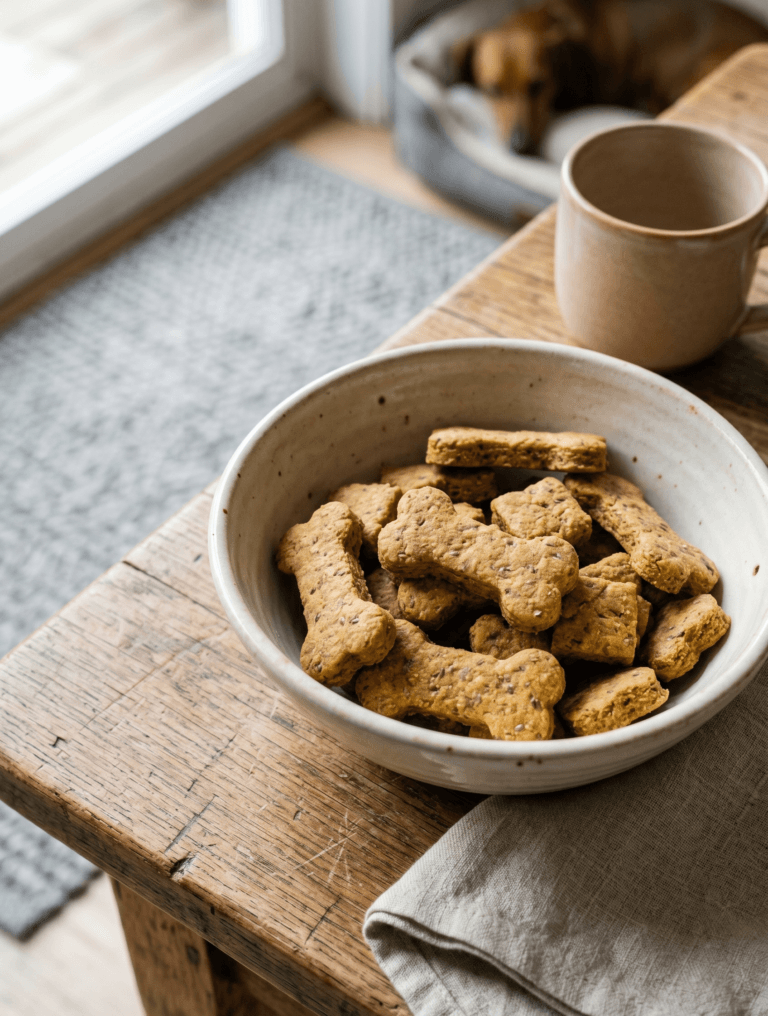
Hot day and a panting pup? This Pumpkin Peanut Butter Dog Ice Cream cools them down and packs a nutritional punch.
It uses simple, dog-safe ingredients like plain yogurt, pumpkin puree, and unsalted peanut butter. You can make it in minutes and freeze it into lickable goodness your dog will love.
Ingredients
Here’s what you need for a batch that fills about 6 silicone molds or an ice cube tray.
- 1 cup plain unsweetened yogurt (Greek works great)
- 1/2 cup canned pumpkin puree (not pumpkin pie filling)
- 1/4 cup unsalted, xylitol-free peanut butter
- 1 tablespoon water or low-sodium chicken broth (optional, for consistency)
- Optional mix-ins: mashed banana, finely chopped cooked carrot, or a sprinkle of ground flaxseed
Important safety note: never use peanut butter that contains xylitol. That sweetener kills dogs. Also avoid added sugars and spices like nutmeg or cinnamon in large amounts.
Pumpkin Peanut Butter Dog Ice Cream
Nutritional Benefits for Dogs
Why Pumpkin Helps
Pumpkin provides fiber, vitamin A, and beta carotene. Fiber supports digestion and can help firm loose stools or ease mild constipation.
Why Plain Yogurt Works
Plain unsweetened yogurt offers probiotics and calcium. Probiotics support gut health which helps digestion and immune strength.
Why Peanut Butter is a Win
Peanut butter adds healthy fats and protein while boosting flavor. Dogs love the nutty taste, but portions should stay moderate.
Preparation Steps
This recipe stays easy. You do not need fancy tools, just a bowl and a spoon.
- Scoop the yogurt into a medium bowl.
- Add the pumpkin puree and peanut butter.
- Stir until smooth. If the mixture feels too thick, add 1 tablespoon of water or low-sodium chicken broth to loosen it.
- Taste it yourself – it should smell pleasantly pumpkiny and slightly nutty. Dogs will approve even more enthusiastically.
- Spoon the mixture into silicone molds, a muffin tin lined with liners, or an ice cube tray.
- Freeze for at least 3 to 4 hours, or overnight for firmer treats.
- Pop out the treats and serve, or store them in an airtight container in the freezer.
Quick blender method
Want an even creamier texture? Toss everything into a blender or food processor and pulse until smooth. This method works great if you add banana or flaxseed, because it distributes mix-ins evenly.
Serving Suggestions
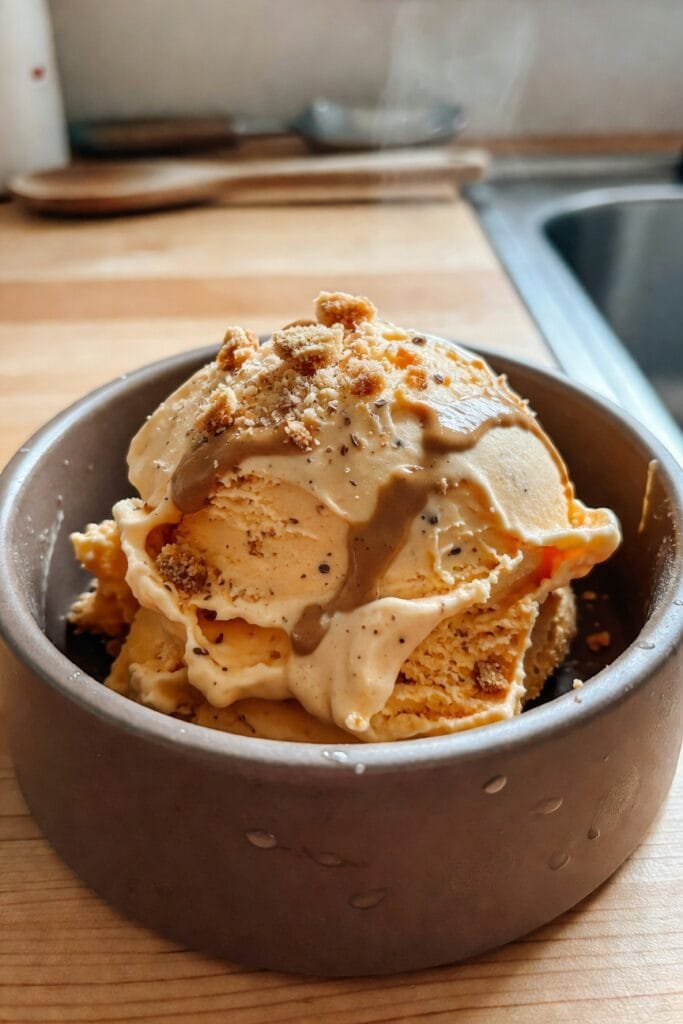
How you serve matters. Keep portions small and appropriate for your dog’s size.
- Small dogs: one ice cube-sized treat or one small mold portion.
- Medium dogs: one to two medium-sized molds.
- Large dogs: two molds or a larger scoop.
Let the treat sit at room temperature for a minute so it softens a little, especially if your dog has sensitive teeth. You can also use these as enrichment by stuffing a Kong toy, then freezing it. Your dog gets mental stimulation and a cool reward.
Storage Tips
Freeze treats flat in a tray first, then transfer to a resealable freezer bag or airtight container. This prevents freezer burn and keeps them fresh.
- Use within 2 to 3 months for best taste and texture.
- Thaw one treat at a time in the fridge if you plan to serve it later that day.
- Do not refreeze after thawing once, because texture and microbial safety decline.
Ingredient Swaps and Variations
Recipes should flex to what you have on hand, and dogs appreciate variety.
Fruit and veggie add-ins
- Banana: adds sweetness and potassium. Use 1/4 cup mashed banana.
- Carrot: grated or cooked and finely chopped, for crunch and vitamin A.
- Blueberries: add a few for antioxidants, but chop larger ones for small dogs.
Dairy-free option
If your dog cannot tolerate yogurt, substitute plain canned pumpkin plus 1/2 cup unsweetened applesauce or canned coconut milk in small amounts. Use coconut milk sparingly because it adds extra fat.
Protein boost
For extra protein, mix in 1 to 2 tablespoons of plain canned dog-safe wet food or a scoop of plain, unflavored poultry baby food. This turns the treat into a mini-meal during hot days.
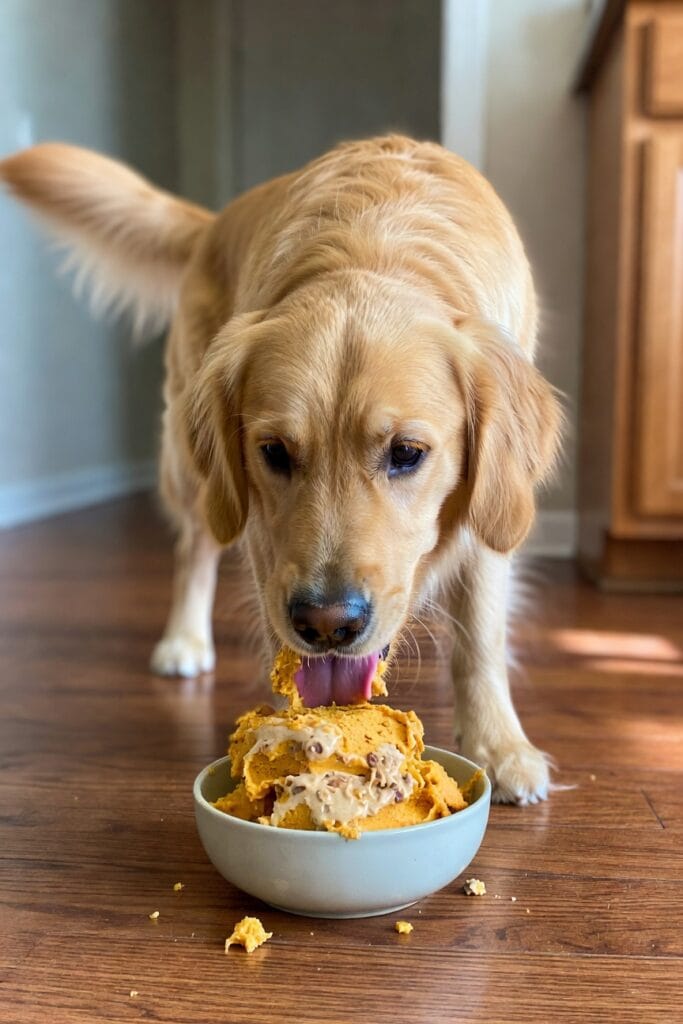
Feeding Guidelines and Safety
Keep treats as part of daily calorie counting. These ice creams can be calorie-heavy if you feed too many.
- Treats should make up no more than 10 percent of your dog’s daily calories.
- Start with a small serving to test for stomach sensitivity.
- Watch for signs of allergies like itching, ear scratching, or GI upset. If you see these, stop feeding and consult your vet.
- Avoid xylitol at all costs, and check peanut butter labels carefully. FYI, some “natural” peanut butters still include additives.
FAQs
Is canned pumpkin the same as pumpkin pie filling?
No. Use plain pumpkin puree only. Pumpkin pie filling contains sugar, spices, and sometimes dairy, which can harm dogs.
Can puppies eat this ice cream?
Yes, in small amounts and only if they already eat solid foods. Puppies have smaller stomachs and different nutrient needs, so limit portions and consult your vet for big dietary changes.
How often can I give my dog this treat?
Once or twice a week is reasonable for most dogs. If you use smaller portions or dilute the recipe, you can increase frequency. Monitor weight and adjust accordingly.
My dog is overweight, can they have a taste?
Yes, but reduce portion sizes and choose low-fat yogurt or skip peanut butter. Pumpkin alone makes a lower calorie, fiber-rich icy snack.
Can senior dogs enjoy this?
Absolutely. Freeze a few into silicone molds with shallower portions so the treats soften quickly. Soft, cold treats can soothe sore gums and provide hydration.
What if my dog has a peanut allergy?
Use canned pureed sweet potato or unsweetened applesauce instead of peanut butter. Both add thickness and flavor without the allergen risk.