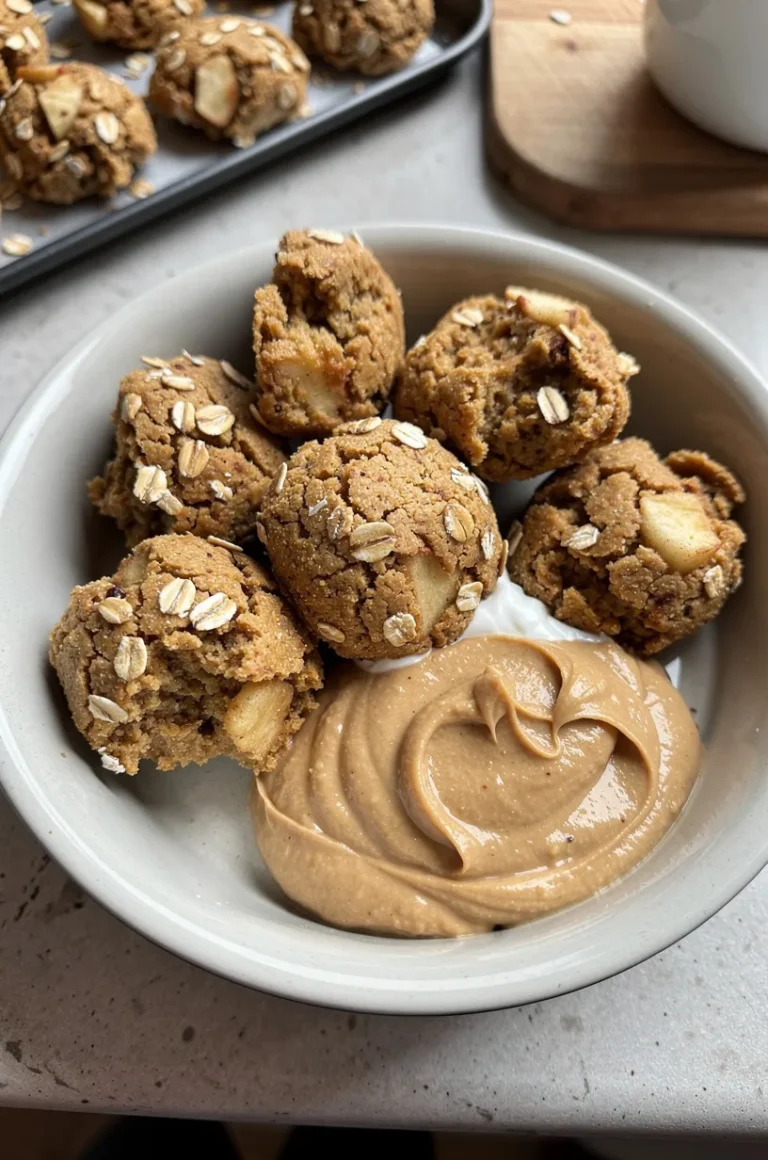
These soft chews pack real food flavor into a chewy, training-friendly bite.
They use only dog-safe ingredients, they bake up fast, and they freeze well for a stash that lasts.
Bonus: most dogs will go bananas for the sweet potato and apple combo. Let’s get baking.
Ingredients
Gather simple, wholesome stuff. Everything below stays safe for most dogs, but always check with your vet for puppies, seniors, or pups with allergies.
- 1 large sweet potato, cooked and mashed (about 1 to 1 1/2 cups)
- 1 medium apple, peeled, cored, and finely grated
- 1 large egg
- 1/2 cup oat flour (or finely ground oats)
- 1/4 cup plain unsweetened applesauce
- 1 tablespoon coconut oil, melted
- 1/2 teaspoon ground cinnamon (optional, safe in small amounts)
- Pinch of salt (optional, avoid if your dog needs low sodium)
Why these ingredients? Sweet potatoes deliver fiber and vitamin A, apples add vitamin C and crunch when grated, and oats give structure without wheat. Coconut oil adds healthy fats that many dogs enjoy.
Preparation Steps
This recipe stays straightforward and dog-owner friendly. Ready to make a freezer-full?
- Preheat oven to 325 F (160 C) and line a baking sheet with parchment.
- Cook the sweet potato until soft. You can bake, microwave, or boil it. Scoop and mash until smooth.
- Mix the mashed sweet potato, grated apple, egg, applesauce, and melted coconut oil in a bowl.
- Stir in the oat flour and cinnamon until you get a slightly sticky dough. Add a splash of water if it feels too dry.
- Roll into small 1/2-inch balls, or spread the dough about 1/4 inch thick on the sheet and cut into squares with a knife or cookie cutter.
- Bake 20 to 25 minutes for soft chews, turning once halfway. If you want chewier treats, bake a few minutes longer.
- Cool completely before serving. They firm up a bit as they cool.
Tips for Perfect Texture
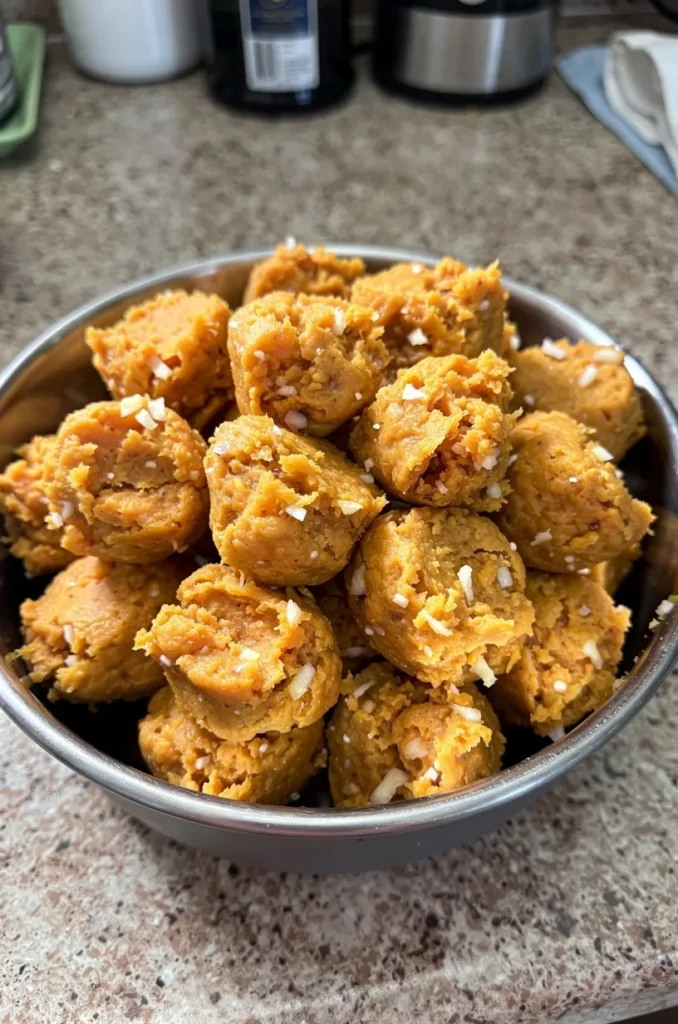
- For soft chews, keep thickness around 1/4 inch. Thicker pieces take longer to cook through.
- If your dog prefers a more gummy, soft center, remove treats slightly early and let them finish off the sheet as it cools.
- For crunchy chews, bake at 300 F and extend the time until fully dried.
Ingredient Swaps and Variations
Want to tweak flavor or tailor to your pup?
- Swap oat flour for rice flour if your dog reacts to oats, or use buckwheat for extra nutrients.
- Add a tablespoon of plain Greek yogurt to the mix for extra protein and tang, but reduce applesauce slightly to keep dough consistency.
- Mix in a tablespoon of finely chopped parsley for fresh breath, or a pinch of turmeric for anti-inflammatory benefits.
- Skip cinnamon if your dog has a sensitive stomach. Cinnamon is safe in small amounts, IMO, but always keep it low.
Nutritional Benefits for Dogs
Your dog gets real nutrients here, not filler.
- Vitamin A and beta-carotene from sweet potato support skin, coat, and eye health. Dogs convert beta-carotene into usable vitamin A.
- Fiber helps digestion and keeps stools regular. This is great after a run or a playdate that went wild.
- Vitamin C and phytonutrients in apples support immune function, though dogs make some vitamin C on their own.
- Healthy fats from coconut oil support skin and sheen, and act as an energy source.
Note: These chews act as treats, not full meals. They add nutrition, but they should not replace balanced dog food.
Serving Suggestions
How do you use these chews without overdoing it?
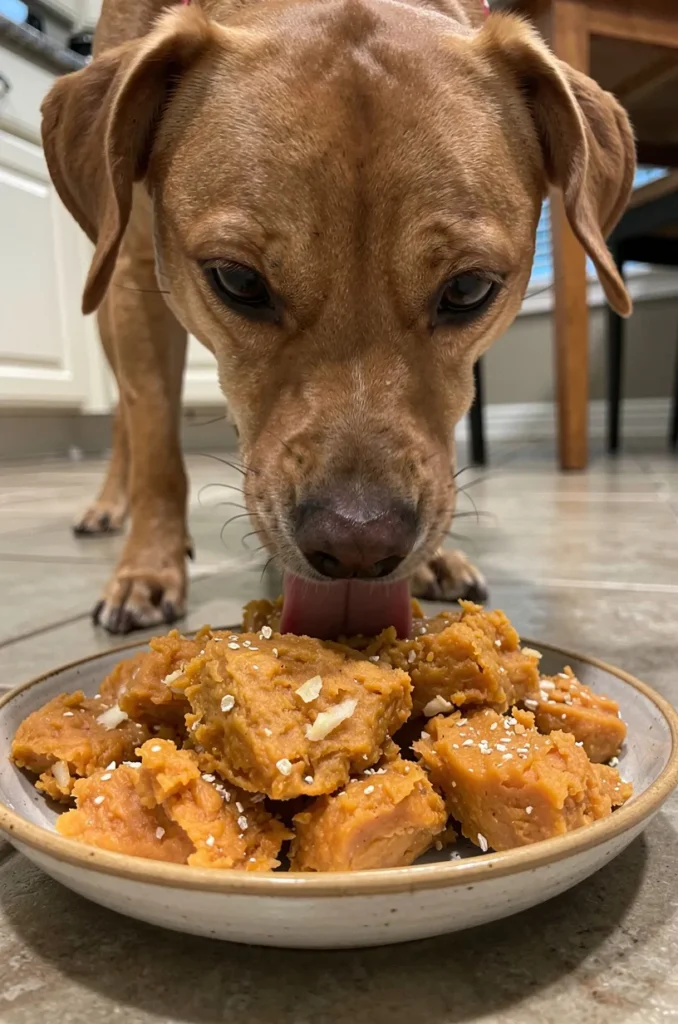
- Use them as training rewards – break into pea-size pieces for small dogs.
- Offer one as an after-walk treat to settle down and relax.
- Stuff a Kong with a few chews mixed with plain yogurt and freeze for a long-lasting boredom buster.
- FYI, always adjust daily calories from other treats so you don’t overfeed.
Storage Tips
Keep a stash for quick rewards and prevent waste.
- Store airtight in the fridge for up to 5 days.
- Freeze extras in a single layer, then transfer to a freezer bag. They last 2 to 3 months frozen.
- Thaw in the fridge or microwave for a few seconds to soften before giving to your dog.
- If treats develop any off smell, mold, or odd color, toss them. Safety first.
Safety Notes and Ingredients to Avoid
Your dog’s safety matters. Avoid ingredients that harm dogs.
- Do NOT add xylitol, chocolate, raisins, grapes, macadamia nuts, or artificial sweeteners.
- Always remove apple seeds and core; apple seeds contain trace cyanide and pose a choking hazard.
- Watch for allergies. Introduce one new ingredient at a time and monitor for vomiting, diarrhea, or itchiness.
- Younger puppies and dogs with dental issues may need smaller, softer pieces. Consult your vet for portion guidance.
Special Diets and Vet Advice
If your dog has a medical condition, ask your vet before introducing these chews.
Dogs with pancreatitis, certain liver issues, or strict weight limits may need tailored treat options.
I recommend discussing any homemade treat routines with your vet, especially if your dog eats a prescription diet.
FAQs
Are sweet potatoes safe for dogs to eat every day?
Yes, in moderation. Sweet potatoes provide fiber and vitamins, but too much can add excess calories and upset digestion. Treats should make up no more than 10 percent of daily calories.
Can I use raw apple instead of applesauce?
Yes, grated raw apple works great and adds texture. Always remove the core and seeds, and use small amounts. If you prefer smoother dough, applesauce helps bind the mix.
How should I size the chews for different dogs?
For small dogs, make pea-size chews or break larger pieces into quarters. For medium to large dogs, 1/2-inch to 1-inch pieces work well. Use treats for training rewards in tiny bits so you don’t overfeed.
What if my dog has a grain allergy?
Swap oat flour for rice flour or almond flour if appropriate, but check with your vet first. Some dogs with grain allergies tolerate oats, while others do not.
Can I freeze these treats with other types of dog food?
Yes, but store them separately in freezer bags or containers to avoid cross-contamination and flavor transfer. Label the bag with date and type.
How many treats can I give my dog per day?
It depends on size and calorie needs. For a small dog, a couple of small treats per day works. For a large dog, up to 4 or 5 might be fine. Always factor treats into total daily calories and adjust main meal portions if needed.