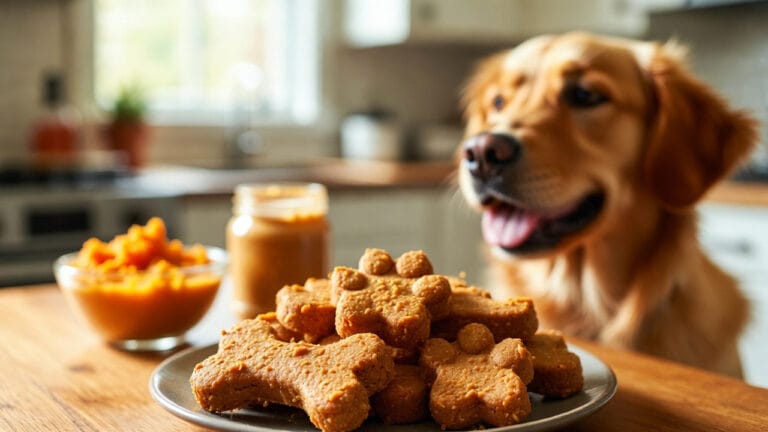
Got a hungry pup who prefers people food? These homemade high protein dog treats with eggs fix that.
They pack lean protein, whole grains, and dog-safe add-ins that boost energy and coat health.
Best part – you control the ingredients, no mystery fillers, and you can make them in under an hour.
Ingredients
Here’s what you need for one batch of crunchy, protein-rich treats that hold up well for training or snacking.
- 2 large eggs, beaten
- 1 cup cooked, shredded chicken or turkey (no bones, no skin)
- 1/2 cup plain Greek yogurt (unsweetened, unflavored)
- 1/2 cup rolled oats, pulsed into flour in a blender
- 1/2 cup whole wheat flour or oat flour (use oat flour for gluten-sensitive pups)
- 1/4 cup shredded carrot or pumpkin puree
- 1 tablespoon coconut oil, melted (optional)
- 1 teaspoon dried parsley or a pinch of turmeric (optional for flavor and anti-inflammatory benefits)
Safety Note: Never use xylitol, garlic, onions, grapes, raisins, chocolate, or macadamia nuts. Those ingredients harm dogs. Also skip added salts and seasonings. FYI, plain Greek yogurt boosts protein and probiotics.
Preparation Steps
Follow these steps for consistent, crunchy treats your dog will scarf down.
- Preheat your oven to 350 F (175 C) and line a baking sheet with parchment paper.
- Pulse the rolled oats in a blender until they reach a flour-like texture. Combine with whole wheat or oat flour.
- Mix the beaten eggs, Greek yogurt, shredded chicken, shredded carrot or pumpkin, and melted coconut oil in a bowl.
- Stir the dry ingredients into the wet until you form a firm dough. If it’s too sticky, add a tablespoon of flour at a time.
- Roll dough to about 1/4 inch thickness on a lightly floured surface. Use cookie cutters or cut into small squares. Smaller treats dry faster, which I like for training sessions.
- Place treats on the baking sheet and bake 20 to 25 minutes for chewy treats, 30 to 35 minutes for crunchy treats. Flip halfway through for even browning.
- Cool completely on a wire rack. Treats crisp as they cool, so resist the urge to taste until they’re cool.
Texture Tips
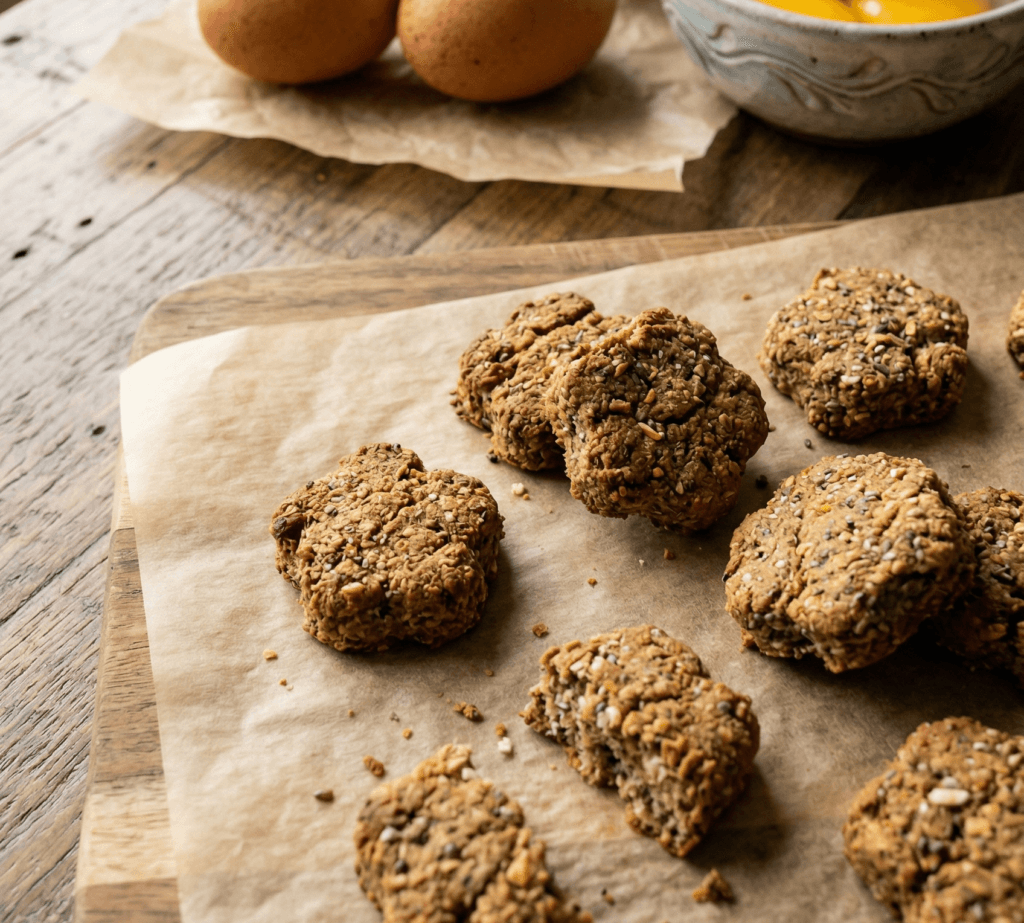
Want them softer for older dogs? Bake 18 to 20 minutes and let them cool covered with a towel.
Need extra crunch? Bake a bit longer and leave in the oven after it’s off to air-dry.
Nutritional Benefits for Dogs
These treats deliver real nutrition, not just empty calories.
- Eggs provide high-quality protein, essential amino acids, and vitamins like B12 and riboflavin.
- Chicken or turkey adds lean animal protein for muscle maintenance and energy.
- Greek yogurt contributes protein and gut-friendly probiotics for digestion.
- Oats and whole wheat or oat flour give fiber, slow-burning energy, and help the treats hold together.
- Carrots or pumpkin supply beta-carotene, fiber, and vitamins that support eye health and digestion.
Curious how many treats you should give per day? Think of these as occasional snacks or training rewards.
Treats should make up no more than 10% of your dog’s daily calories. IMO, stick to small pieces for small dogs and larger ones for big breeds.
Variations and Add-Ins
Switch things up based on your dog’s preferences and dietary needs.
- Swap chicken for canned salmon (boneless, skinless) for omega-3 fatty acids.
- Use cottage cheese instead of Greek yogurt if your dog tolerates dairy.
- Add a tablespoon of peanut butter, but ensure it contains no xylitol and minimal salt.
- For sensitive stomachs, keep it simple: eggs, pumpkin, and oat flour only.
Remember to introduce new ingredients slowly. Watch for any signs of upset stomach or allergies such as vomiting, diarrhea, itching, or ear infections.
Serving Suggestions
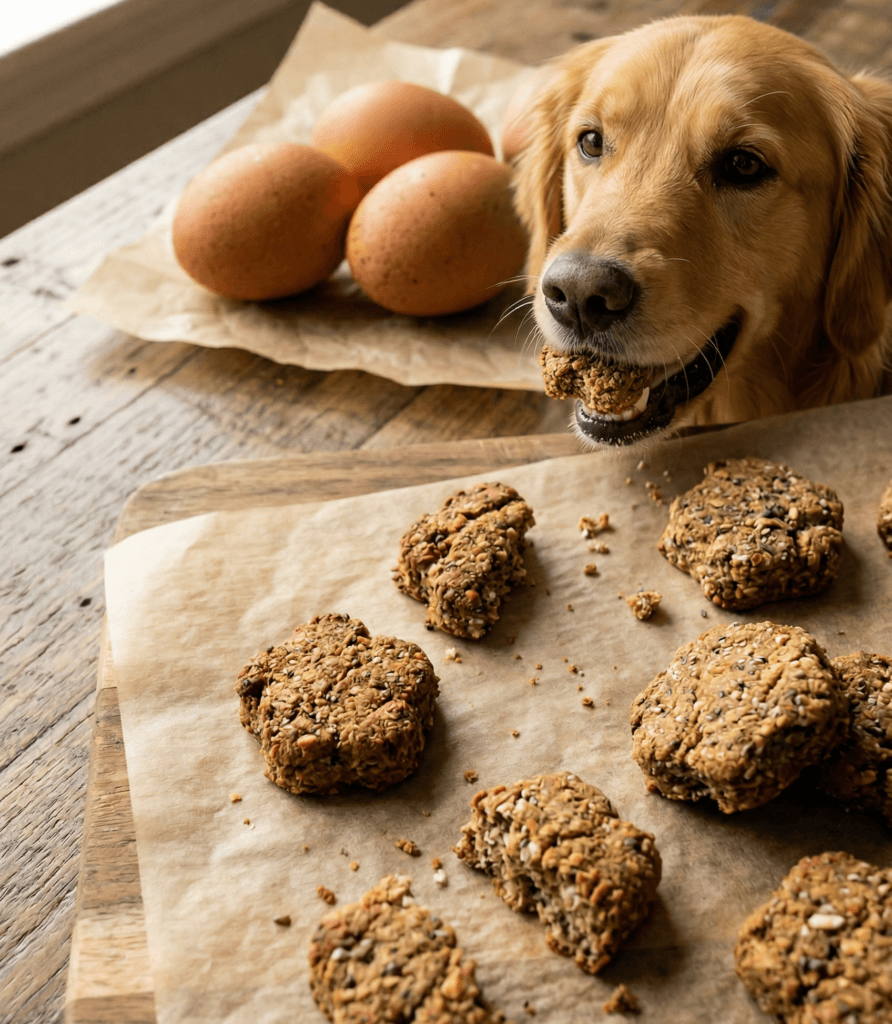
How you serve treats matters more than you think.
- Break into small pieces for training sessions. Small dogs get tiny bites; larger breeds get bigger chunks.
- Use as meal toppers for picky eaters. Crumble a treat over food to tempt fussy dogs.
- Take them on walks or hikes for an energy boost. They pack easily and don’t melt like human snacks.
Dogs will do wild things for food. Expect dramatic head tilts, the “clearly I am starving” eyes, and maybe a little dance. That’s a win in my book.
Storage Tips
Keep freshness and safety in mind to avoid waste.
- Store baked treats in an airtight container at room temperature for up to 5 days.
- Refrigerate for up to 10 days if you use fresh meat or dairy in the mix.
- Freeze in portions for up to 3 months. Thaw at room temperature before serving.
- If treats develop a sour smell or mold, toss them immediately.
Pro tip: Label containers with the date. You will forget, your pup will not.
When to Avoid Eggs and Other Safety Notes
Eggs boost protein, but some dogs do react to them.
- Skip eggs if your dog has a known egg allergy or frequent digestive upset after egg exposure.
- Avoid raw eggs. Cooking eliminates salmonella risk and increases protein digestibility.
- Keep portions moderate for dogs with pancreatitis or overweight dogs due to calorie content in protein and fats.
- Check with your vet if your dog has chronic health issues, like kidney disease. High protein may not suit every condition.
FAQs
How many treats can my dog have per day?
Treat volume depends on your dog’s size, age, and activity level. A rough guide – small dogs get 1 to 3 small treats, medium dogs 3 to 6, and large dogs 6 to 10. Always keep total treats under 10% of daily calories.
Can I use raw eggs in the recipe?
No. I do not recommend raw eggs. Cooking reduces the risk of salmonella and makes egg protein safer and more digestible for dogs.
Are these treats suitable for puppies?
Yes, but modify texture and size. Puppies need softer treats and smaller portions. Also confirm with your breeder or vet on diet specifics for very young pups under 4 months.
What if my dog has a grain allergy?
Use oat flour or a mix of coconut flour and tapioca starch instead of whole wheat. Oats often sit well with grain-sensitive dogs, but monitor for reactions.
Can I add supplements like fish oil or glucosamine?
Absolutely, but check dosages. Add liquid fish oil sparingly to avoid greasy treats, or sprinkle powdered supplements into the mix per your vet’s guidance.
How long do frozen treats last?
Frozen treats last about 3 months. Freeze in single-serving portions to defrost only what you need, reducing waste.