
Your dog deserves a special treat that goes beyond the usual biscuit.
These homemade dog donuts with yogurt drizzle are fun, wholesome, and made with dog-safe ingredients.
They look just like real donuts, smell amazing, and pack a nutritional punch. Bake a batch for your pup’s birthday or just because.
Ingredients
- 1 cup whole wheat flour
- 1/4 cup rolled oats
- 1 ripe banana, mashed
- 1 egg
- 1/4 cup natural peanut butter (xylitol-free)
- 1/4 cup unsweetened applesauce
- 1 teaspoon baking powder
- 1/2 teaspoon cinnamon
- 1/4 cup plain Greek yogurt (for drizzle)
- 1 tablespoon honey (optional topping)
Instructions
- Preheat your oven to 350 degrees Fahrenheit. Grease a mini donut pan lightly with coconut oil.
- In a large bowl, mix the mashed banana, egg, peanut butter, and applesauce together until smooth.
- Add the whole wheat flour, rolled oats, baking powder, and cinnamon to the wet mixture.
- Stir everything together until a thick, uniform batter forms. Do not overmix.
- Spoon or pipe the batter into each donut mold. Fill each mold about three quarters of the way full.
- Bake for 12 to 15 minutes until the donuts are golden and a toothpick comes out clean.
- Remove from oven and let the donuts cool completely on a wire rack.
- Once cooled, drizzle plain Greek yogurt over the top of each donut.
- Add a tiny drizzle of honey on top if you want an extra special finish.
- Serve one to your dog and store the rest for later.
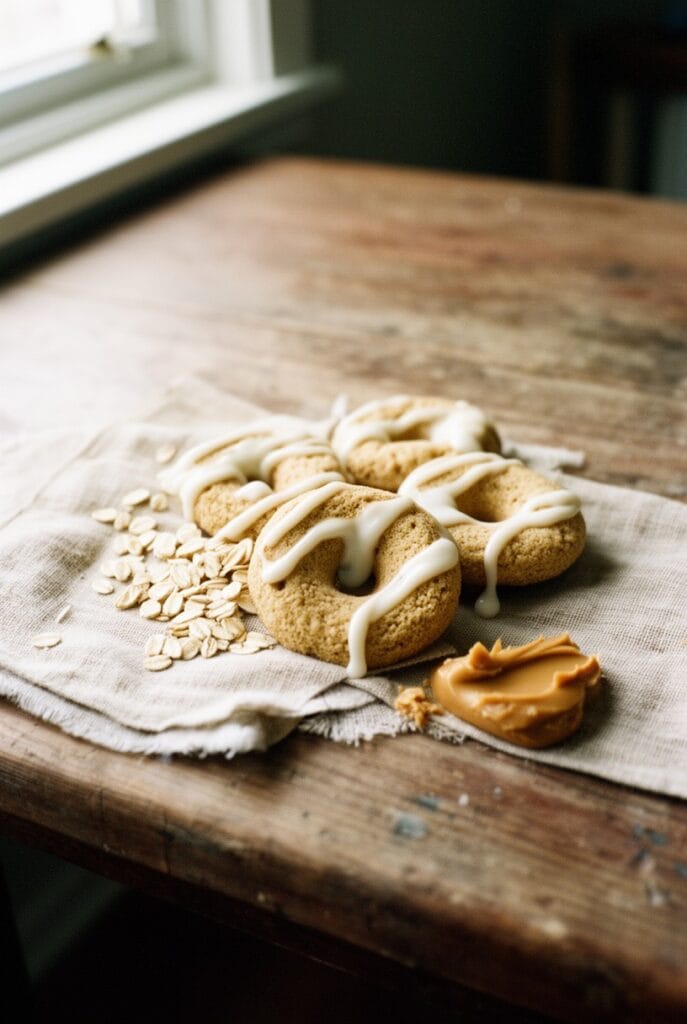
Nutritional Information (Per Donut)
| Nutrient | Amount Per Donut |
|---|---|
| Calories | 85 kcal |
| Protein | 3.5 g |
| Fat | 3 g |
| Carbohydrates | 11 g |
| Fiber | 1.2 g |
| Sugar | 2.5 g |
| Calcium | 30 mg |
Values are estimates based on standard ingredient measurements.
Storage Tips
Keep your dog donuts fresh with these simple storage steps.
- Store in an airtight container in the refrigerator for up to 5 days.
- For longer storage, freeze the donuts without the yogurt drizzle for up to 2 months.
- Add the yogurt drizzle fresh after thawing.
- Always check for mold or off smells before serving a stored donut.
Avoid leaving the donuts at room temperature for more than 2 hours because of the yogurt topping.
Feeding Suggestions
These donuts work great as an occasional treat, not a daily meal replacement. A good rule of thumb is to follow the 10 percent rule.
Treats should make up no more than 10 percent of your dog’s daily calorie intake.
Here are some smart serving ideas.
- Give one small donut as a reward during training sessions.
- Use them as a birthday cake alternative for your dog.
- Break them into smaller pieces for tiny breeds or puppies.
- Serve one after a long walk or play session as a fun cool-down reward.
Always adjust meal portions on treat days to keep your dog’s diet balanced.
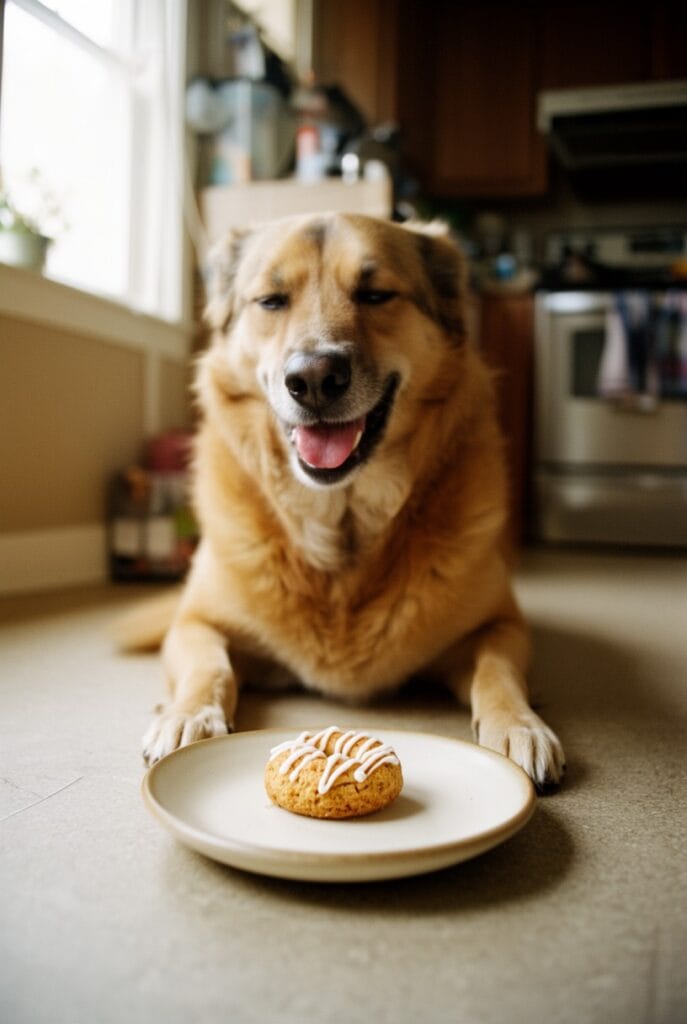
Nutritional Benefits
These dog donuts are more than just a cute snack. Every ingredient brings something valuable to the table.
- Whole wheat flour provides complex carbohydrates and dietary fiber that support healthy digestion.
- Bananas are rich in potassium, vitamin B6, and vitamin C.
- Peanut butter offers healthy fats and protein for sustained energy.
- Rolled oats are a gentle, fiber-rich grain that supports gut health.
- Greek yogurt adds calcium and live probiotic cultures that promote a healthy gut microbiome.
- Applesauce provides natural sweetness along with vitamins A and C.
- Cinnamon has anti-inflammatory properties and may help regulate blood sugar levels in dogs.
Together these ingredients create a snack that supports energy, digestion, and overall wellness.
Health Considerations and What to Avoid
Not all human food ingredients are safe for dogs. Before baking, make sure you are using the right versions of each ingredient.
Always avoid the following.
- Xylitol, an artificial sweetener found in many peanut butter brands, is highly toxic to dogs and can cause rapid drops in blood sugar and liver failure.
- Raisins and grapes cause acute kidney failure in dogs and must never be added to dog treats.
- Nutmeg is toxic to dogs and should never be substituted for cinnamon.
- Macadamia nuts cause weakness, vomiting, and tremors in dogs.
- Chocolate is poisonous to dogs and must never be used in any dog recipe.
- Artificial sweeteners of any kind should be completely avoided.
If your dog has a wheat allergy, swap whole wheat flour for oat flour or chickpea flour.
Dogs with lactose sensitivity may react to yogurt, so use a small amount first and monitor for digestive upset.
Always consult your vet before introducing new foods, especially if your dog has existing health conditions.
FAQs
Can I use regular yogurt instead of Greek yogurt?
Yes, you can use plain regular yogurt. Make sure it has no added sugar, artificial sweeteners, or flavoring. Greek yogurt is preferred because it has more protein and less lactose, making it easier for most dogs to digest.
What if my dog is allergic to peanut butter?
You can substitute peanut butter with sunflower seed butter or pure pumpkin puree. Both are safe for dogs and provide a similar creamy texture in the batter. Always check labels for added sugars or salt.
How many donuts can I give my dog per day?
One small donut per day is enough for a medium-sized dog. For small breeds, half a donut is plenty. Always factor treat calories into your dog’s daily intake to avoid overfeeding.
Can puppies eat these dog donuts?
Yes, puppies over 8 weeks old can enjoy these donuts in smaller portions. Break them into tiny pieces and monitor for any digestive reactions after the first serving. Avoid giving honey to puppies under 1 year old.