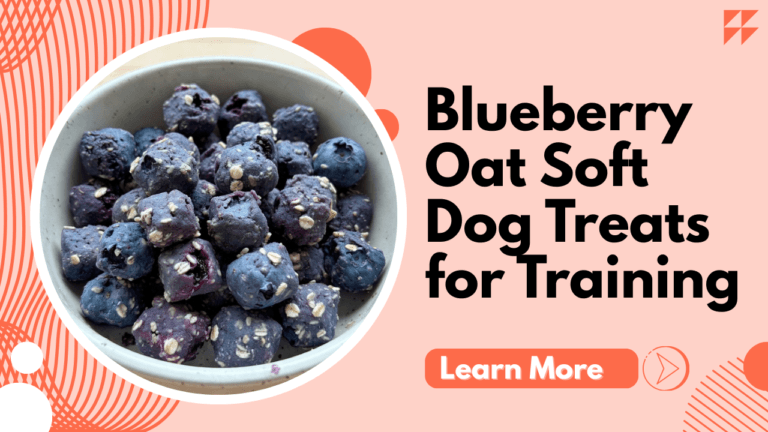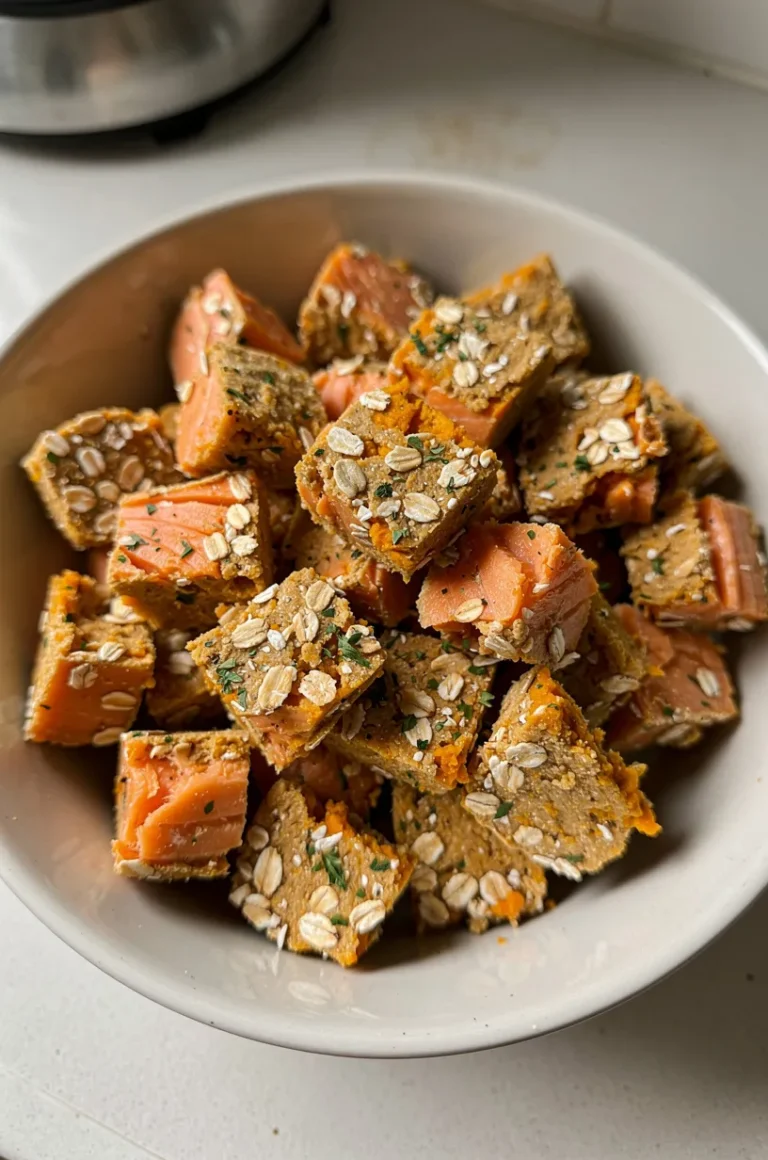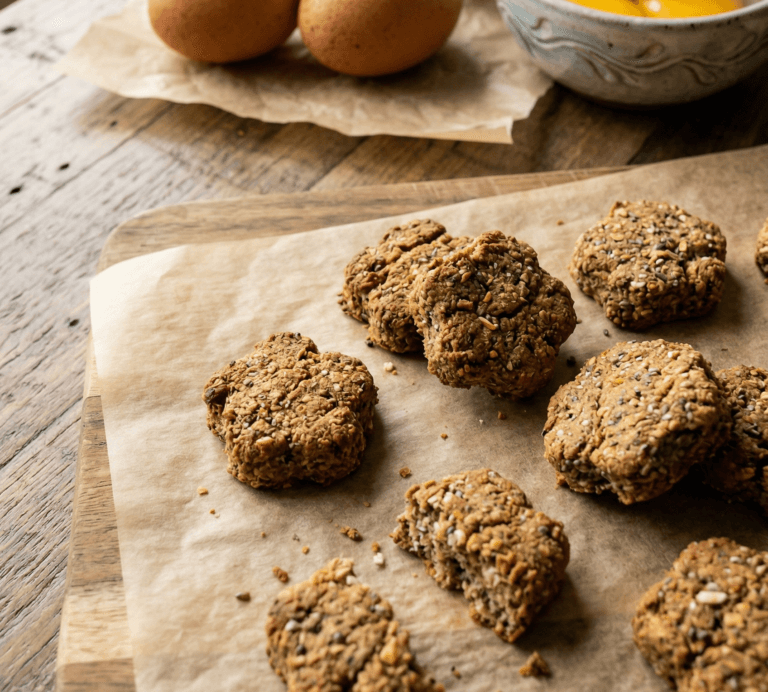
These pumpkin dog cookies pack flavor, fiber, and healthy fats without any dairy.
They use sunflower butter instead of peanut butter, making them a safe swap for dogs with nut allergies or sensitivities to legumes.
Quick to make, easy to store, and totally drool-worthy, these treats double as training rewards and occasional spoils.
Ingredients
Here’s everything you need. All ingredients focus on canine safety and nutrition.
- 1 cup pumpkin puree (unsweetened, plain canned or homemade)
- 1/2 cup sunflower seed butter (no xylitol or added sugar)
- 2 eggs
- 2-3 cups oat flour (see note on making your own)
- 1/2 teaspoon ground cinnamon (optional, small amount is safe for most dogs)
- 1 tablespoon coconut oil (optional, for extra healthy fats and a softer cookie)
- 1 teaspoon baking powder (optional, helps texture but not necessary for dogs)
Oat flour note
You can make oat flour by pulsing rolled oats in a blender or food processor until fine. Oats add fiber, help digestion, and are gluten-free, IMO they work great here.
Preparation Steps
Let’s bake. These cookies come together in about 25 to 35 minutes, plus cooling time.
- Preheat your oven to 350°F (175°C). Line a baking sheet with parchment paper or use a silicone mat.
- In a large bowl, mix pumpkin puree, sunflower seed butter, and eggs until smooth. Add coconut oil if using.
- Stir in cinnamon and baking powder, then gradually add oat flour. Start with 2 cups and add until the dough becomes workable but not crumbly.
- Flour a surface lightly with oat flour and roll dough to about 1/4-inch thickness. Use cookie cutters or a knife to shape treats.
- Place cookies on the baking sheet and bake 18 to 22 minutes, or until edges just start to brown slightly.
- Let cookies cool completely on a wire rack. They firm up as they cool, so resist the urge to taste-test all of them at once.
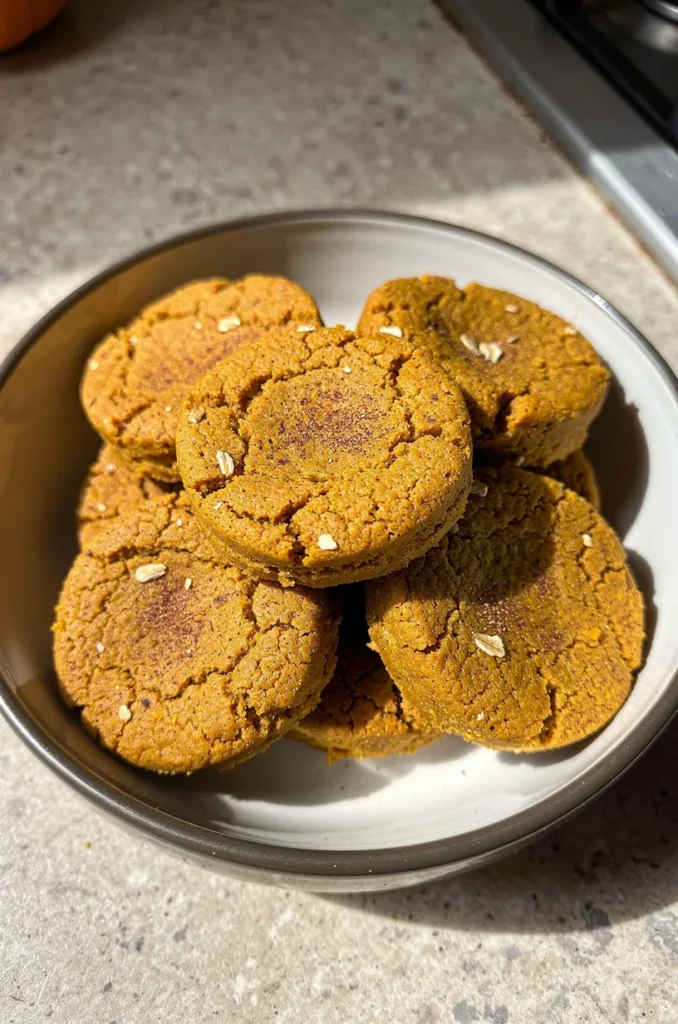
Texture tips
For crunchy training treats, roll thinner and bake a few extra minutes. For softer, chewier cookies for older dogs, make them thicker and reduce bake time slightly.
Nutritional Benefits for Dogs
These cookies work as occasional treats that still offer some nutrition.
- Pumpkin provides fiber and beta-carotene, which helps digestion and eye health.
- Sunflower seed butter delivers vitamin E, healthy fats, and some protein. It supports skin and coat condition.
- Eggs boost protein and supply B vitamins and choline, which helps brain health.
- Oats add soluble fiber and help regulate blood sugar spikes, making these treats more balanced than sugary store-bought options.
FYI, treats should make up no more than 10% of your dog’s daily calories. Use these as rewards, not meal replacements.
Serving Suggestions
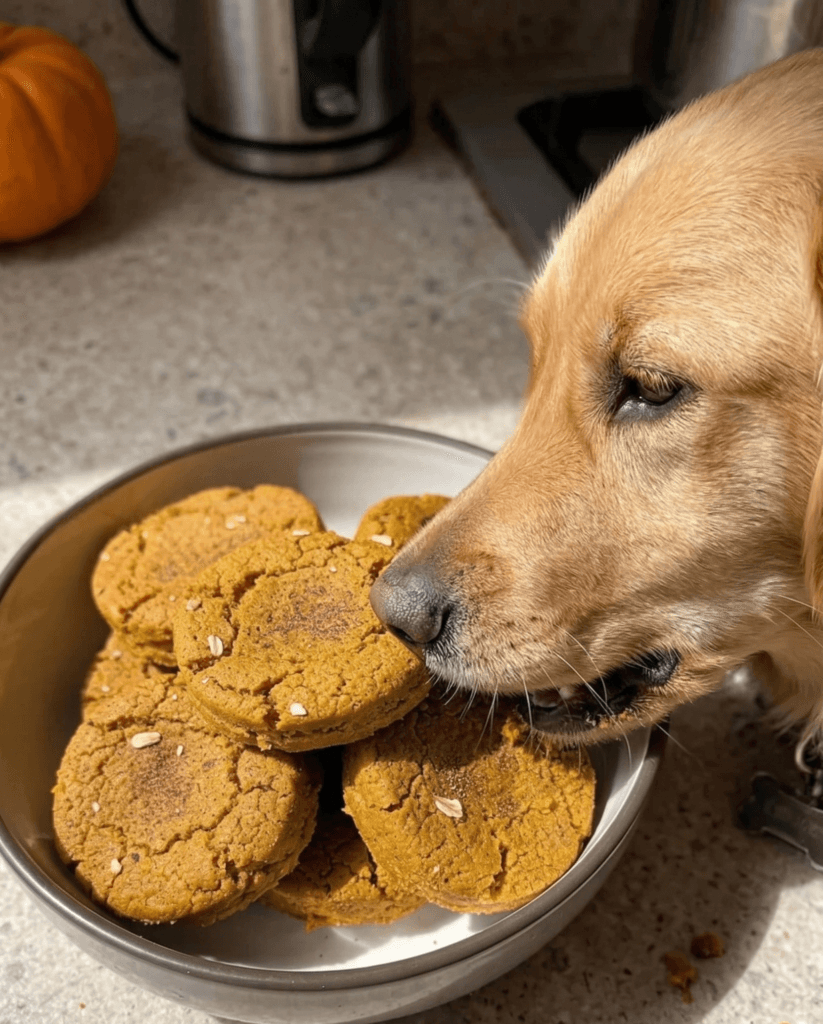
How you serve these depends on your dog’s size, age, and training needs.
- Break into small pieces for training rewards. Tiny dogs need tiny pieces.
- Use whole cookies as a mid-day treat or as a special surprise in a puzzle feeder.
- Soak a cookie in warm water or low-sodium chicken broth for picky eaters or pups with dental issues.
Want to get fancy? Spread a thin smear of plain, unsweetened pumpkin on top of a cookie for extra flavor. However, keep toppings minimal so you don’t overload calories.
Storage Tips
Treats stay fresh longer if you store them right.
- Room temperature: Keep in an airtight container for up to 5 days.
- Refrigerator: Store in a sealed container for up to 2 weeks.
- Freezer: Place cookies in a freezer-safe bag or container for up to 3 months. Thaw at room temperature or pop into a bowl to soften.
Label the container with the date. Dogs don’t read labels, but you should.
Variations and Swaps
Want to mix it up? Here are safe swaps and tweaks.
- Swap oat flour for whole wheat flour only if your dog tolerates wheat. Oats remain the gentler choice.
- Add a tablespoon of ground flaxseed for extra omega-3s, but introduce gradually to avoid tummy upset.
- Mix in finely grated carrot or apple (no seeds) for texture and natural sweetness.
- For a grain-free version, try cassava or coconut flour, but adjust amounts – they absorb moisture differently.
Remember, avoid raisins, grapes, chocolate, onions, garlic, macadamia nuts, and anything sweetened with xylitol. These ingredients harm dogs.
Training Tips and Portion Control
Use these cookies strategically. They smell amazing, so your dog will work for them.
- For training sessions, cut cookies into pea-sized bits. You can reward many times without a calorie overload.
- For daily treats, calculate calories. A medium cookie might be 40 to 80 calories depending on size. Adjust based on your dog’s weight and activity level.
- Watch your dog after the first feeding. Look for signs of digestive upset like loose stool or vomiting. If anything odd shows up, stop treats and check with your vet.
FAQs
Are pumpkin and sunflower butter safe for all dogs?
Most dogs tolerate plain pumpkin and sunflower seed butter well. Avoid sunflower butter with added sweeteners or xylitol. If your dog has a history of food allergies, introduce new ingredients slowly and watch for reactions.
Can I use canned pumpkin pie filling instead of plain puree?
No. Don’t use canned pumpkin pie filling. It often contains sugar, spices, and additives that can upset your dog. Use plain, unsweetened pumpkin puree only.
How many cookies can I give my dog per day?
Treats should equal no more than 10% of daily calories. For a typical 20-30 pound dog, one or two small cookies per day works, depending on your cookie size. Adjust for activity level and body condition.
Can I make these cookies grain-free?
Yes, you can try cassava or coconut flour, but you must experiment with amounts. Those flours absorb more moisture, so your dough will need different ratios. Monitor your dog for tolerance.
What if my dog has a nut allergy?
Sunflower seed butter works for many dogs with nut allergies, because seeds are different from tree nuts. Still, if your dog has severe or multiple allergies, consult your vet before trying new foods.
How do I know if the sunflower butter is safe?
Read labels carefully. Choose sunflower seed butter with no xylitol, no salt, and no added sugar. The only ingredient should ideally be sunflower seeds, or seeds and a little oil.