These blueberry chia seed dog cookies pack serious antioxidant power in a crunchy, tail-wagging treat.
They use simple, dog-safe ingredients that support skin, coat, and overall health.
You can make a batch in under an hour and feel good about what you hand over next time your pup gives you the stare. Ready to bake for your best friend?
Ingredients
Here’s everything you need to make about 30 small cookies. Measure precisely for consistent texture.
- 1 cup oat flour (or finely ground rolled oats)
- 1/2 cup whole wheat flour (substitute rice flour for wheat sensitivity)
- 1/3 cup plain unsweetened applesauce
- 1/3 cup fresh or frozen blueberries, slightly mashed
- 1 tablespoon chia seeds
- 1 egg
- 2 tablespoons plain Greek yogurt (full fat, no xylitol)
- 1 tablespoon coconut oil, melted
- 1/4 teaspoon cinnamon (optional, small amount only)
Notes:
– Use unsweetened applesauce and plain yogurt. Avoid any products with xylitol, artificial sweeteners, or added sugars.
– If your dog has grain allergies, swap both flours for a cup of oat or rice flour total.
Preparation Steps
Follow these steps for a reliable texture and flavor dogs love. The dough is forgiving, so don’t stress if your first batch looks rustic.
- Preheat your oven to 325 F (160 C). Line a baking sheet with parchment paper.
- In a bowl, whisk the egg, applesauce, yogurt, and melted coconut oil until smooth.
- Stir in the mashed blueberries. If you use frozen, thaw and drain excess liquid first.
- In a separate bowl, combine oat flour, whole wheat flour, chia seeds, and cinnamon.
- Mix wet and dry ingredients until a dough forms. If the dough feels too sticky, add a tablespoon of flour at a time until manageable.
- Roll dough to about 1/4 inch thickness. Use small cookie cutters or a knife to cut bite-size shapes.
- Place on the baking sheet and bake for 20 to 25 minutes, until the edges turn lightly golden.
- Cool completely on a wire rack. Chia seeds continue to hydrate, so cooling helps cookies firm up.
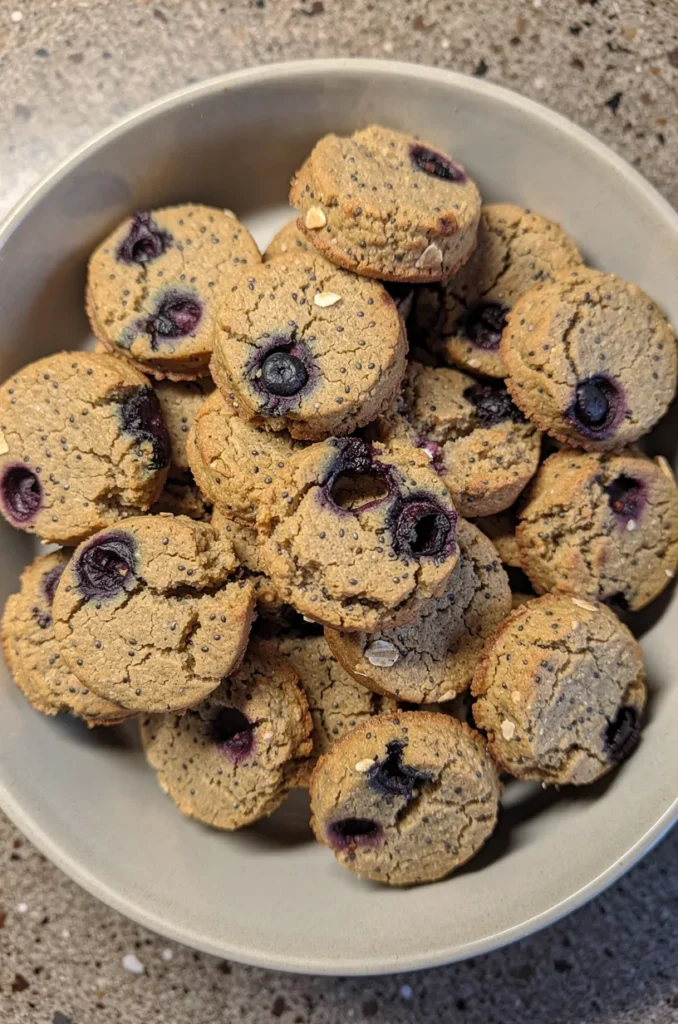
Tip: For crunchy cookies, bake an extra 5 minutes at the end, keeping a close eye so they don’t over-brown.
Texture adjustments
Want softer cookies for older dogs with dental issues? Reduce baking time by 4 to 6 minutes and keep thickness at 1/4 inch or slightly more.
Need firmer, crunchier cookies? Thin to 1/8 inch and increase baking time by 5 minutes.
Nutritional Benefits for Dogs
Blueberries and chia seeds do a lot of good in small packages. You get antioxidant support, omega-3s, fiber, and a little protein – all from safe, natural ingredients.
- Blueberries provide antioxidants like vitamin C and anthocyanins, which help fight free radicals and support immune health.
- Chia seeds offer omega-3 fatty acids for skin and coat, plus fiber that helps digestion and keeps stools regular.
- Oats and whole wheat add slow-burning carbohydrates and B vitamins for steady energy.
- Greek yogurt gives a dose of calcium and probiotics to support gut health, IMO a real win for sensitive tummies.
Always remember, treats should make up no more than 10% of daily calories. These cookies are healthy, but moderation matters.
Serving Suggestions
How you present the cookie makes it extra special. Try these ideas to mix things up.
- Use small cookies as training rewards during short sessions. They break easily, so one cookie can become two tiny treats.
- Crush one cookie and sprinkle over your dog’s breakfast for a blueberry crunch.
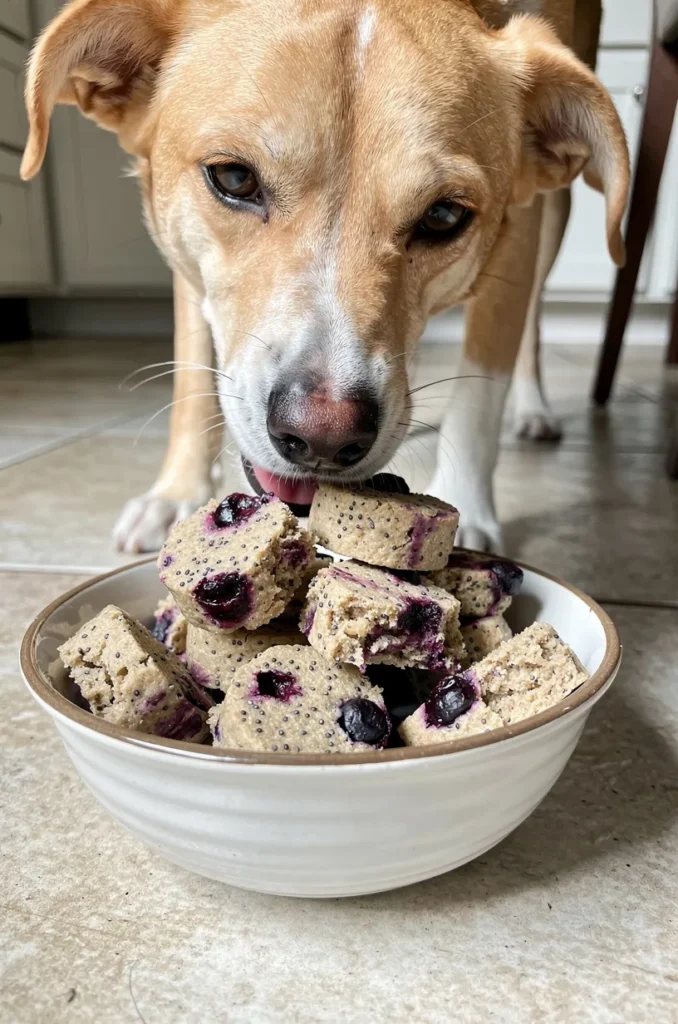
- For a birthday surprise, stack cookies into a mini “cake” and add a dog-safe yogurt dollop on top.
Always offer fresh water with treats. If your dog has a sensitive stomach, start with one cookie and watch for changes the next 24 hours.
Storage Tips
Keep your batch fresh with proper storage. These cookies last quite well if you handle them right.
- Room temperature: Store in an airtight container for up to 5 days.
- Refrigerator: Keep in an airtight container for up to 2 weeks.
- Freezer: Lay cookies flat on a tray to freeze, then transfer to a freezer bag. They last up to 3 months. Thaw at room temperature before serving.
Label your container with the bake date. That way you don’t accidentally serve last month’s cookies as if they were fresh.
Ingredients to Avoid and Safety Notes
Dogs metabolize some human foods poorly, and a safe-sounding ingredient can become dangerous. Here’s what to avoid and why.
- Never use xylitol, a sweetener highly toxic to dogs. Check yogurt and applesauce labels.
- Avoid chocolate, raisins, grapes, onions, garlic, macadamia nuts, and artificial sweeteners.
- Keep cinnamon minimal. Small amounts are okay for most dogs, but too much can irritate.
- If your dog has known food allergies, swap ingredients accordingly and consult your vet.
FYI, if you spot any concerning reactions after trying the cookies – vomiting, diarrhea, lethargy, or swelling – contact your vet immediately.
Substitutions for special diets
Grain-free: Use 1 cup of oat or rice flour in place of both wheat and oat flours.
Egg-free: Replace egg with a “flax egg” – 1 tablespoon ground flaxseed plus 3 tablespoons water, chilled 10 minutes. Note this changes texture.
FAQs
Are blueberries safe for all dogs?
Yes, blueberries are safe and nutritious for most dogs in moderation. They offer antioxidants and vitamins. Avoid giving large quantities to very small dogs, and watch for stomach upset if your dog is sensitive.
How many cookies can my dog eat per day?
Treats should stay under 10% of daily calories. For a medium dog, 2 to 4 small cookies a day is reasonable. Adjust by your dog’s size, activity level, and overall diet. Ask your vet if your dog has weight or health issues.
Can I use frozen blueberries?
Absolutely. Thaw and drain extra liquid or lightly mash them before adding. Frozen berries can add moisture, so adjust flour if the dough gets too wet.
Can puppies eat these cookies?
Puppies can eat these in small amounts, but consult your vet first. Puppies need balanced, growth-focused nutrition, so treats should remain occasional and small.
How do chia seeds help my dog?
Chia seeds provide omega-3 fatty acids, fiber, and small amounts of protein. They support coat health and digestion. They absorb liquid and form a gel, so avoid feeding dry chia to a dehydrated dog. In this recipe, hydration occurs during baking, so they work well.
My dog has allergies. What should I swap?
If your dog has grain allergies, use oat or rice flour. For egg allergies, use a flax egg. If dairy causes issues, skip the yogurt and increase applesauce or use a small amount of pumpkin puree instead.