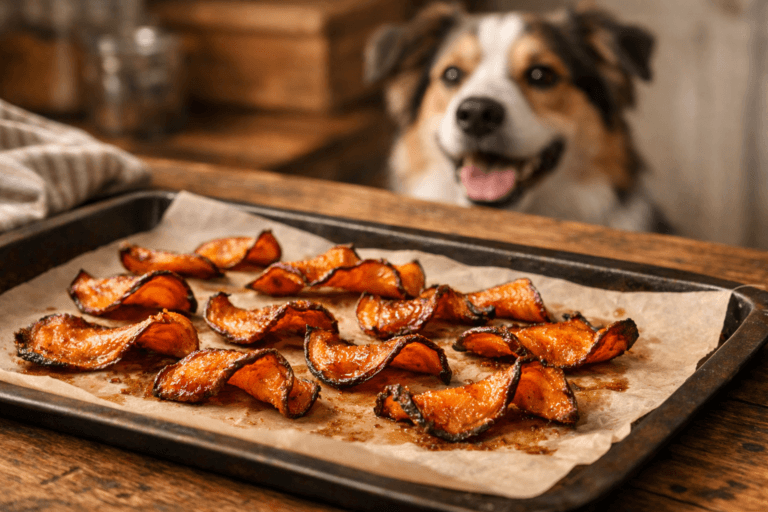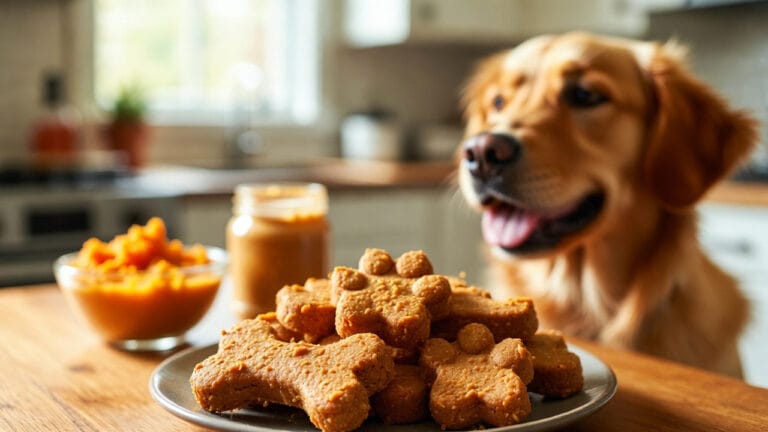
Short, crunchy, and packed with wholesome apple flavor, these Apple Cinnamon Dog Cookies make a perfect treat for your pup.
They use no added sugar, rely on natural apple sweetness, and keep ingredients dog-safe. Easy to bake, easy to store, and even easier to get your dog to love them.
Ready to bake a batch your dog will steal from the counter if you blink? Proceed with caution.
Ingredients
Here’s what you need, all dog-friendly and easy to source at the grocery store.
- 1 cup oat flour (or rolled oats blitzed into flour)
- 1/2 cup whole wheat flour or brown rice flour (use rice flour for dogs with wheat sensitivity)
- 1/2 cup unsweetened applesauce or 1 cup finely grated fresh apple (peeled, core and seeds removed)
- 1 large egg
- 2 tablespoons plain unsweetened Greek yogurt or pumpkin puree
- 1 teaspoon ground cinnamon
- 1-2 tablespoons coconut oil, melted (optional, for texture)
- 1/4 cup water or low-sodium chicken broth, as needed
Notes:
– Never include apple seeds or cores. Apple seeds contain trace cyanide, so remove them fully.
– Do not add any sweeteners, especially no xylitol. Xylitol is extremely toxic to dogs.
– Cinnamon in small amounts is safe and can help with taste and digestion, but keep it moderate.
Preparation Steps
This recipe keeps steps simple. You can have cookies in under 45 minutes.
- Preheat oven to 350°F (175°C) and line a baking sheet with parchment paper.
- If using rolled oats, blitz them in a food processor to make oat flour.
- In a bowl, mash the apples or mix applesauce with the egg and yogurt or pumpkin.
- Add the oat flour, whole wheat or rice flour, and cinnamon. Stir to combine.
- Add the melted coconut oil, then slowly add water or broth until dough forms a rollable consistency.
- Roll dough to about 1/4 inch thick. Use cookie cutters or a knife to cut shapes. Smaller training-size pieces work well for dogs with small mouths.
- Place cookies on the sheet and bake 18-25 minutes, flipping halfway for even crispness.
- Let cool completely on a rack before serving.
Tips for Perfect Texture
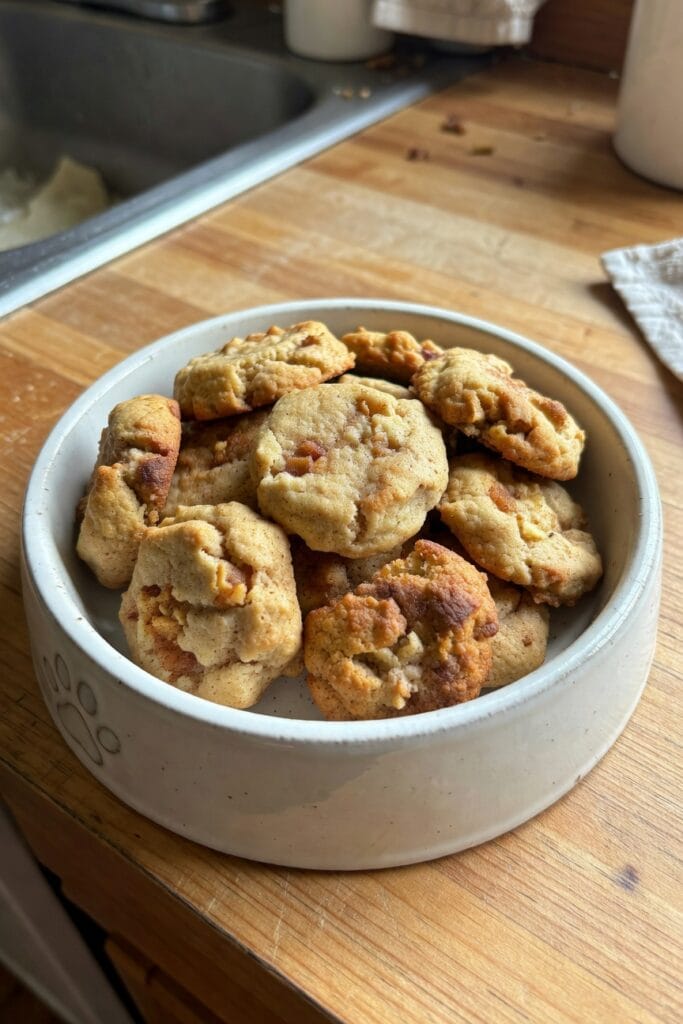
- Want crunchier cookies? Roll thinner and bake longer, checking every 3-5 minutes after 18.
- Prefer chewy treats? Make them thicker and pull out a few minutes earlier.
- Use a silicone baking mat if your cookies stick; parchment usually works fine.
Ingredient Substitutions and Variations
Switch things up based on what you have or what your dog prefers.
- Grain-free option: Replace oat and wheat flours with a combination of oat and coconut flour or pure brown rice flour. Note that coconut flour absorbs moisture, so add extra egg or applesauce.
- Pumpkin swap: Substitute canned pumpkin for applesauce for a fall flavor dogs often adore.
- Peanut butter twist: Add 1-2 tablespoons of unsweetened, xylitol-free peanut butter. Most dogs go wild for this, IMO.
- Freeze-dried toppings: Crumble a few freeze-dried apple pieces on top before baking for extra apple pop and texture.
Always introduce new ingredients one at a time to monitor for allergies or upset stomachs.
Serving Suggestions
How do you present these cookies to your dog? Make it fun.
- Training rewards: Break cookies into small pieces for quick reinforcement during sessions.
- Treat puzzle inserts: Fill a Kong or puzzle toy with yogurt and add cookie pieces for a crunchy surprise.
- Special occasion: Use cookie cutters to make themed shapes for birthdays or adoption anniversaries.
- Pair with hydration: Serve alongside fresh water, especially if the cookies are crunchier.
Remember, even healthy treats can add calories. Adjust meal portions to keep your dog’s daily intake balanced.

Storage Tips
Keep these cookies fresh without wasting a single one.
- Room temperature: Store in an airtight container for up to 5 days.
- Refrigerator: Keep in a sealed container for up to 2 weeks.
- Freezer: Freeze in a zip-top bag for up to 3 months. Thaw at room temperature or microwave for a few seconds for a soft treat.
Label your storage containers with the date. Dogs won’t check dates, but you should.
Safety Notes and Ingredients to Avoid
I want you to bake confidently and keep your pup safe.
- Never use xylitol or other artificial sweeteners. They cause dangerous hypoglycemia and liver damage in dogs.
- Avoid raisins, grapes, chocolate, onions, garlic, and macadamia nuts – these all harm dogs.
- Keep spices minimal. Nutmeg poses risks in larger amounts, so skip it.
- Watch portion sizes. Small dogs only need a tiny piece, while big dogs may enjoy a full cookie as a treat.
If your dog has a medical condition or is on a special diet, consult your veterinarian before introducing new treats.
FAQ
How many cookies can I give my dog each day?
Aim to keep treats within 10% of your dog’s daily calories. For small dogs, that might be one or two small cookies. For medium to large dogs, two to four may fit comfortably. Adjust based on your dog’s weight and activity levels.
Can puppies eat these cookies?
Yes, in moderation. Puppies have sensitive stomachs, so introduce a single cookie and watch for digestive upset. Avoid too many treats while they grow, since puppy food should supply most nutrients.
Can I use raw apple instead of applesauce?
Absolutely. Use finely grated apple and remove all seeds and core. Grated apple adds texture and more fiber, while applesauce blends more evenly into the dough.
What if my dog is allergic to wheat?
Use brown rice flour or a grain-free alternative like oat flour plus a small amount of coconut flour. Keep an eye on texture and adjust liquid accordingly.
Can I make these in a blender or food processor?
Yes. A food processor simplifies combining wet and dry ingredients and yields consistent dough. Pulse in small bursts to avoid overmixing.
My dog is diabetic. Are these safe?
These cookies contain natural sugars from apples, so consult your vet before offering them. For diabetic dogs, consider a pumpkin-based cookie with lower natural sugar, and get a vet’s go-ahead.