If you’ve ever stood in the pet food aisle thinking “What’s actually best for my dog?”… you’re not alone.
So, I did something simple, but powerful.
I asked 10 practicing veterinarians one question:
👉 “What do you personally feed your own dog?”
I expected 10 different answers. Fancy brands. Maybe even raw diets.
But what I got instead?
A surprisingly consistent pattern.
🐶 The Big Surprise
Most vets didn’t choose trendy diets.
They didn’t go for Instagram-famous raw feeding either.
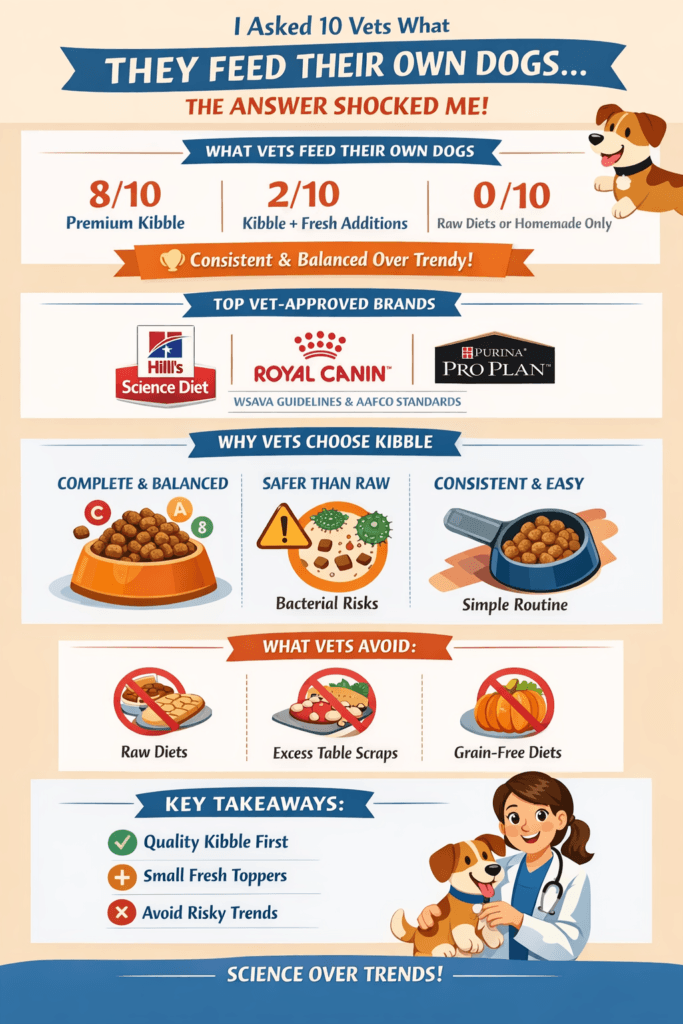
👉 8 out of 10 vets fed their dogs high-quality commercial kibble
👉 2 included fresh or homemade additions
👉 0 followed extreme or unbalanced diets
That alone tells you something important:
Consistency, safety, and proven nutrition matter more than trends.
📊 What Vets Actually Feed (Real Breakdown)
| Diet Type | Number of Vets | Key Reason |
|---|---|---|
| Premium Commercial Kibble | 8 | Complete & balanced nutrition |
| Kibble + Fresh Add-ons | 2 | Variety + enrichment |
| Raw Diet | 0 | Safety concerns |
| Homemade Only | 0 | Hard to balance properly |
🥣 The Brands That Came Up Again and Again
While vets don’t “endorse” brands casually, a few names kept popping up:
- Hill’s Science Diet
- Royal Canin
- Purina Pro Plan
These brands follow guidelines from the World Small Animal Veterinary Association.


👉 That means they invest in feeding trials, veterinary nutritionists, and safety testing.
🧠 Why Vets Prefer “Boring” Kibble
This part shocked me the most.
Here’s what multiple vets said in different ways:
1. It’s Complete and Balanced
Commercial diets that meet Association of American Feed Control Officials standards provide:
- Essential amino acids
- Vitamins and minerals
- Correct calcium-phosphorus ratios
📌 Homemade diets often miss these without expert formulation.
2. It’s Safer Than Raw Diets
Raw diets sound natural… but vets were clear:
“I’ve treated too many cases of bacterial infections.”
Studies show raw meat diets can carry pathogens like Salmonella and E. coli, posing risks to pets and humans.
(Source: U.S. Food and Drug Administration)
3. It’s Consistent
Dogs thrive on routine.
Kibble provides:
- Stable nutrition in every bite
- No guesswork
- Easy portion control
🍗 Do Vets Add Fresh Food?
Yes, but carefully.
2 out of 10 vets said they occasionally add:
- Boiled chicken
- Carrots
- Pumpkin
👉 But always as less than 10% of total calories
Why?
Because too many extras can unbalance the diet.
⚠️ What Vets Avoid Feeding Their Dogs
This was almost unanimous.
🚫 No to:
- Raw meat diets
- Excess table scraps
- Grain-free diets (unless medically needed)
❗ About Grain-Free Diets
The U.S. Food and Drug Administration has investigated a link between grain-free diets and Canine Dilated Cardiomyopathy.
While research is ongoing, vets are cautious.
🧬 What Science Says (Backed by Research)
Here’s what current veterinary science supports:
- Diets meeting AAFCO standards are nutritionally adequate
- WSAVA guidelines emphasize quality control and research-backed formulation
- Raw diets carry documented infection risks
- Balanced nutrition reduces long-term disease risk
📚 Key references:
- WSAVA Global Nutrition Guidelines
- FDA Pet Food Safety Reports
- Peer-reviewed studies in Journal of the American Veterinary Medical Association
🐕 Real Vet Feeding Routine (Example)
One vet shared her exact routine:
Morning:
- Measured portion of kibble
Evening:
- Kibble + small amount of boiled chicken
Treats:
- Training treats (counted within daily calories)
👉 Simple. Predictable. Science-backed.

💡 So… What Should You Feed Your Dog?
Here’s the practical takeaway:
✅ Stick to:
- High-quality commercial dog food
- Brands that meet WSAVA guidelines
- Consistent feeding schedule
➕ Optional:
- Small fresh food toppers (in moderation)
❌ Avoid:
- DIY diets without a vet nutritionist
- Trendy diets without scientific backing
Final Thoughts
I expected complicated answers.
Instead, I got something refreshingly simple:
Vets feed their dogs what works, what’s safe, and what’s proven.
Not flashy. Not trendy.
Just reliable nutrition that keeps dogs healthy for years.
Frequently Asked Questions (FAQ)
Do vets really recommend kibble over fresh or raw diets?
Yes, most veterinarians prefer high-quality commercial kibble because it is formulated to meet strict nutritional standards set by Association of American Feed Control Officials. These diets are tested for balance, safety, and consistency, which many homemade or raw diets lack.
Is a raw diet actually dangerous for dogs?
It can be. Organizations like the U.S. Food and Drug Administration warn that raw diets may contain harmful bacteria such as Salmonella and E. coli. These can affect both dogs and humans in the household. That’s why many vets avoid feeding raw to their own pets.
Can I cook homemade food for my dog instead?
You can, but it must be done carefully. Without proper formulation, homemade diets often lack essential nutrients like calcium, vitamins, and amino acids. Vets recommend consulting a veterinary nutritionist or following guidelines from groups like World Small Animal Veterinary Association.
Is it okay to add fresh food to kibble?
Yes, in moderation. Many vets add small amounts of foods like:
- Boiled chicken
- Pumpkin
- Carrots
👉 Keep it under 10% of daily calories to avoid nutritional imbalance.
Are grain-free diets better for dogs?
Not necessarily. The U.S. Food and Drug Administration has investigated a potential link between grain-free diets and Canine Dilated Cardiomyopathy. Unless your dog has a specific allergy, most vets do not recommend grain-free diets.
How often should I feed my dog?
Most adult dogs do well with:
- 2 meals per day
- Consistent timing
Puppies and senior dogs may need different schedules, so always adjust based on your vet’s advice.